
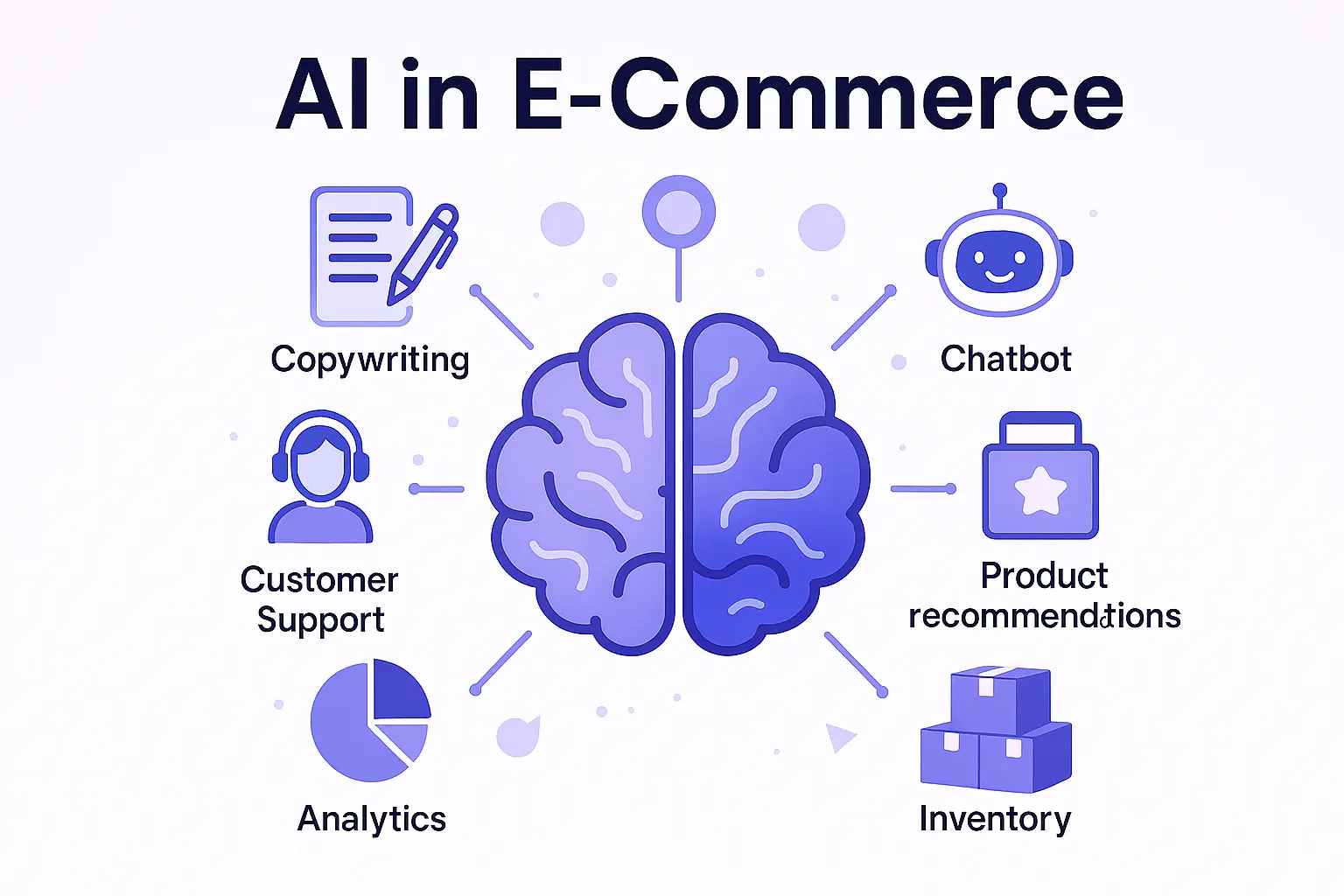

Necessary cookies help make a website usable by enabling basic functions like page navigation and access to secure areas of the website. The website cannot function properly without these cookies.
Master E-commerce Product Search With This Guide

Why E-commerce Product Search Matters
Imagine this: you land on an online store, type in “black running shoes,” and get zero search results because the retailer listed them as “dark sneakers.” Frustrating, right? You’d probably click away within seconds.
This is the conversion cliff retailers face when product search doesn’t work well. Studies consistently show that customers who use on-site search are 2.4x more likely to convert compared to those who just browse. On desktop, an optimized search experience can even double conversion rates.
But today’s e-commerce world is more complex than keyword matching using search algorithms. With Artificial Intelligence, natural language processing, and voice assistants starting to purchase on behalf of consumers, e-commerce businesses need to rethink their product discovery and search functionality.
In this article, I will explore what e-commerce product search is, best practices to master it, case studies of leading solutions, and where the future is headed.
What Is E-commerce Product Search?
At its core, ecommerce product search is the functionality that allows users to find relevant products within an online store.
Traditionally, this meant keyword-based search: type “red dress” and get results containing “red” and “dress” in product descriptions.
But today, smart search engines go further:
- Handle synonyms (“sneakers” = “trainers”)
- Account for typos (“iphon” → “iPhone”)
- Understand intent (searching “cheap laptop” means price sensitivity)
- Use AI and natural language processing to surface the most relevant items, not just exact matches
In other words, modern e-commerce search is intelligent product discovery.
Core Best Practices for Effective Product Search
Let’s break down the fundamental practices every e-commerce business should adopt, and later in the article, I will tell you the platforms that will help you achieve them!
1. Prominent Search Bar Placement and Visibility
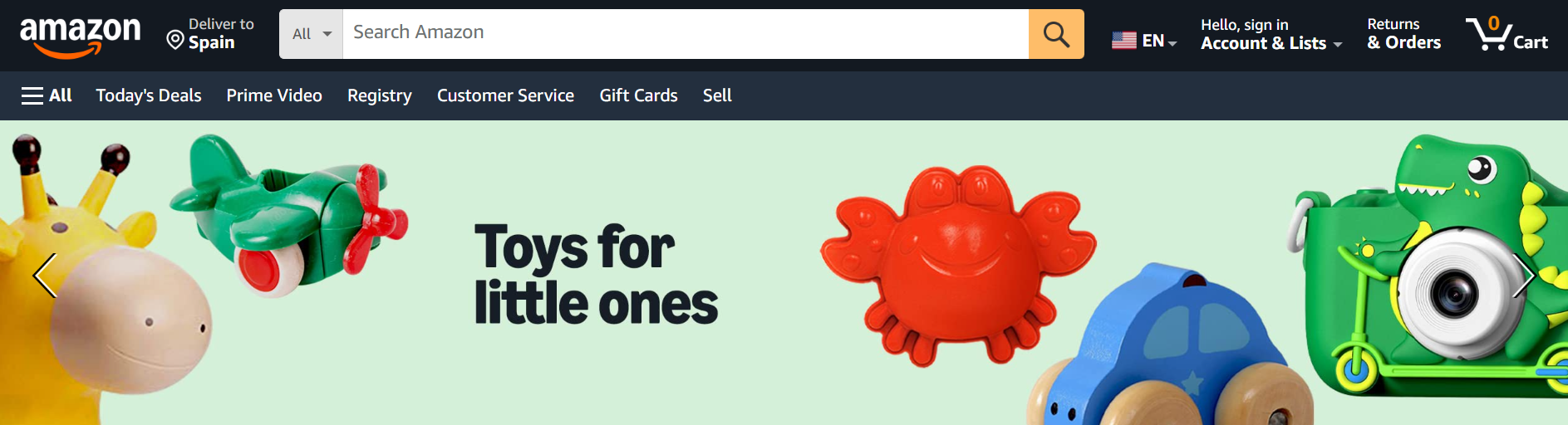
The search bar should be as obvious as your brand logo. Placing it in a central, highly visible position ensures customers don’t have to hunt for it. A hidden or small search box costs you conversions.
Think of Amazon: their search bar dominates the header. That’s intentional.
2. Typo Tolerance & Autocomplete Suggestions
Google states that 1 in 10 (10%) of search queries are misspelled daily, and this rate is even higher on e-commerce sites, reaching about 25%. Without error correction, you’ll lose those customers instantly.
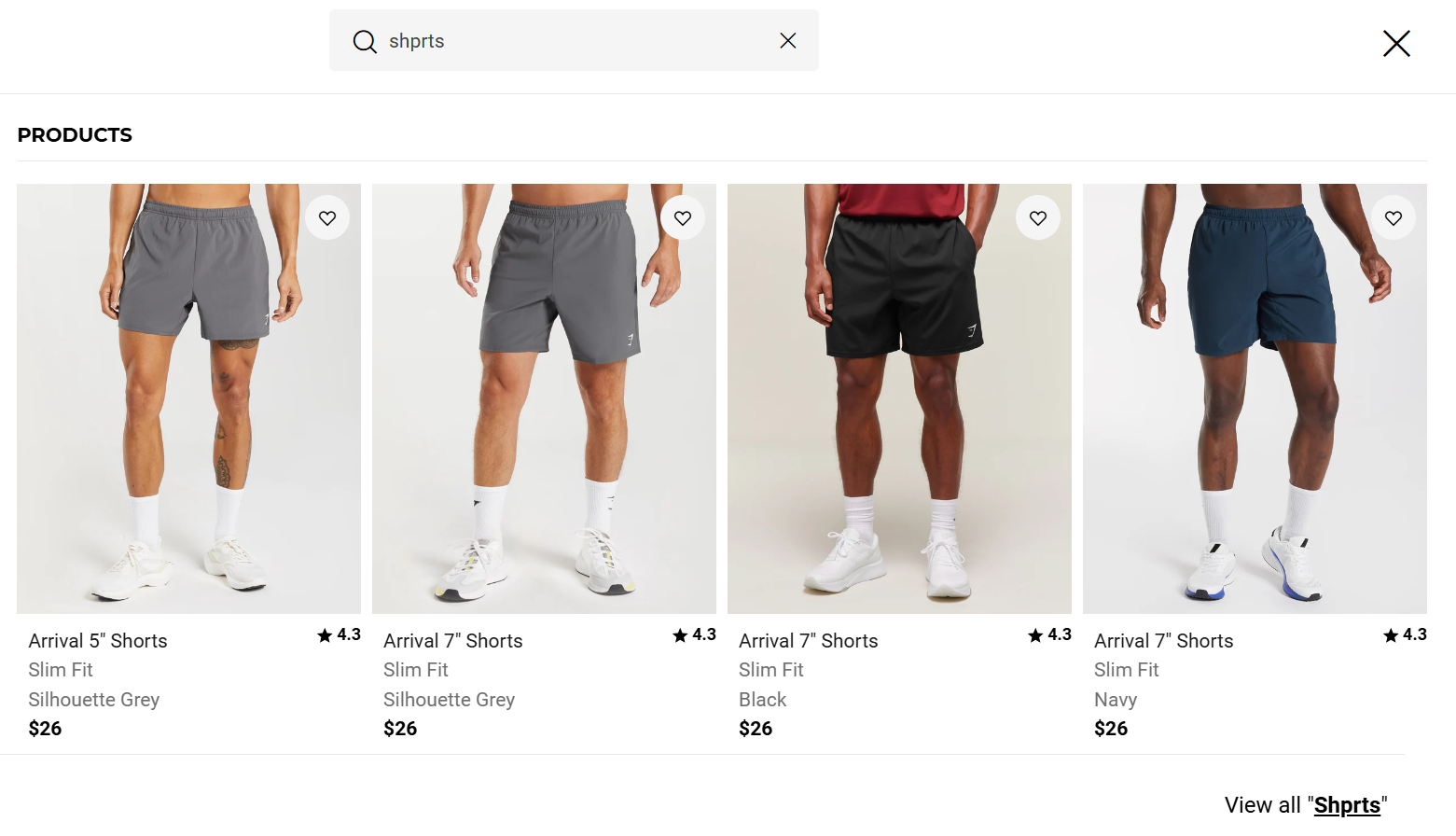
Autocomplete also reduces friction, letting users find products faster. Nearly 23% of users select from autocomplete suggestions when conducting searches
Example: Type “nik” and see “Nike Air Zoom” pop up immediately, complete with an image preview. That’s both convenient and persuasive.
3. AI-Driven Relevance: Synonyms, Personalization & Intent
Not every customer speaks your product catalog’s “language.” If someone types “hoodie” but your system only knows “sweatshirt,” you’ll lose them.
AI-powered search engines learn from user behavior, past searches, and context to deliver personalized recommendations. They also allow merchants to promote priorities (e.g., high-margin products, items in stock, bestsellers) alongside relevance.
4. Filters, Facets & Searchandising
After the initial query, customers need ways to refine results. This means:
- Filters/facets: Like size, color, brand, ratings
- Searchandising: Adjusting product ranking to showcase top-sellers, seasonal picks, or promotions
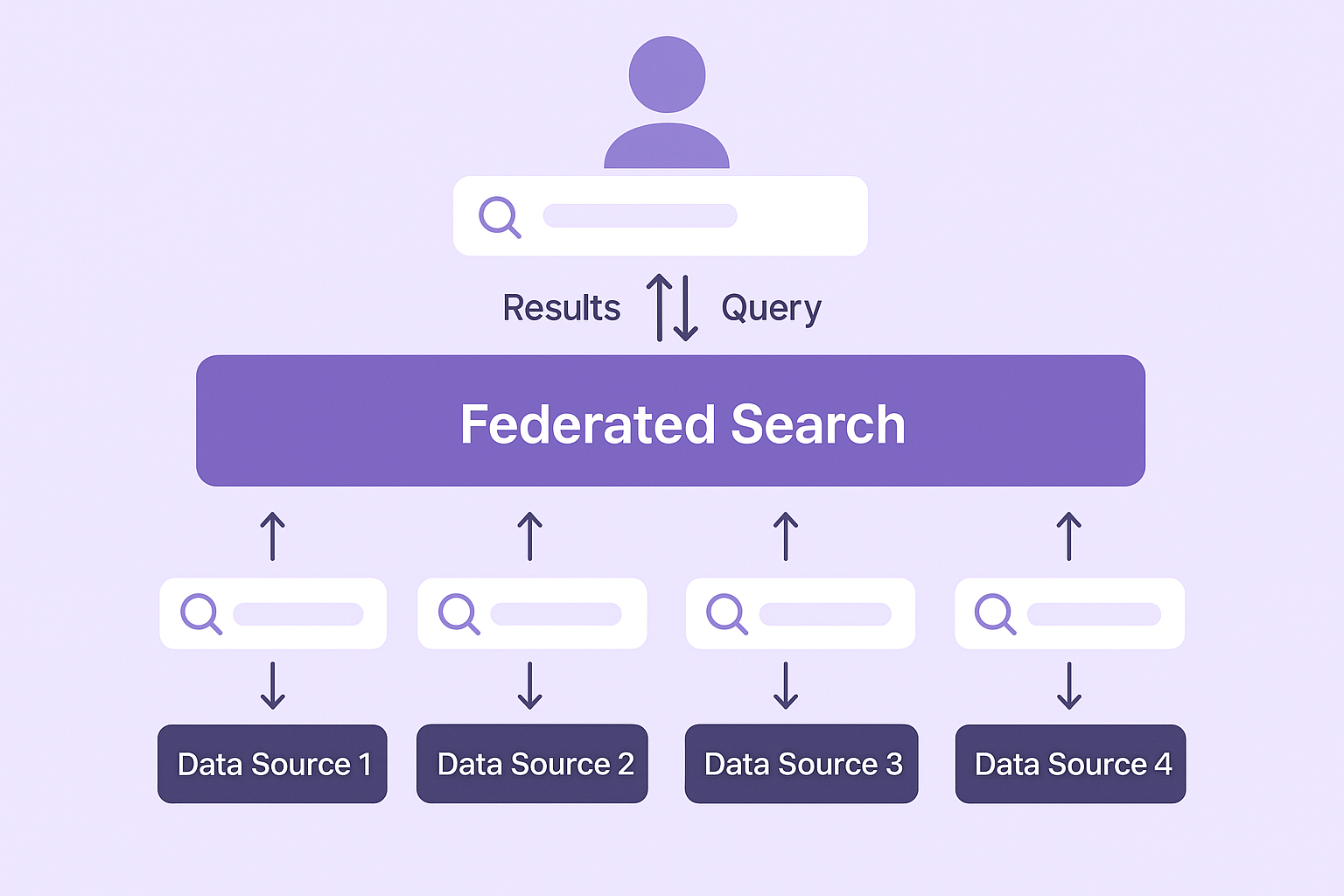
5. Federated Search for Marketplaces
If you’re running a marketplace, customers expect one search bar to search across all merchants and content types.
Federated search integrates data from different vendors and categories into a single unified search experience.
consider improving relevance with AI, adding autocomplete, and optimizing filters to guide users more efficiently
6. Zero-Result Handling & Keyword Expansion
Nothing kills the customer experience faster than a blank “no results found” page.
Smart search engines use:
- Synonym expansion (e.g., “sofa” → “couch”)
- Alternative suggestions (Other close enough products)
- Dynamic recommendations (show related categories or top-selling items)
That way, the customer always has a path forward.
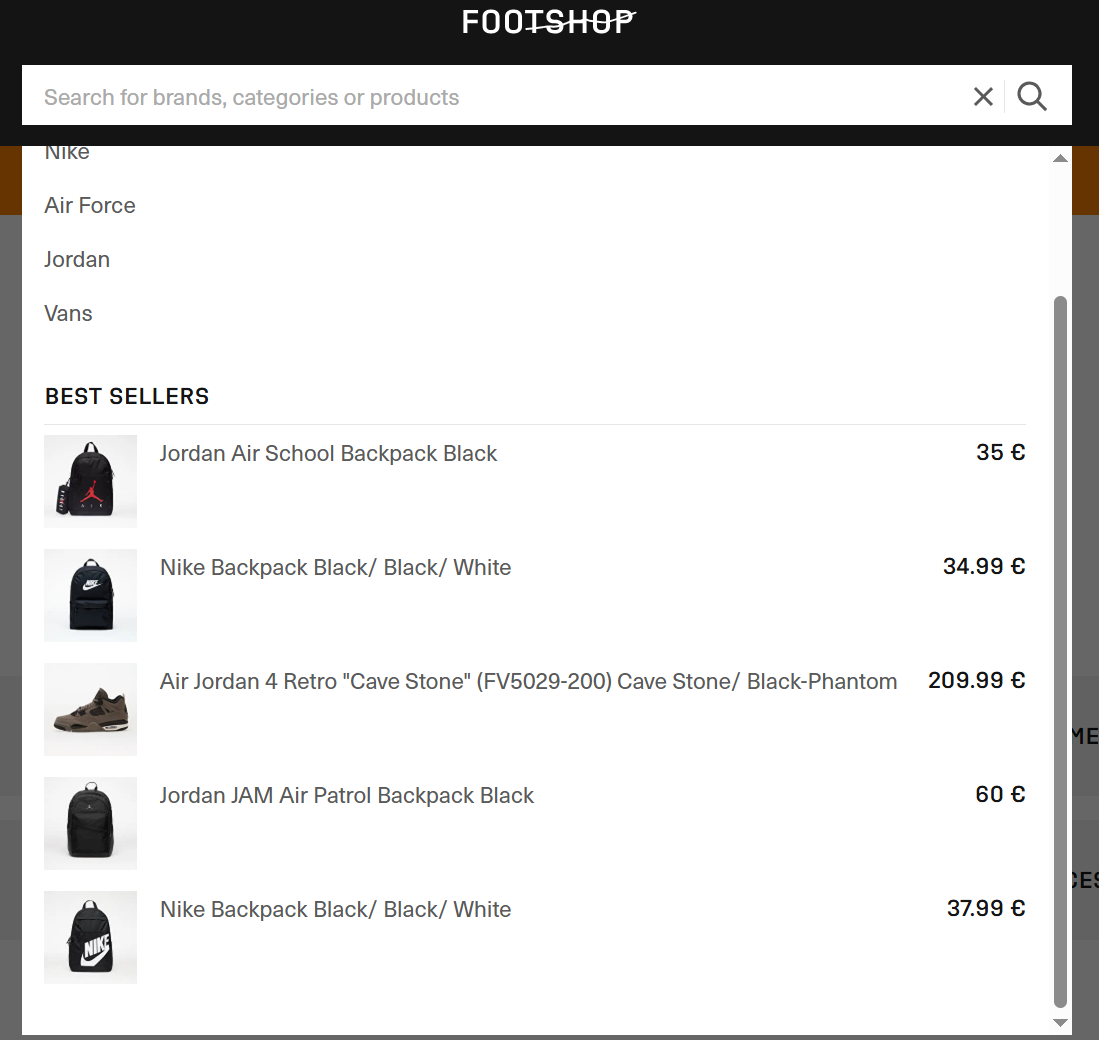
7. Rich Previews: Images in Autocomplete
Modern users expect visual product previews. Showing product images, product details, prices, or ratings in the dropdown makes the search feel more like a personal shopper.
75% of online shoppers rely on product photos to make purchasing decisions.
8. Metrics & Analytics
Finally, measure everything:
- What % of searches convert/what are the bounce rates?
If your conversion rates are low, consider improving relevance with AI, adding autocomplete, and optimizing filters to guide users more efficiently. - Which keywords return zero results?
If this happens frequently, consider adding synonyms, updating product titles, and displaying related search suggestions or relevant content instead of a blank page. - How often do customers refine their queries?
If refinements are too frequent, simplify filters, improve typo tolerance, and analyze query patterns to adjust your catalog or metadata.
Advanced Strategies & AI Innovations
The basics are table stakes. The leaders go further by embracing AI-powered features.
Read more: Top 7 use-cases of AI in e-commerce.
1. AI Shopping Agents & Semantic SEO
Autonomous shopping agents (like AI assistants) can now research, compare, and even purchase products without human input. Think about the times you have heard "hey, Alexa" or "hey, Siri".
That means e-commerce businesses need to optimize product data not only for humans but also for AI understanding - clear attributes, structured metadata, and semantic relevance.
2. Leveraging AI/Machine Learning Techniques
Top platforms use large language models, AI, and Machine Learning to improve results continuously. They learn from search analytics like:
- Popular searches: What are people looking for the most?
- Click-through rates: How many of the viewers actually click?
- Past purchases
- Customer demographics: Who likes what?
This ensures the search engine improves over time without manual tuning.
3. Guided Selling & Recommender Systems
Sometimes, customers don’t know exactly what they want. Guided selling helps by asking a few questions and narrowing down options.
For example: “What’s your budget range?” “Do you prefer lightweight or durable?”
Combined with recommender systems (“You might also like…”), this creates a personal customer experience.
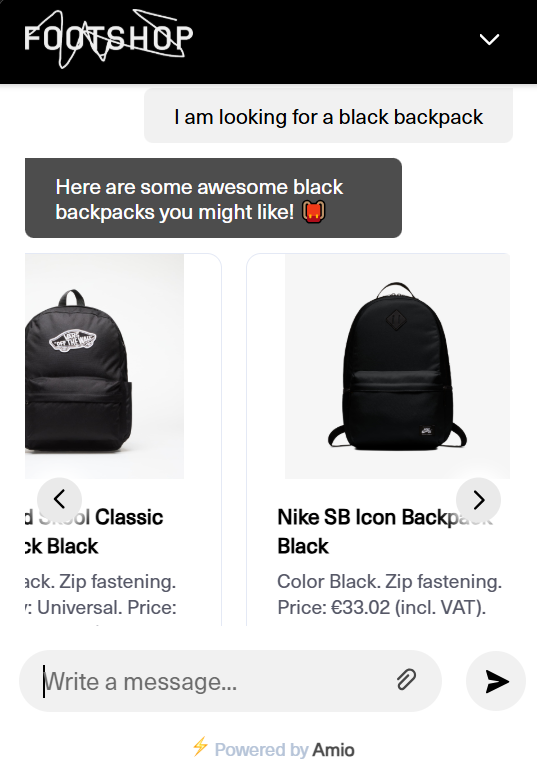
4. Conversational AI & Chatbots
Instead of having your team answer the repetitive questions, you can implement a bot that can answer everything with access to your product catalog. Chatbots not only answer customer queries, but they can also help with the search process by giving AI recommendations.
Implementation Challenges & Solutions
Of course, implementing intelligent search isn’t without hurdles.
1. Data Quality & Integration
If product data is messy (inconsistent titles, missing tags, wrong product attributes, ...) even the best AI engine will struggle. Retailers need structured, accurate product catalogs.
2. Balancing Business Objectives
Site search shouldn’t only serve customers, but it also needs to align with business goals for KPI optimization. Merchants may want to promote high-margin products, reduce inventory, or highlight seasonal campaigns.
That’s where boost-and-bury functionality comes in: elevate certain products while pushing others down.
3. Technical & Resource Constraints
Building a custom AI search engine is costly and requires expertise. For most businesses, it makes more sense to partner with specialized platforms.
There are many different integrations for online businesses. See top 25 e-commerce integrations to find out more.
Product Recommendations
Here’s where we look at real-world examples of e-commerce search platforms done right.
1. Algolia – Speed & Relevance at Scale
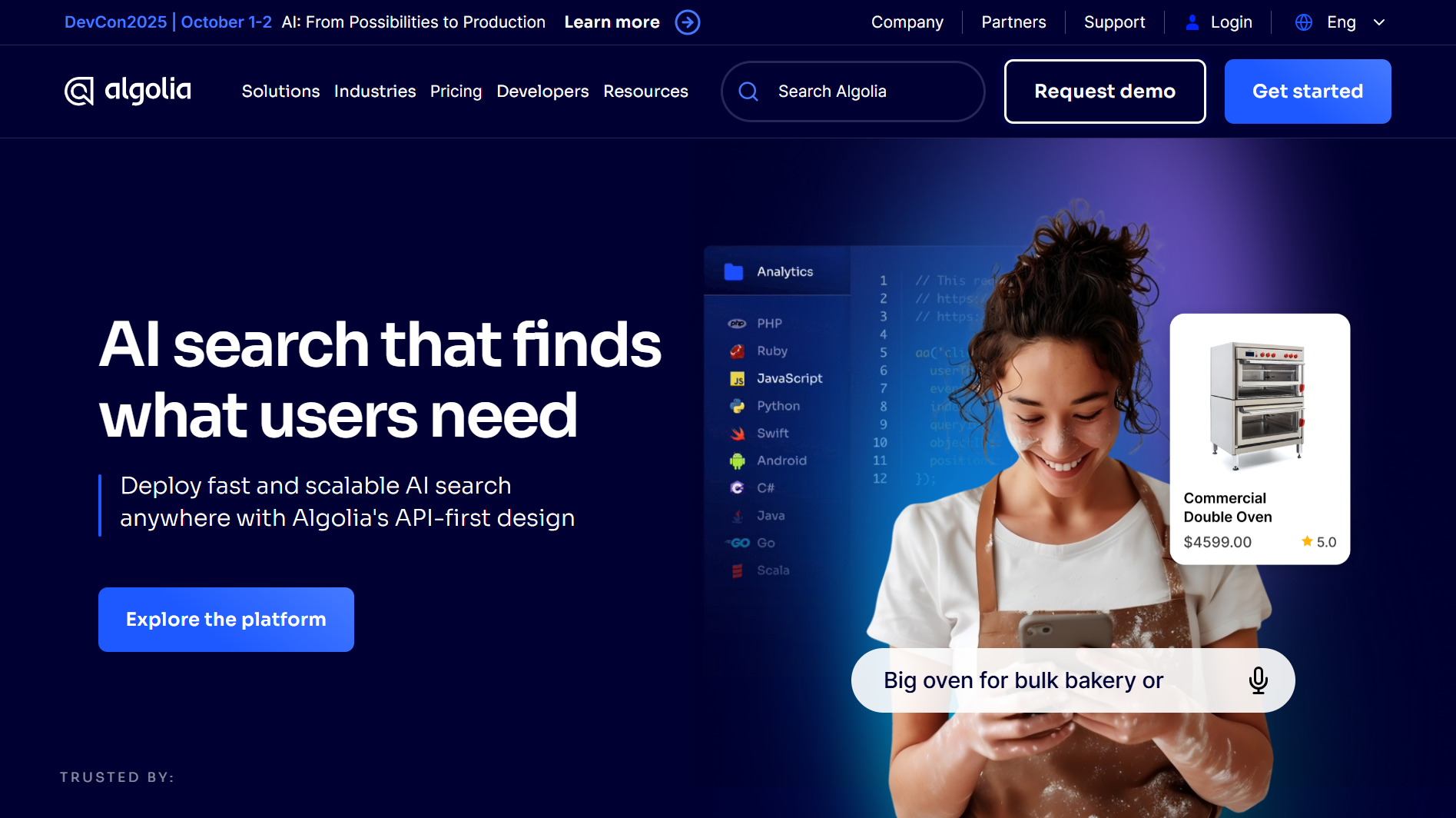
Algolia powers search for companies like WeWork and GymShark. Their strength is instant search results (milliseconds) combined with AI-driven relevance.
Pricing: Start for free and/or request pricing 🤔
Best for:
- Large e-commerce stores that need speed and scaling.
- Teams that want strong personalization and analytics.
When to avoid:
- If you’re a small shop with a limited budget.
- If you need deep custom search logic, it’s less flexible than open-source solutions.
2. Constructor – Business-First Search
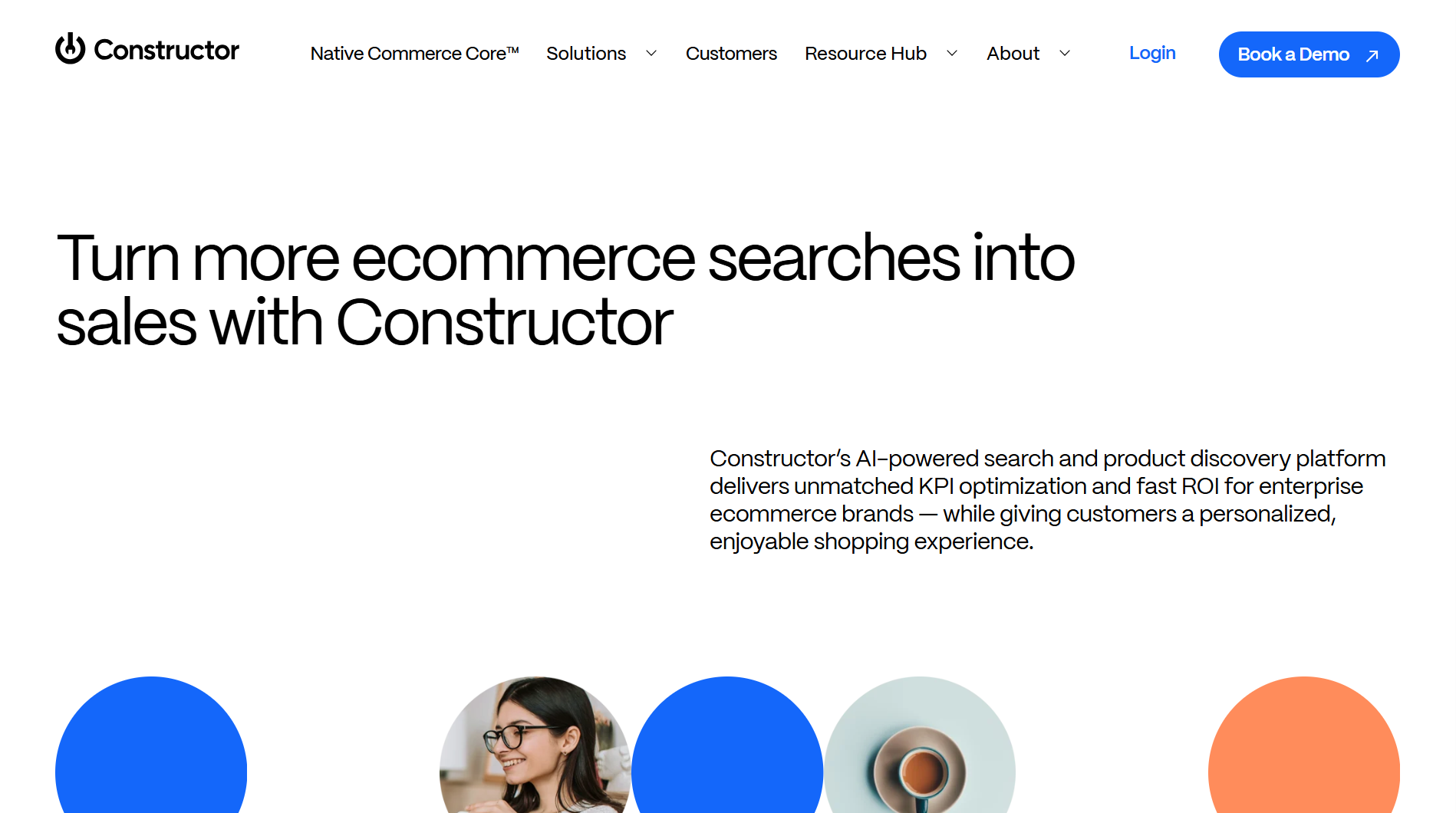
Constructor positions itself as an AI product discovery built for revenue optimization. It doesn’t just show the most relevant results; it balances them with profitability, inventory levels, and promotions.
Pricing: Custom pricing 🤔
Best for:
- Retailers who want search to drive business KPIs, not just relevance.
- Teams that are focused on revenue-optimized product discovery.
When to avoid:
- If you’re a small or mid-sized store, it may be overkill in cost and features.
- If you don’t need advanced merchandising or business-rule control.
3. Amio – Conversational AI Chatbots
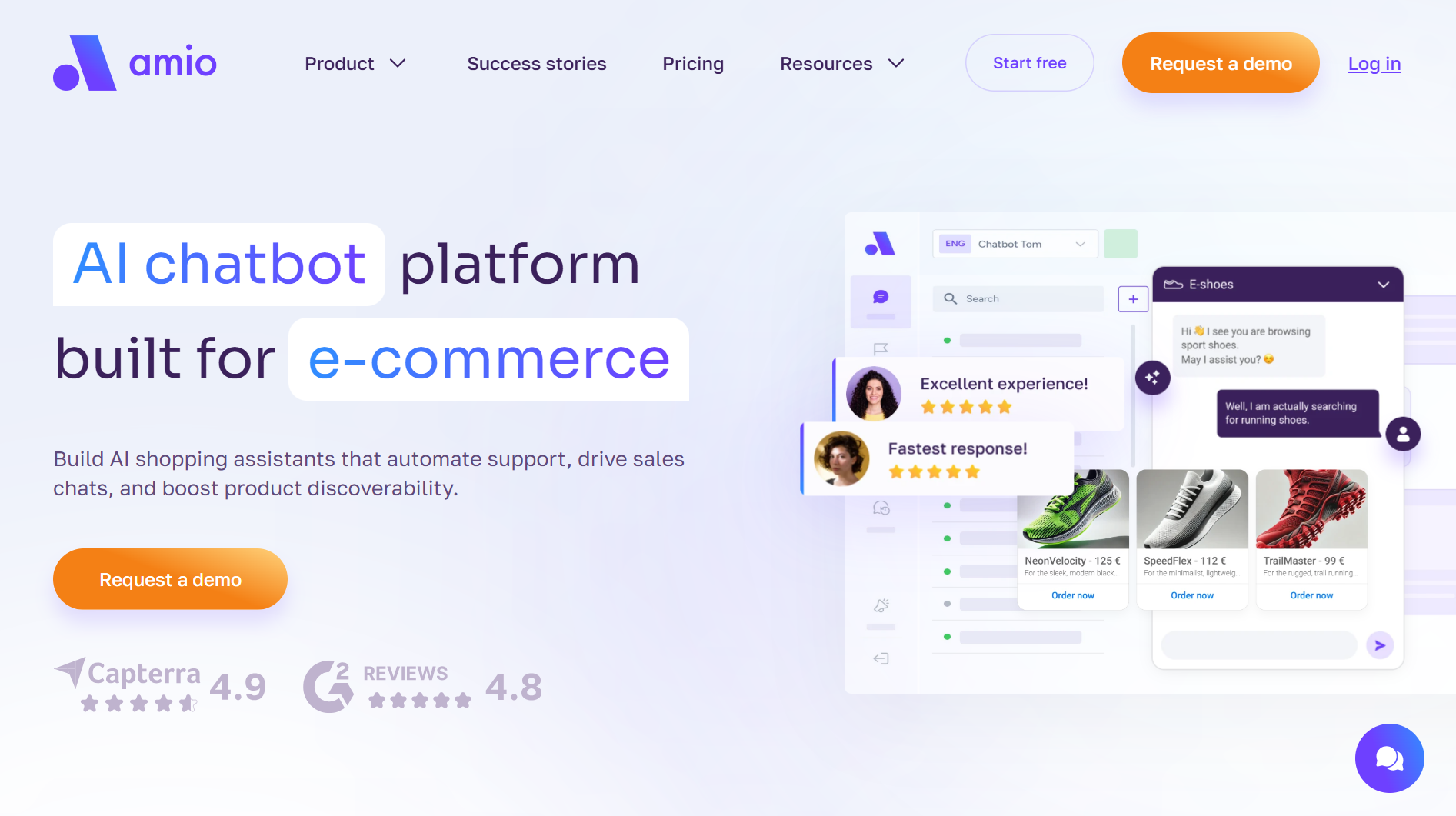
While platforms like Algolia and Constructor focus on the search bar, Amio brings product search into conversations.
Imagine a customer typing into a chatbot:
- “Show me running shoes under $100 in size 9.”
- “I need a black evening dress for a wedding.”
Amio’s AI chatbot can parse these natural language queries, pull product results from the catalog, and present them in a conversational, guided format.
Pricing: start with a 14-day free trial
- Starting from 150 EUR/month
- Second tier: 350 EUR/month
Best for:
- Retailers wanting to merge search + chat into one experience.
When to avoid:
- If you think I am being biased in this article 😅
4. Elasticsearch – Open Source Flexibility
Elasticsearch is an open-source engine that many companies customize for their own search. It’s highly flexible but requires more in-house technical expertise.
Pricing: Start for free and pay as you go 🤔
Best for:
- Tech-heavy companies with in-house developers
- Businesses that need open-source flexibility to build a fully custom search.
When to avoid:
- If you lack dev resources, setup and maintenance can require significant expertise
5. Sparq – Smart Search for Shopify Search
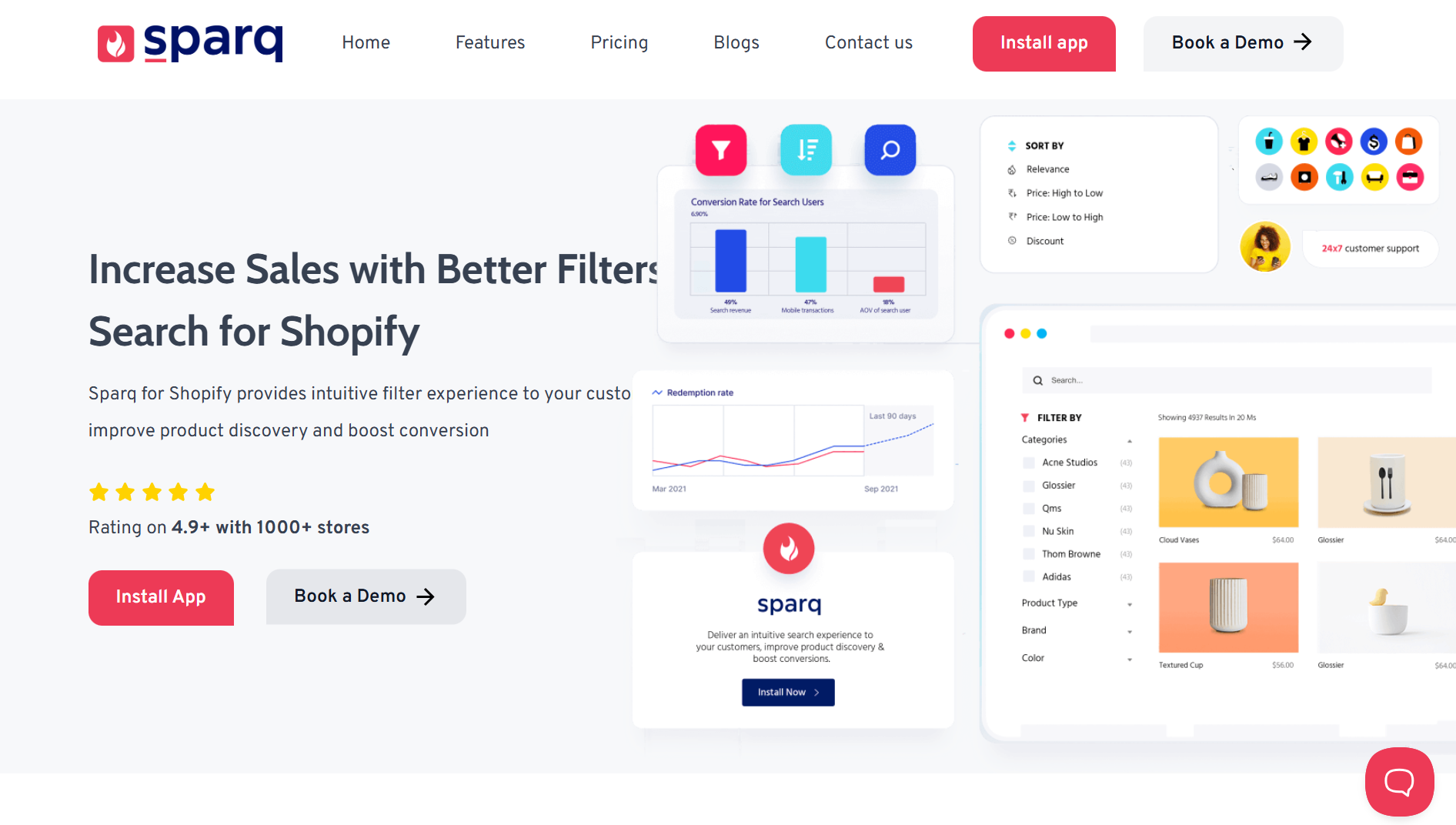
Sparq is designed for Shopify merchants and focuses on visual search, search filters, and AI-powered autocomplete.
Pricing: Custom pricing with plans starting at 19$/mo
Best for:
- Mid-sized Shopify stores that need an easy-to-deploy search upgrade.
- Shops that need a quick setup.
When to avoid:
- If you are not on Shopify...
Future Outlook
E-commerce product search is evolving rapidly. Here’s what to watch:
- AI-First Shopping: Autonomous agents will become major customers. Businesses must optimize for machine readability as much as human UX.
- Universal Discovery Experiences: Search, recommendations, and guided selling will merge into one discovery layer for a coheseve experience.
- Visual search: While it's not a new thing, it is gaining more popularity, especially with platforms like Pinterest and Google search implementing it.
- Conversational Search: Chatbots like Amio will increasingly serve as the first touchpoint for customers, blurring the line between support and sales.
- Automated Content: AI models will generate product names, descriptions, FAQs, and metadata - solving the “cold start” problem for new products, making a "hybrid search system."
- Advanced personalization: By analysing data like search history, user intent, and ... you can increase the search relevance for the searchers, improving conversion rates. A personalized experience is gaining more and more importance in the e-commerce world.
Conclusion
E-commerce product search is not a “nice-to-have” in the age of technology. It’s the front door of your digital store.
Getting it right means:
- Searching fast, accurately, and typo-proof
- Using filters and merchandising to guide discovery
- Leveraging AI for behavioral targeting and continuously optimizing
The bottom line? Customers who search are customers who buy. If you make their discovery experience better, whether through a search bar or an AI chatbot, you’re not just improving UX, you’re boosting revenue.
And we are always here to help you do just that!
Table of Contents
Start building AI chatbots with Amio.
Book a 30-minute session where we will find out how AI bot can help you decrease call center costs, increase online conversion, and improve customer experience.
Book a demoWhat is Amio?
We understand your business on
Book a 30-min consultation session where we will discuss your support cost optimization potential, experience improvements, including our online conversion increase techniques
Request a demo