
Required for the website, security, remembering your choice and features you request.
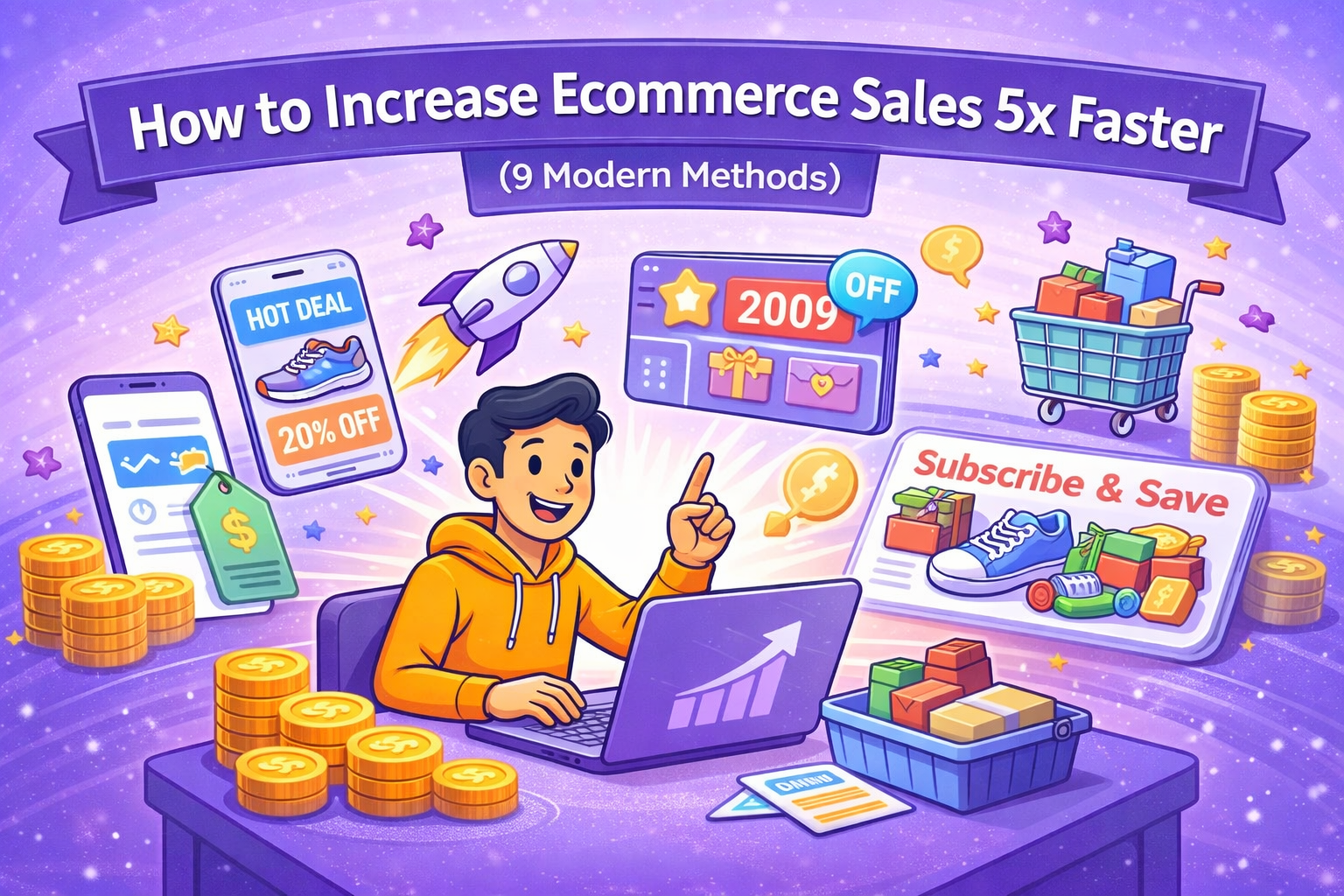
How to Increase Ecommerce Sales 5x Faster (9 Modern Methods)
The most effective way to increase ecommerce sales is to improve your conversion rate and product pages, optimize the checkout process, increase your average order value, and make your customer experience frictionless.
Most ecommerce stores already have enough visitors. What they’re missing is a system that turns that traffic into store's revenue. Instead of focusing only on marketing strategies like content marketing, social media marketing, or other digital marketing channels, the biggest gains usually come from improving what’s already inside your online store, in parts most stores set up once, and then never touch again (your product pages, your checkout flow, and your overall customer experience).
In this guide, you’ll find 5 practical ways to increase ecommerce sales using modern capabilities, including AI shopping, A/B testing, or product bundles and subscriptions, all designed to improve conversion rate, increase average order value, and grow revenue without increasing ad spend.
How to Increase Ecommerce Sales
Most advice on how to increase ecommerce sales sounds the same: run more ads, post on social media, invest in content marketing, or experiment with affiliate marketing and influencer partnerships. Most of this advice boils down to one thing: bring more traffic (as if traffic magically fixes everything).
But here’s the reality. Most ecommerce stores don’t have a traffic problem. They have a conversion problem.
If your product pages don’t clearly communicate value, your checkout process creates friction, or your customer experience feels confusing, more traffic won’t fix anything. It will just amplify what’s already broken, like pouring water into a leaking bucket.
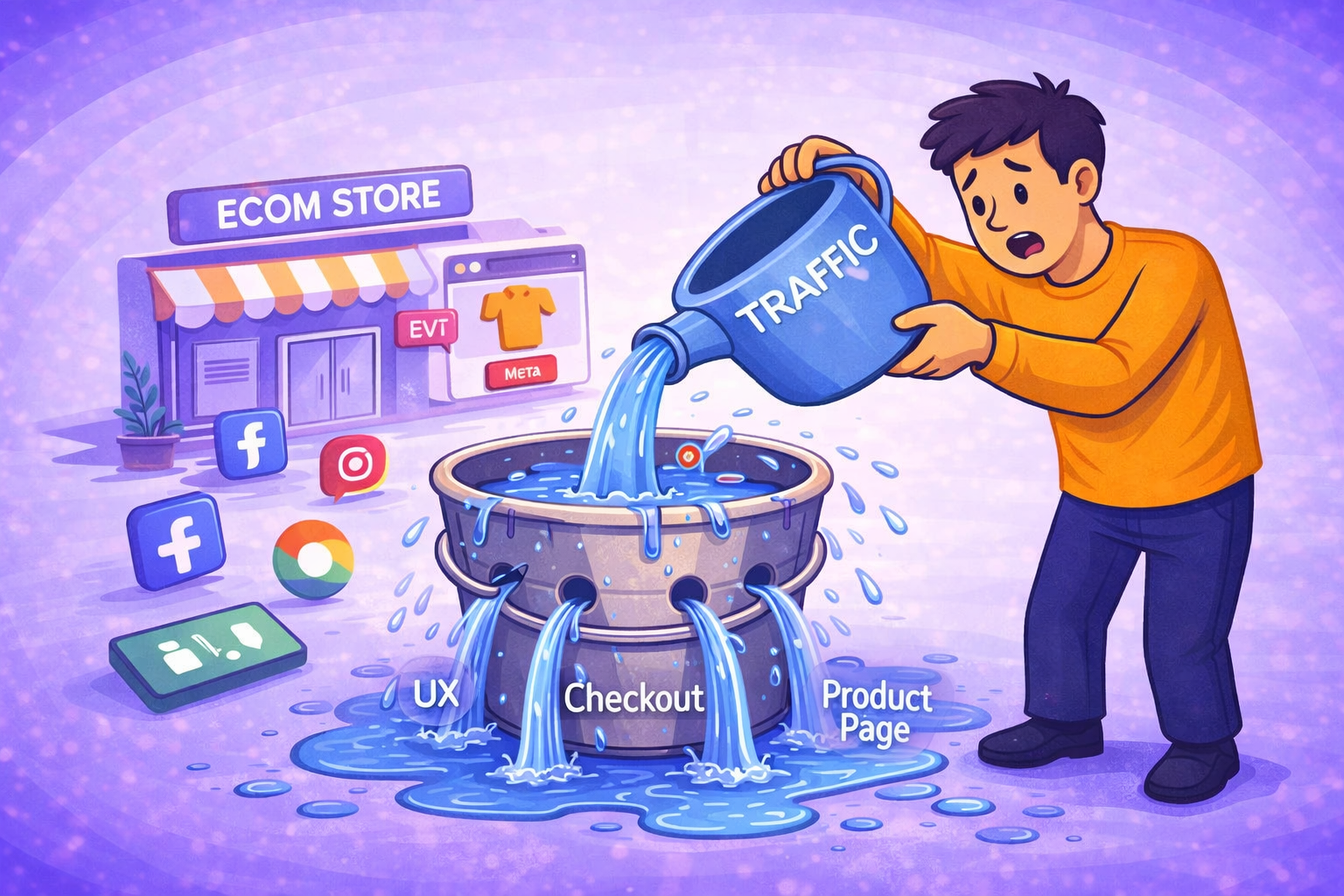
That’s why the fastest way to increase ecommerce sales isn’t more marketing. It’s improving what happens after someone lands on your store or landing page.
Small changes in the right places, such as your product visuals, landing page, checkout flow, or average order value strategy, can increase your conversion rate and revenue almost immediately.
And the best part? These changes don’t require a full redesign, big budgets, or months of work.
In this guide, we’ll walk through 5 practical ways to increase ecommerce sales by fixing the parts of your store that directly impact conversion rates, customer experience, and revenue.
Each strategy is:
- simple to implement
- based on real ecommerce performance levers
- designed to improve conversion rate, increase average order value, and reduce friction in your checkout process
1. AI Shopping & Agentic Commerce (New Traffic Channel)
Yes, we said this guide is about increasing ecommerce sales without more traffic. But this shift is too big to ignore. And then no more traffic changes, we promise.
What Is It
Ecommerce is moving into what’s called agentic commerce, meaning your products can now be discovered, recommended, and even purchased through AI tools like ChatGPT, Claude, Google Shopping, or other AI shopping agents.
In simple terms, customers don’t always visit your online store anymore. The store must come to them.
Why It Matters
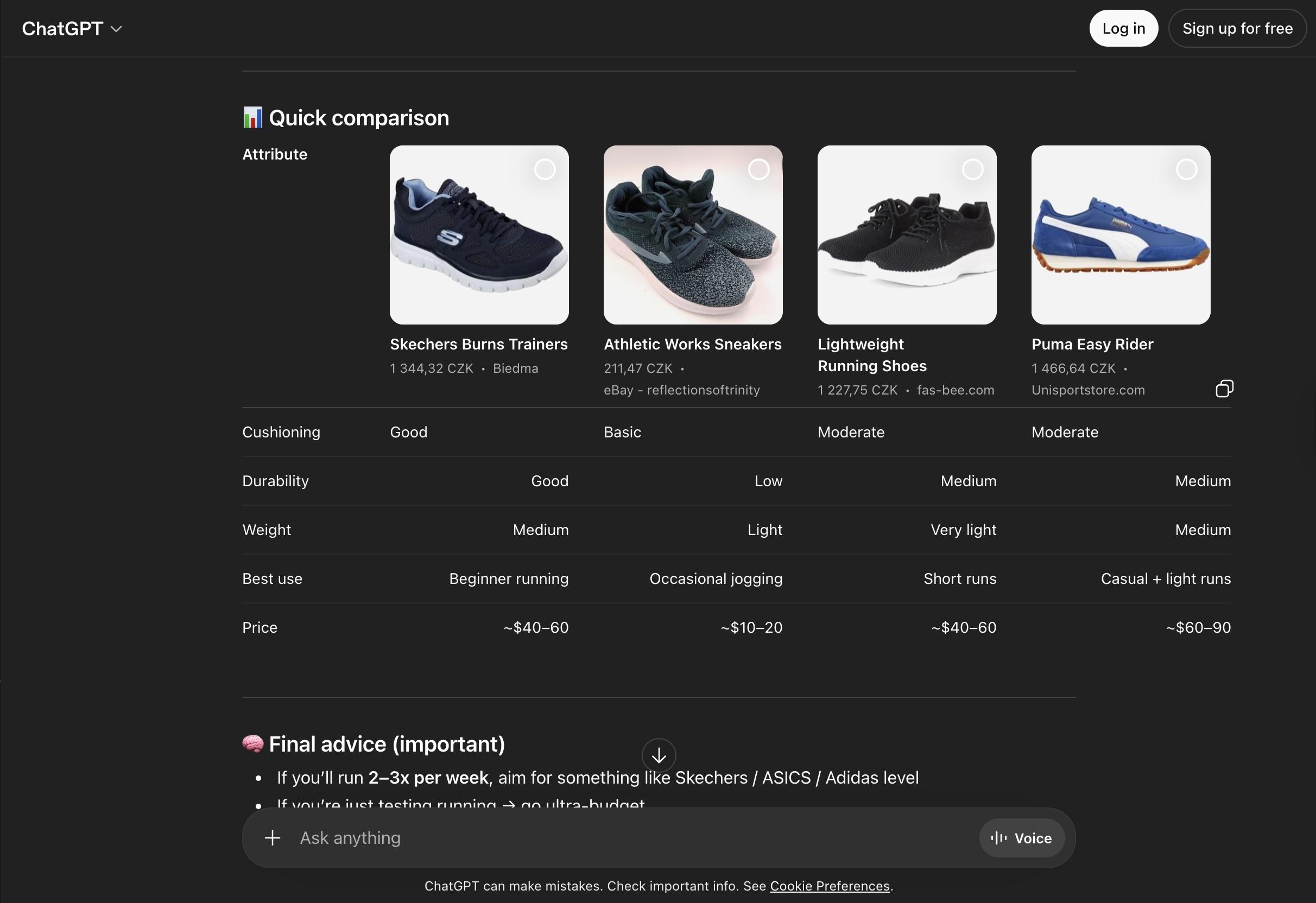
Customers' search behavior is shifting from Google to AI. Instead of typing “best running shoes” into Google, people are starting to ask AI directly, for example: “What are the best running shoes for beginners under $100?”
And AI such as ChatGPT or Claude doesn’t show 10 blue links. It gives 3–5 actual product recommendations with photos and a direct link to buy.
Revenue Impact
This creates a completely new AI-driven sales channel, without ads, clicks, or traditional search rankings.
But here’s the catch. AI tools don’t “browse” your store like search engines. They rely on structured product data, descriptions, context, and most importantly, how clearly your product data communicates value.
Clean, structured, descriptive product data means AI understands your products. Messy data causes you not to exist. This is basically SEO 2.0, just not on Google.
Want to understand how GEO (Generative Engine Optimization) actually works and why it’s becoming essential? This guide breaks it down.
How to Get Started
If you already do SEO, you’re halfway there. Now you need to upgrade it. Instead of optimizing for keywords like “running shoes men”, start optimizing for questions and intent, such as “best running shoes for beginners with flat feet”.
If you want your products to show up in AI-driven commerce:
- optimize product titles, make it clearer (what it is + who it’s for)
- improve product descriptions, focus on use cases, not just features
- structure your attributes (materials, fit, use, category)
- content that answers real customer questions and improves overall customer experience, not only contains most keywords
Try This
Take one of your product pages and run this prompt in ChatGPT (or any other LLM like Claude or Gemini):
Run this on a few products, and you’ll immediately see the gap between SEO-ready content and AI-ready content.
2. AI Shopping Assistants (The Fastest-Growing Ecommerce Trend)
What Is It
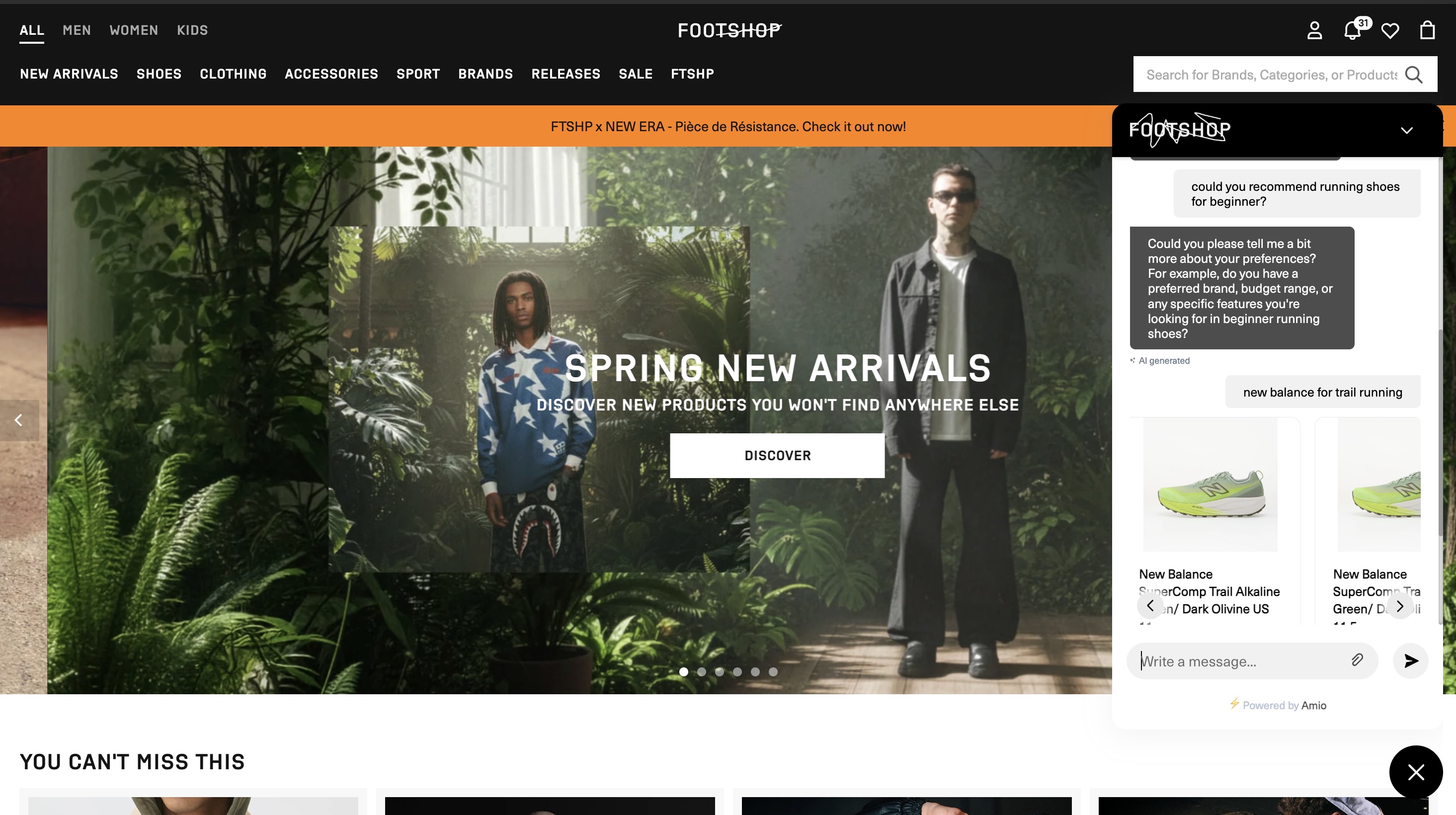
AI shopping assistants are quickly becoming a standard part of modern ecommerce. Instead of browsing categories, filtering products, and comparing options manually, customers can now simply ask: “I’m looking for a gift under $50 for someone who likes fitness,” or “Which product is best for sensitive skin?”
And the assistant does the rest - recommends products, answers questions, and guides the purchase in real time.
Why It Matters
Because it removes the biggest problem in ecommerce: too many choices and not enough guidance. A typical store expects customers to search, filter, compare, read reviews, and then decide.
An AI shopping assistant skips all of that. It turns a messy browsing experience into a simple conversation. Like having a knowledgeable salesperson but available 24/7 who never gets tired and never ignores a customer.
Revenue Impact
This directly improves the metrics that actually matter:
- higher conversion rate because customers get answers instantly
- higher average order value thanks to personalized recommendations
- better customer experience and customer loyalty
And using AI shopping assistants is not just about increasing revenue. A good AI shopping assistant can also automate a large part of your customer support, cutting costs while improving response times.
Want to see how AI shopping assistants work in practice and what other benefits they bring? We covered everything in this article.
How to Get Started
Modern AI shopping assistants should:
- recommend products based on real intent (not just keywords)
- deliver truly personalized recommendations
- answer detailed product questions instantly
- handle real customer support requests (orders, returns, tracking)
- guide customers through the buying process
In other words, not just respond, but help and sell.
Today, there are hundreds of AI shopping assistants out there. And choosing the right one can directly increase your conversion rate.
We’ve put together a breakdown of 20+ AI shopping assistants, including which ones are best suited for different types of Shopify stores. Read here.
3. Native A/B Testing (The Most Underrated Revenue Lever)
What Is It
A/B testing is one of the most effective ways to increase ecommerce sales. It means testing two versions of the same element (for example, a product page, CTA button, or checkout step) to see which one leads to a higher conversion rate.
Instead of guessing what work or relying on “gut feeling”, using Google Analytics or other real-time analytics, you can make decisions based on real customer behavior.
And in ecommerce, even small improvements can have a direct impact on revenue.
Why It Matters
Most ecommerce stores don’t have a traffic problem. They have a conversion rate problem. And conversion isn’t improved by big redesigns. It’s improved by small, continuous changes.
- a better product title
- a clearer CTA
- a different product image
- a slightly shorter checkout flow
Individually, these changes look tiny. Almost boring. But together? They compound into significant revenue growth.
(grafika jak se spojuje více věcí do jedné, nějaké přirovnání)
Revenue Impact
This is where things get interesting. A +1% increase in conversion rate might not sound like much.
But if your store does €50,000/month, that’s +€500/month or €6,000/year just from a single test. Now imagine running tests continuously across your product pages and checkout process.
This is why A/B testing is one of the highest ROI ecommerce strategies and still massively underused.
How to Get Started
Until recently, A/B testing was expensive, technical, and slow. You needed third-party tools, developers, and a lot of patience. Now it’s becoming a native part of modern ecommerce platforms like Shopify.
You can test changes directly in your store, faster, cheaper, and without a complicated setup. This removes the biggest barrier that kept most stores from doing it.
Start simple. You don’t need a full experimentation team. Pick one high-impact element in your purchase funnel and test it:
- product page headline
- product images
- add-to-cart button text
- pricing display
- product description structure
Try This
Use this structure for every test:
- Hypothesis - “If we simplify the product title, conversion will increase.”
- Change - make, for example shorter, clearer title focused on the use case
- Measure conversion rate or add-to-cart rate
- Decide either to keep, revert, or further iterate
Run one test per week. That’s 50+ improvements per year.
4. Native Product Bundles (Instant AOV Boost)
What Is It
Product bundles are nothing new. It's one of the simplest ways to increase ecommerce sales by increasing your average order value. Instead of selling one product, you offer multiple complementary products together as a single purchase.
What’s new is how easy Shopify is making this. Instead of relying on third-party apps or complicated setups, you can now create bundles directly inside your store.
Why It Matters
Most ecommerce stores focus on getting more traffic. But one of the easiest ways to grow revenue is simply to increase how much each customer spends.
Bundles do exactly that. They remove decision fatigue and make it easier for customers to say “yes” to more products without overthinking it. Like turning: “Do I need this?” into “Yeah, I’ll just take the whole set.”
Revenue Impact
Bundles directly increase average order value (AOV).
- more products per order
- better product discovery
- higher perceived value
And unlike ads or SEO, you’re not paying for more traffic. You’re just making better use of the traffic you already have. Even simple bundle strategies can increase average order value by 20–30% in many ecommerce stores (Rework).
Customers who buy bundles also tend to have higher lifetime value, because they’re exposed to more products from the start and are more likely to come back.
How to Get Started
Start simple.
Look for products that naturally belong together:
- complementary items (e.g. shoes + socks)
- starter kits
- “frequently bought together” products
- problem-solution bundles
Then test:
- fixed bundles (set products)
- dynamic bundles (recommended combinations)
- discount vs no discount
The goal isn’t to discount. It’s to make buying easier (and faster).
Try This
Pick your top 3 best-selling products. For each one, create a simple bundle with 1–2 complementary items.
Example: Running shoes + performance socks or Skincare product + moisturizer or Coffee machine + capsules
Launch it and track AOV. Most stores see an increase almost immediately.
Most digital platforms today support product bundles either natively or through apps. If you're using Shopify, you can create bundles directly in your admin or use bundle apps from the Shopify App Store. Other e-commerce platforms offer similar functionality on their online marketplace.
The key isn’t the tool. It’s the logic behind it. Group products that naturally belong together, make the offer simple, and remove decision friction.
Bonus: AI-powered bundles
Today, AI shopping assistants can take this even further.
Instead of relying only on fixed bundles or manual recommendations, modern AI tools can suggest relevant products in real time, directly on the product page or even during the checkout process. For example:
- a customer adds running shoes → AI recommends performance socks
- a customer views skincare → AI suggests a complete routine
- a customer is about to check out → AI offers a small add-on that increases average order value
This turns bundles from a static setup into a dynamic, personalized experience. And that’s where things get powerful. Instead of guessing what customers might want, you’re recommending exactly what fits their intent, in the moment they’re most likely to buy.
5. Native Subscriptions (Predictable Revenue Engine)
What Is It
Subscriptions are one of the most effective ways to increase ecommerce sales by increasing customer lifetime value and creating predictable revenue. They aren’t new. What’s changed is how easy Shopify is making it to run.
With native subscription features and a growing ecosystem of subscription apps, you can now offer recurring purchases directly in your store, without complex setups or heavy custom development.
Why It Matters
Most ecommerce businesses are built on one-time purchases. That means every month, you’re starting from zero and hoping it works this time too. You have to attract new traffic, which brings new conversions and creates new customers.
Subscriptions change that. They turn one-time buyers into repeat customers automatically. They turn one-time buyers into repeat customers and create a more stable, predictable revenue stream.
Revenue Impact
Subscriptions directly increase:
- customer lifetime value (LTV)
- order frequency
- revenue stability
And here’s the key: It’s almost always easier to sell again to an existing customer than to acquire a new one. Subscriptions make that happen by default.
Subscription customers generate up to 2–3× higher lifetime value compared to one-time buyers. And even small improvements in retention can have a massive impact. A 5% increase in retention can boost profits by 25–95% (Smartrr).
How to Get Started
Subscriptions are now supported across most major ecommerce platforms. If you're using Shopify, you can enable subscriptions through native features or apps. Other ecommerce platforms offer similar setups with recurring billing options.
Start with products that naturally fit recurring purchases:
- consumables (coffee, supplements, cosmetics)
- products with regular usage cycles
- refill-based products
Choose one product with repeat purchase potential, add a subscription option directly on the product page, and highlight savings and convenience clearly.
Then test:
- subscribe & save discounts
- flexible delivery intervals
- easy cancellation (this actually increases trust and conversion)
The goal isn’t to lock customers in. It’s to make reordering so easy they don’t even think about it.
Additional Ways to Increase Ecommerce Sales
There’s a lot more you can do to increase ecommerce sales, but we don't want to turn this into a 10,000-word novel. You’ve got things to fix, not essays to read.
So instead of breaking each one down step by step, we’ll keep these short and practical. But still, below are a few more smaller, high-impact improvements across your checkout process, mobile experience, and customer trust that can quickly improve your conversion rate and revenue.
6. Fix cart abandonment in your checkout process
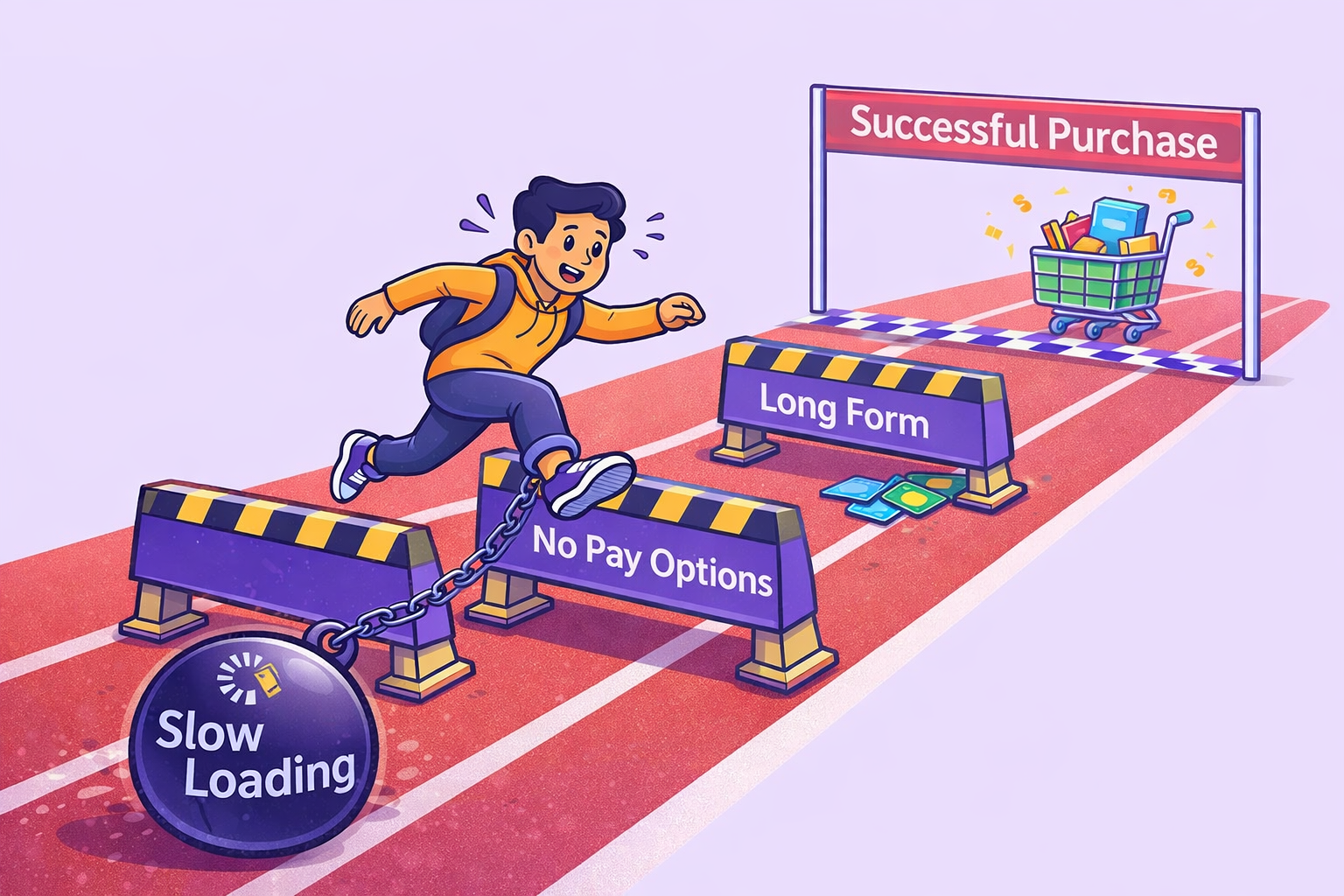
Cart abandonment is one of the biggest hidden revenue leaks in ecommerce.
On average, around 70–75% of shopping carts are abandoned (Upsella). That means 7 out of 10 customers who were ready to buy… simply don’t.
And in many cases, it’s not because they changed their mind. It’s because something in your checkout process pushed them away.
Instead of guessing what’s wrong, go through your own checkout like a customer (yes, actually do it, because most store owners don’t):
- Where does it feel slow?
- Where do you hesitate?
- Where would you drop off?
Then fix friction points. Simplify form fields, remove unnecessary steps, and improve page speed using modern UX tools. You can also test adding trust elements directly to your checkout page, like return policies, guarantees, or delivery information.
Try This
Add a simple line like “30-day free returns. No questions asked.” near the payment step and measure conversion rate.
7. Add more payment options
Many ecommerce stores still lose conversions because they don’t offer preferred payment methods. Adding digital payment options like:
- Apple Pay
- Google Pay
- BNPL (Buy Now Pay Later) via Klarna or other providers
can significantly improve your checkout conversion rate, especially on mobile devices. For example, businesses that offer Apple Pay see, on average, a +22% increase in conversion, while Buy Now Pay Later options can boost conversion by up to 30% (Stripe).
8. Optimize your mobile experience
Today, a large portion of ecommerce traffic comes from mobile devices. But many online stores are still optimized for desktop. Check your mobile experience:
- Is your product page easy to scan?
- Is the CTA button visible without scrolling?
- Is the checkout process smooth on mobile?
Even small UX improvements here can have a direct impact on conversion rates and revenue.
9. Use product reviews to build trust
Customers don’t trust your product descriptions, no matter how good they are. They trust other customers. Adding product reviews and customer feedback, especially from independent or user-generated content, can significantly improve your conversion rate.
Even better. Highlight key customer reviews directly on the product page. Link to detailed reviews or external sources. Show real use cases and results. This reduces hesitation and increases confidence at the moment of decision.
What This Means for Your Ecommerce Sales
Most ecommerce stores don’t need more traffic. They need to get more out of the traffic they already have. Because the difference between an average store and a high-performing one usually isn’t marketing. Its execution.
How well your product pages convert, how smooth your checkout process feels, and how easy it is for customers to decide and buy. The stores that grow faster aren’t doing completely different things. They’re just doing small things better, consistently.
By now, you know exactly what to focus on if you want to increase ecommerce sales. These are the changes that separate average stores from the ones that grow consistently.
Now it’s just about execution. Pick a few of these ideas, test them in your own online store, and start optimizing what you already have.
Table of Contents
Start building AI chatbots with Amio.
Book a 30-minute session where we will find out how AI bot can help you decrease call center costs, increase online conversion, and improve customer experience.
Book a demoWhat is Amio?
We understand your business on
Book a 30-min consultation session where we will discuss your support cost optimization potential, experience improvements, including our online conversion increase techniques
Request a demo