
Necessary cookies help make a website usable by enabling basic functions like page navigation and access to secure areas of the website. The website cannot function properly without these cookies.
5 Reasons E-Commerce Brands Are Adopting AI Shopping Assistants (And Why You Should Too)
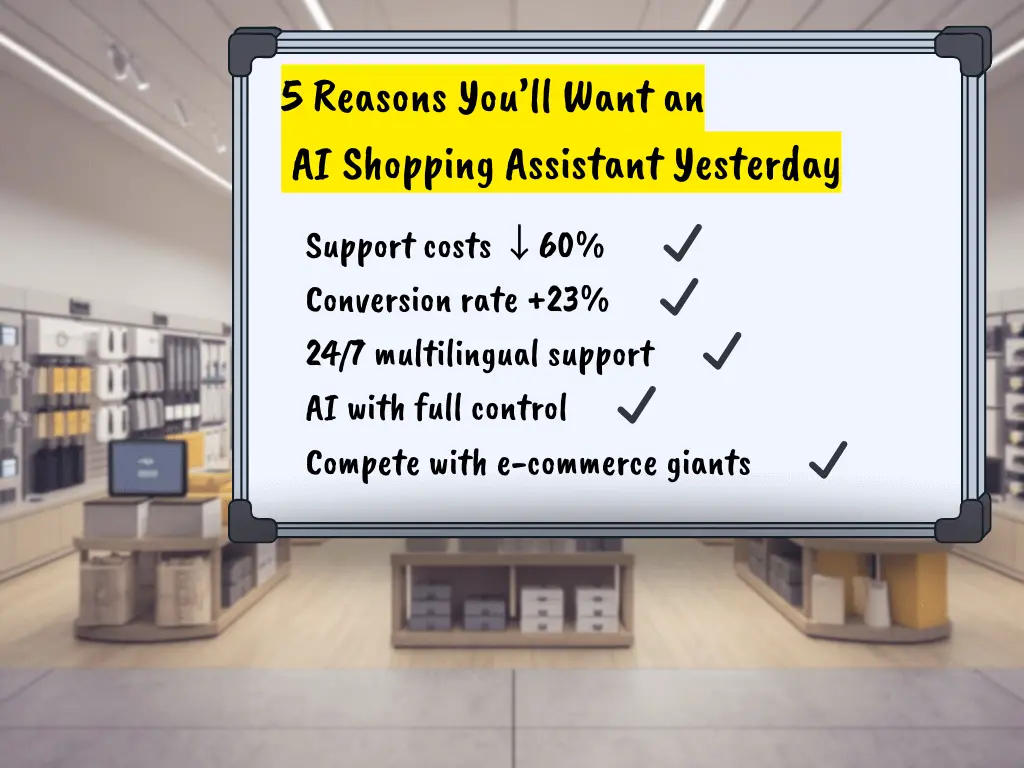
“We should implement this freaking AI ASAP!”
If that’s the vibe in your e-commerce meetings, you’re not alone. AI shopping assistants are popping up everywhere, but the real question isn’t “Should we use AI?” It’s “What business results will it actually bring?”
AI in e-commerce goes far beyond basic chatbots. Today, brands use AI to write product descriptions, generate images, personalize recommendations, and guide shoppers through the entire buying journey. And shoppers are already getting used to it – 31.4% of retailers use AI-driven chatbots to engage customers (SellersCommerce).
So what exactly is an AI shopping assistant? In short, it’s an virtual assistant powered by generative AI that helps customers find the right products faster, answers their questions in real time, and automates a big chunk of your support without hiring more agents or extending your working hours.
So should your business adopt one too? Let’s break down why e-commerce brands are rushing to AI shopping assistants and how they impact support costs, conversion rates, and customer experience. So next time AI comes up in your team meeting, you’ll actually have something to say. Ready?
What Is an AI Shopping Assistant? (Definition + Examples)
An AI shopping assistant is an AI-powered chatbot that helps customers during the online shopping process by giving real-time support, answering questions instantly, and providing personalized product recommendations based on their intent and browsing history. Unlike old scripted bots, modern virtual shopping assistants use natural language processing and generative AI to understand what shoppers mean, not just what they type.
They improve the entire shopping experience by guiding users, reducing friction, and increasing the conversion rate with fast and accurate responses.
Ever wished your online store had a colleague who never sleeps, never takes coffee breaks, never calls in sick, and knows your entire product catalog? Well, that’s exactly what an AI shopping assistant does.
These AI-powered chatbots:
- provide real-time support (no more “We’ll get back to you during business hours” messages).
- work across multiple platforms (ecommerce website, WhatsApp, Messenger, you name it).
- Guide customers or recommend products
- Handle support queries, freeing up your team to focus on bigger tasks.
AI shopping assistants can:
- provide real-time support across multiple channels
- recommend products using customer data and browsing behavior
- answer questions about product details, returns, or order tracking
- personalize the shopping experience for every visitor
- automate customer support freeing up your team to focus on bigger tasks.
How AI Shopping Assistants Work
Before we dive into the tech, it’s important to understand one thing: AI shopping assistants don’t work like old-school chatbots. Not even close.
Traditional bots rely on rule-based scripts. If a customer doesn’t use the exact keyword the bot expects (“refund,” “order status,” “size guide”), the conversation breaks. It’s the kind of interaction that makes customers spam “TALK TO A HUMAN” and abandon their carts.
Modern AI shopping assistants are built on machine learning, natural language processing and generative AI, which means they actually understand meaning, not just words. Instead of rigid decision trees, an AI-powered chatbot interprets context, tone, typos, and even follow-up questions just like a real salesperson would.
To make the difference even clearer, here’s how AI shopping assistants compare to traditional chatbots and human agents:
AI Shopping Assistant vs Legacy Chatbot vs Human Agent
| Feature / Capability | AI Shopping Assistant | Legacy Chatbot | Human Agent |
|---|---|---|---|
| Understands natural language | ⭐ Yes – interprets intent, context, typos | ❌ No – keyword-based only | ⭐⭐ Yes |
| Provides personalized product recommendations | ⭐ Yes – uses product data & behavior | ❌ No personalization | ⭐⭐ Yes, but slower |
| Real-time support (instant responses) | ⭐ Instant, 24/7 | ⭐ Instant, but limited | ❌ Depends on availability |
| Handles complex questions | ⭐ Good, learns over time | ❌ Very poor | ⭐⭐ Excellent |
| Scalability (100+ conversations at once) | ⭐ Unlimited | ⭐ Limited | ❌ Not possible |
| Consistency of responses | ⭐ High – same quality every time | ❌ Inconsistent, often wrong | ❌ Varies by agent |
| Cost efficiency | ⭐ Very high | ⭐ High | ❌ Most expensive |
| Multilingual support | ⭐ 50+ languages | ❌ Usually 1–2 | ❌ Requires multilingual team |
| When it works best | Product guidance, support automation, conversions | Simple FAQs | Complex cases needing human empathy |
| Main limitations | Needs training + structured data | Can’t understand real questions | Limited availability, high cost |
How AI Shopping Assistants Work Behind the Scenes
When a customer asks a question, the AI (powered by large language model like GPT or Claude) analyzes intent, browse through your product listings, retrieves the right product specs, compares options, and generates a personalized recommendation in real time. Instead of matching rigid keywords, the assistant processes context, behaviour, and customer data to deliver a smoother, more intuitive shopping experience across any channel.
Because these assistants use generative AI, they can handle everything from FAQs and order tracking to product recommendations and conversational commerce, ultimately boosting customer engagement and improving conversion rates without overwhelming your human support team.
So, Are They Better Than Live Agents?
Yes and no. AI doesn’t replace humans. It gives them superpowers. AI agents handle repetitive questions freeing up human teams for more difficult issues improving customer experience with fast and right answers.
📌 Curious how they work in action? Check out The Best AI Chatbots for E-Commerce in 2025.
And now, let’s dive into why e-commerce brands are adopting AI shopping assistants faster than you can say ‘abandoned cart’.
Benefits of AI Shopping Assistants for E-commerce
#1: Reduced Customer Support Costs
Customer service is one of those necessary evils in e-commerce. It’s essential for keeping customers happy, but it’s also expensive, time-consuming, and often a logistical nightmare - and it only gets worse when your business scales.
Hiring, training, and retaining support agents costs a fortune, and when demand spikes (think Black Friday chaos or holiday sales), businesses either scramble to hire temporary agents who barely know their way around a refund policy or risk losing customers due to long waiting times.
How AI Shopping Assistants Slash Support Costs
AI shopping assistants completely change the game. Instead of hiring more customer support staff (only to still get angry emails at 3 AM), businesses can:
- Save money without sacrificing service - AI automates up to 65% of e-commerce customer support inquiries (IBM).
• Stop scrambling for holiday hires - AI doesn’t leave you after Black Friday.
• Slash response times - no more “we’ll get back to you in 48 hours” (a.k.a. “never”).
• Let human agents handle REAL problems - instead of answering, “Where’s my order?” for the 500th time today.
Can AI Shopping Assistants Replace Live Agents?
Not exactly, but they make human teams way more efficient. virtual shopping assistants take over repetitive, low-value tasks like order tracking, answering FAQs, and basic product recommendations. Instead of spending their time answering the same five customer questions over and over, live agents focus on the cases that need a human touch instead of copy-pasting the same answers all day.
Is AI Cheaper Than Hiring a Customer Support Team?
Absolutely! Hiring just one additional full-time support agent can cost $20,000-40,000 per year, and that doesn’t include benefits, training, or additional hires for peak seasons. AI shopping assistants, on the other hand, scale instantly at a fraction of the cost—handling hundreds of conversations simultaneously without requiring salaries, breaks, or overtime pay.
The results speak for themselves. Businesses using AI-driven chatbots have reported 30-65% lower support costs while maintaining or even improving customer satisfaction (Juniper Research).
📌 Want to cut your support costs without sacrificing quality? Learn how AI-powered automation can transform your business: 5 Under-the-Radar Techniques to Maximize Call Center Savings
#2: Increased Sales With Personalized Product Recommendations
Ever walked into a store, wandered around aimlessly, and left because no one helped you find what you needed? Online shopping can feel the same except there’s no helpful employee to ask, “Hey, do you need some help?”
If customers can’t find what they need fast, they’re out. And unlike a physical store, they’re not just walking out the door. They’re clicking straight to your competitor’s site.
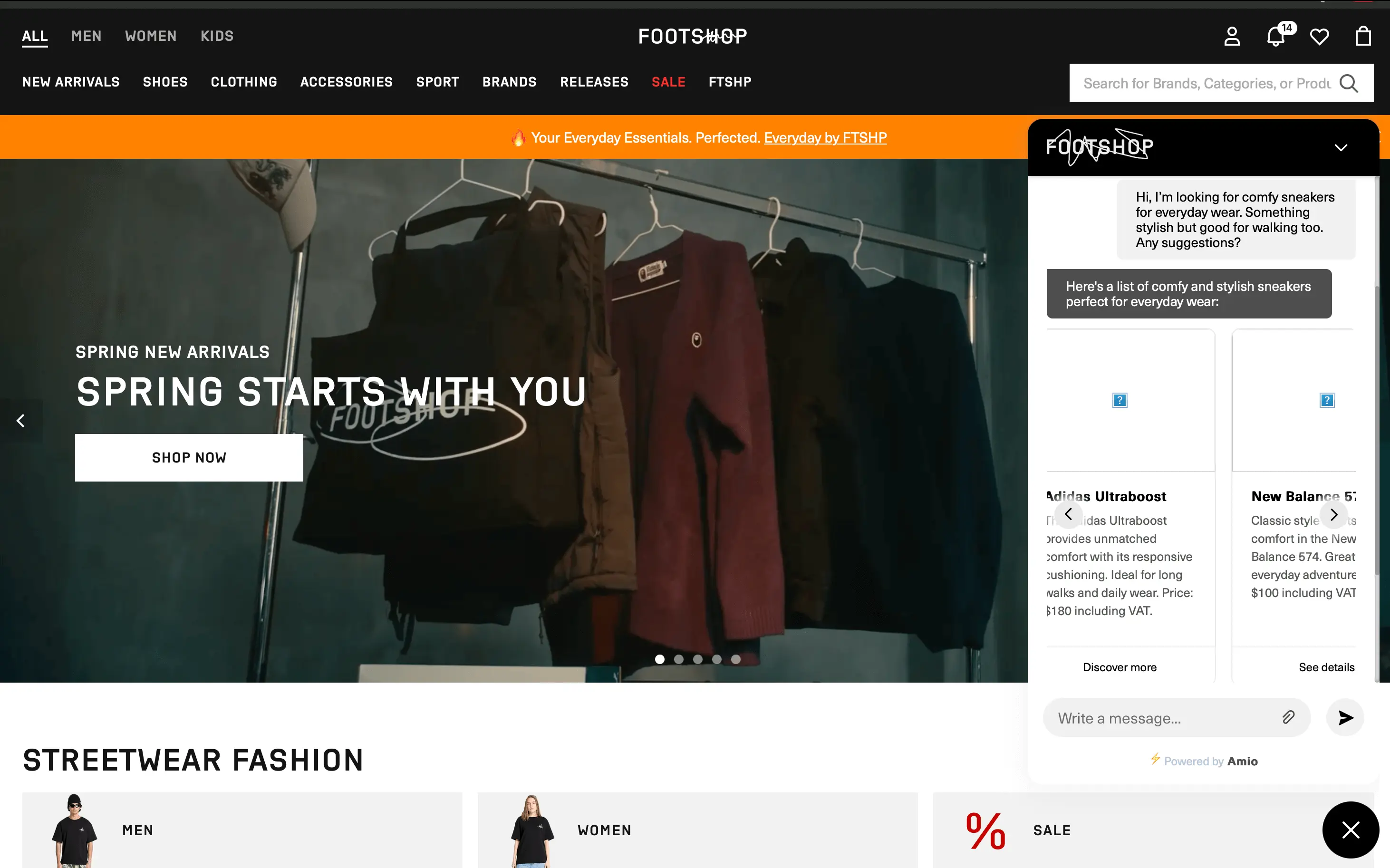
But imagine this: A customer lands in your store looking for the perfect laptop. Instead of wasting time scrolling endlessly through every laptop ever made, they simply ask, “I need a lightweight laptop for work and travel with a long battery life. Any suggestions?”
Within seconds, an AI shopping assistant:
- analyzes your whole product feed and retrieves product data
- considers customer preferences, such as budget, brand, and features
- suggests three top-rated options, ensuring the customer gets exactly what they need
They pick one, add it to their cart, and check out all without hesitation.
Rather than spending 20 minutes scrolling, a shopper gets instant, personalized recommendations tailored to their budget, style, and specific needs.
And guess what? Shoppers love it. Studies show that 80% of consumers expect brands to personalize their shopping experience (Epsilon), and those that do see higher conversion rates and bigger orders.
E-Commerce’s Secret Weapon? AI-Powered Shopping Assistants
Still not convinced? Brands using AI commerce experience have seen conversion rates increase by 23% (Glassix), simply by keeping shoppers engaged, answering their questions instantly, and eliminating any confusion before it leads to an abandoned cart.
📌 Want to see how AI can supercharge your store’s sales? Check out How to Increase E-Commerce Conversion Rates with a Chatbot.
And the best part?
#3: 24/7 Real-Time Support in 50+ Languages
Ever tried calling customer support at midnight, only to get a “We’re closed. Try again tomorrow” message? E-commerce doesn’t sleep, and neither do customers. Whether they’re shopping at 2 AM in Tokyo or during lunch in New York, they expect immediate answers, not an automated message saying, “We’ll get back to you during business hours.”
For international brands, this is a nightmare. Customers expect instant answers, in their language, at any time of day, but hiring a full team of multilingual support agents, across every time zone, would cost more than your marketing budget for the next five years.
AI Shopping Assistants Speak 50+ Languages
If you don’t want to just hope your customers will figure things out with Google Translate, AI shopping assistants are here to save the day. This solution provides instant, real-time support in multiple languages without ever needing a break.
For example, AMIO’s AI assistant currently supports over 50 languages and can seamlessly switch between them based on the customer’s preference.
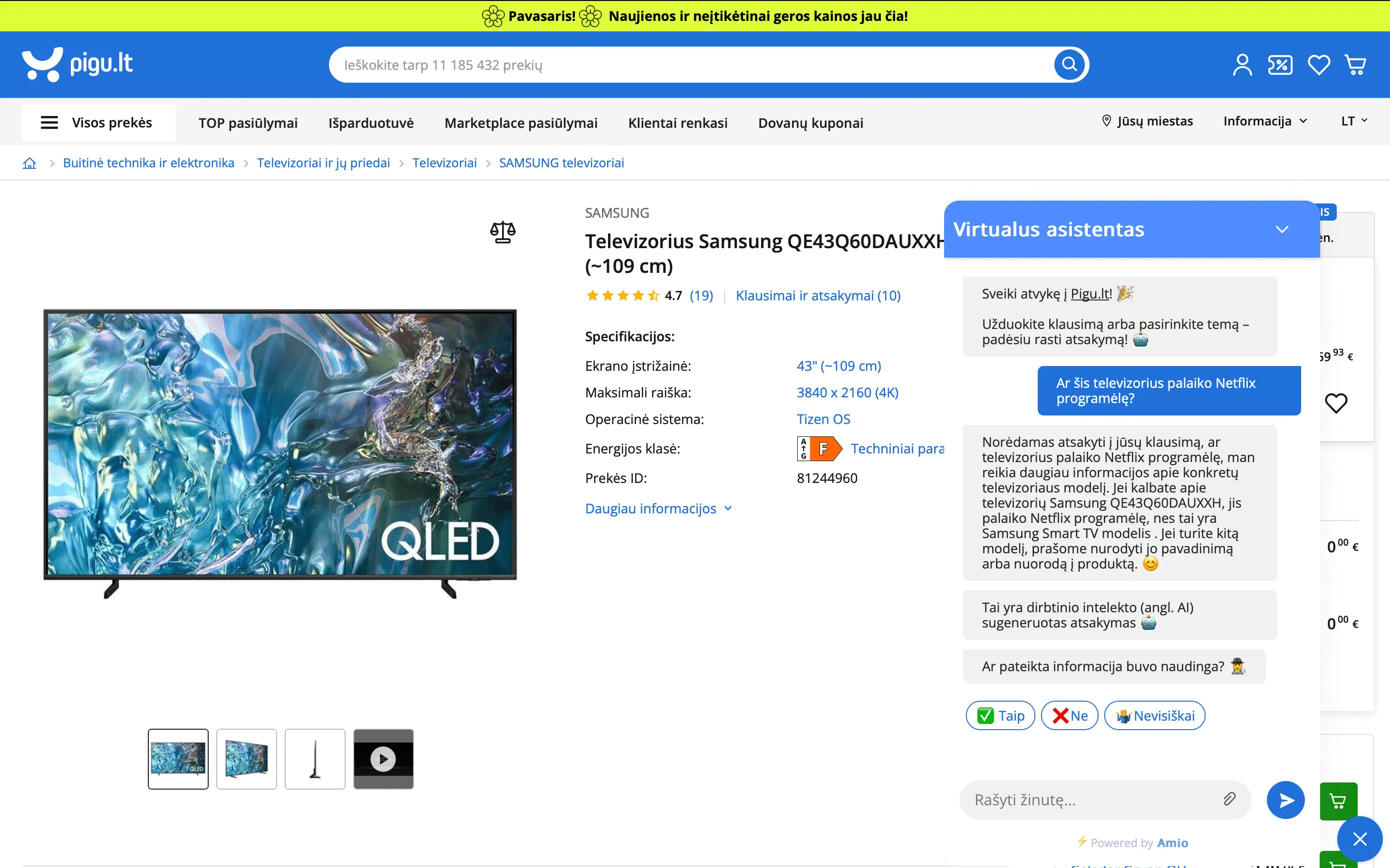
Even better? AI doesn’t just translate, it understands. Unlike those outdated clunky translation tools that turn “I need running shoes” into “I require jogging feet covers”, AI-powered assistants process context, slang, and even regional dialects. That means whether your customers are in Paris, São Paulo, or Seoul, they get a smooth, native-like response.
AI Chatbots Deliver Instant Support
It’s also about speed and availability. Speed isn’t just nice. it’s expected. Customers don’t like waiting. In fact, 75% of consumers expect immediate responses when they contact a business online (Forbes). If your store doesn’t answer fast enough, shoppers won’t wait. They’ll move on, and you’ll lose the sale.
“75% of consumers expect immediate responses when they contact a business online.” - Forbes
AI chatbots eliminate that risk. Unlike live chat, where customers are stuck staring at a spinning “We’ll be with you shortly” message, AI-powered assistants respond instantly, no matter how many inquiries come in at once.

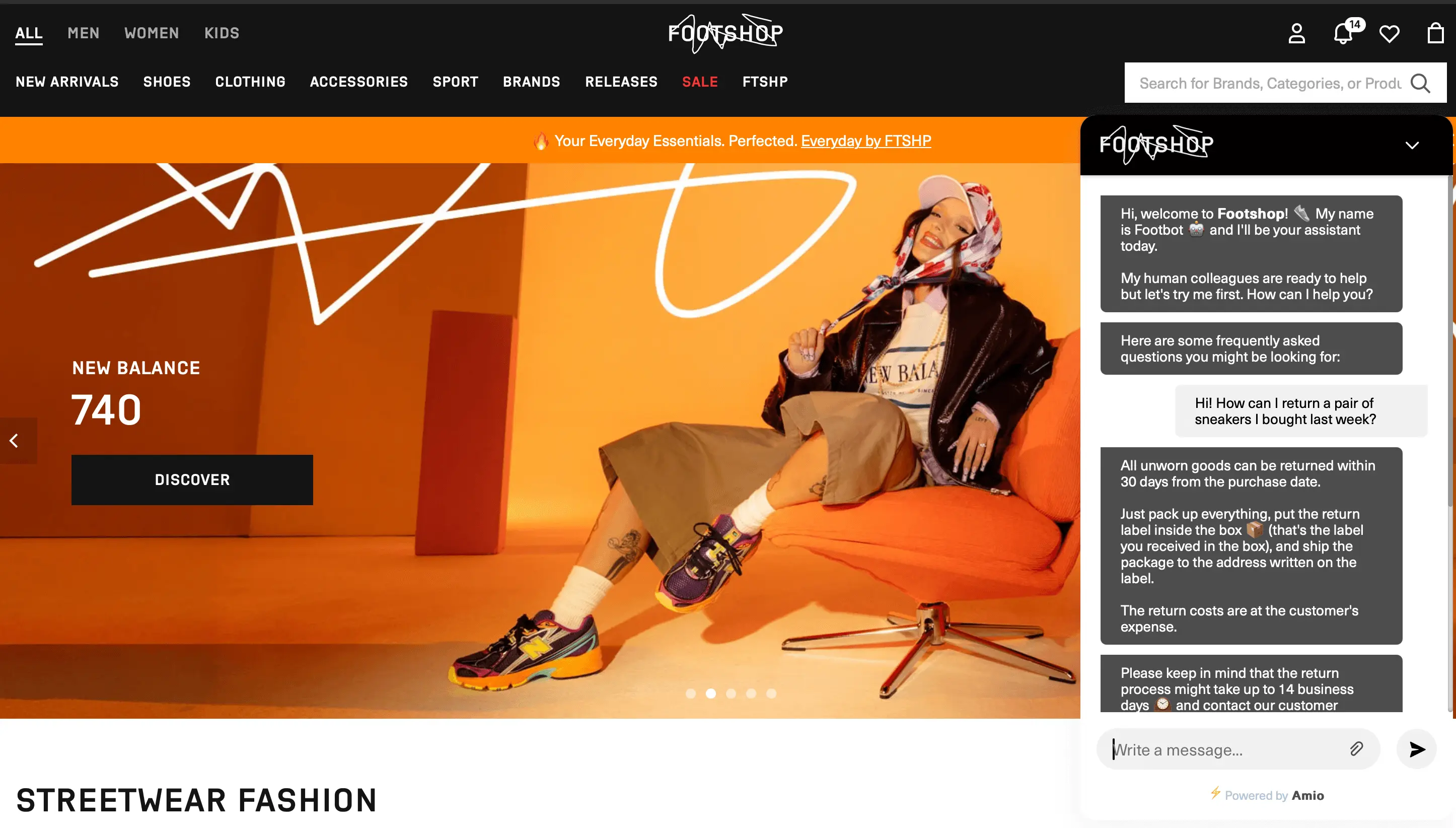
📌Still not convinced? See how AI shopping assistants helped Footshop, an international e-commerce brand, expand globally without hiring multilingual agents. Chatbot for Footshop in 14 languages
Why E-Commerce Brands Are Adopting AI Shopping Assistants
Remember the beginning of this article? That moment when we asked if AI shopping assistants are your destiny or just another tool? By now, the answer should be clear.
E-commerce is a battlefield and customers expect instant answers, personalized recommendations, and seamless experiences and they don’t care whether that comes from a human or an AI. If your store isn’t keeping up, they’ll find one that is.
AI shopping assistants step in where human teams can’t delivering speed, efficiency, and personalized experiences at scale.
And no, AI shopping assistants aren’t just for e-commerce giants like Amazon or Walmart. You don’t need a billion-dollar budget to give customers lightning-fast responses and personalized shopping experiences. Mid or small sized brands are using AI to punch above their weight without hiring an army of support agents or investing millions in tech.
AI Is the Future of E-Commerce
E-commerce is changing fast and the brands that leverage it now will be the ones leading the future. And businesses that hesitate? They’ll watch from the sidelines as their competitors speed ahead.
But here’s the good news. You don’t have to figure it out alone. We can show you exactly how AI shopping assistants can work for your business, with a clear strategy designed just for you. Don’t wait until your competitors have the edge.
📌Book a free demo and get a personalized AI strategy for your store.
FAQ: Everything You Need to Know About AI Shopping Assistants
1. What is an AI shopping assistant?
An AI shopping assistant is an AI-powered chatbot that helps customers during the buying journey by answering questions instantly, offering personalized product recommendations, and guiding shoppers just like a real sales associate. It uses natural language processing and generative AI to understand customer intent—not just keywords—making the entire shopping experience faster, smoother, and more intuitive.
2. How do AI shopping assistants improve conversion rates?
By answering questions instantly, eliminating confusion, and guiding customers to the right products. AI-powered recommendations alone can boost conversions by 20–30% (Glassix) because shoppers get exactly what they want in seconds.
3. How can I integrate an AI shopping assistant into my online store?
Most AI assistants connect directly to your e-commerce platform (Shopify, WooCommerce, Magento) and your product feed. In most cases, you simply enable API access to your e-commerce platform and drop in your product feed link. Unless you’re building a heavily customized experience, setup takes few minutes.
4. What are the key benefits of using AI in online shopping?
AI helps brands:
- reduce customer support costs
- offer 24/7 real-time support
- personalize product recommendations
- increase average order value
- automate repetitive tasks
- scale without hiring dozens of agents
It’s the fastest way to improve customer engagement without inflating your operational costs.
5. Are AI shopping assistants only for big brands like Amazon?
Not at all. Even small and mid-sized e-commerce stores can use AI to automate support, recommend products, and offer 24/7 multilingual support without hiring extra staff. AI levels the playing field between small businesses and giants.
6. Do AI shopping assistants replace human agents?
No, they complement them. AI handles repetitive questions, product lookups, sizing, order tracking, and pre-purchase guidance. Humans step in for complex issues, refunds, escalations, and anything requiring empathy.
7. What types of questions can AI shopping assistants answer?
Everything from product details, stock availability, sizing, compatibility (“will this work with my TV?”), delivery times, returns, store policies, order tracking, and even gift recommendations.
8. Which platforms support AI shopping assistants?
Most major platforms:
- Shopify
- WooCommerce
- Magento
- BigCommerce
- Custom stores
- Gorgias / Zendesk / Intercom
- WhatsApp, Messenger, Instagram, webchat
AI can live anywhere your customers shop or chat.
Table of Contents
Start building AI chatbots with Amio.
Book a 30-minute session where we will find out how AI bot can help you decrease call center costs, increase online conversion, and improve customer experience.
Book a demoWhat is Amio?
We understand your business on
Book a 30-min consultation session where we will discuss your support cost optimization potential, experience improvements, including our online conversion increase techniques
Request a demo