

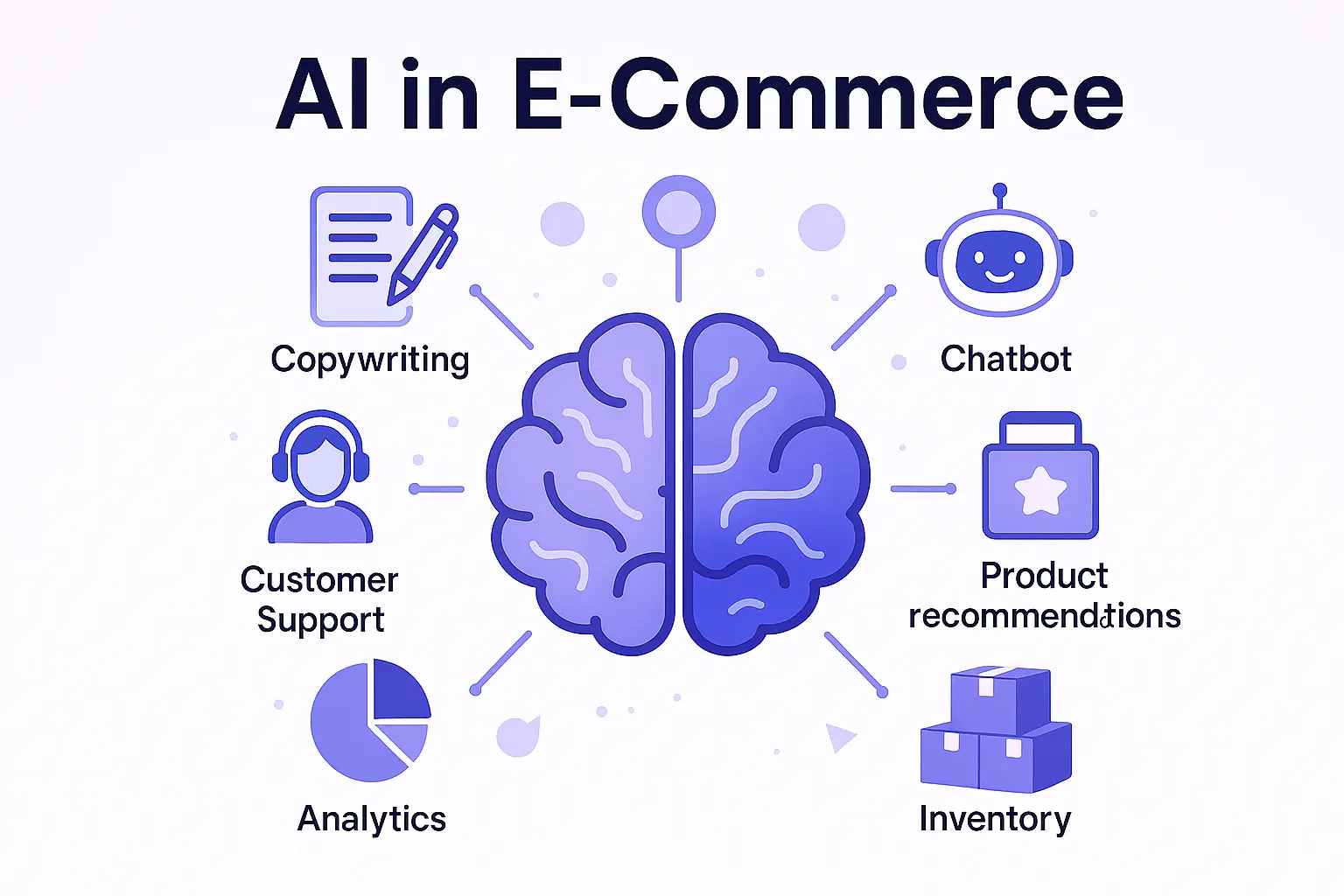

Necessary cookies help make a website usable by enabling basic functions like page navigation and access to secure areas of the website. The website cannot function properly without these cookies.
AI in E-commerce (2026): Everything You Need to Know
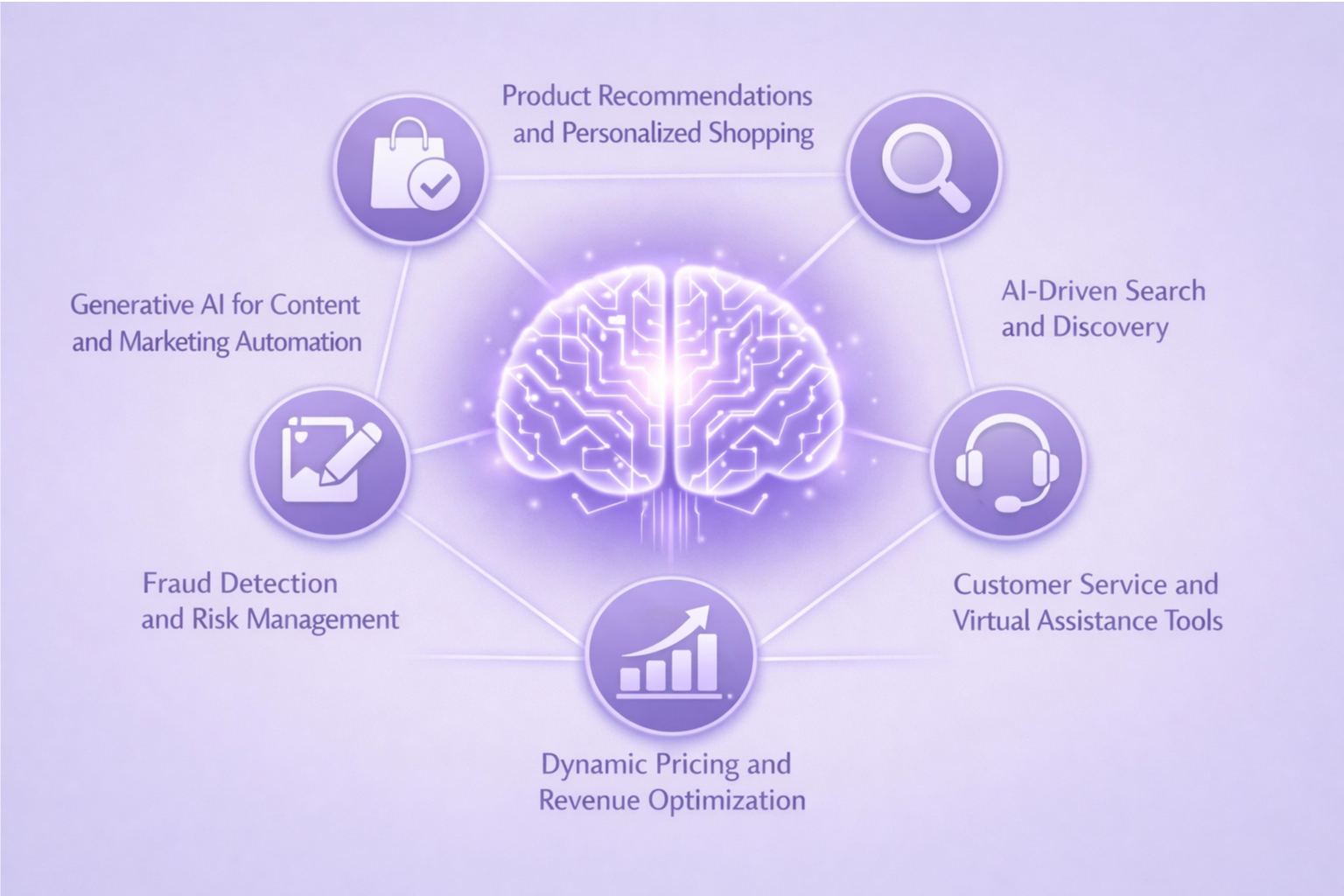
As we have said many times before, AI has now turned into a core part of how e-commerce businesses attract customers, personalize shopping experiences, optimize operations, and scale efficiently.
From product recommendations and customer service automation to supply chain management and fraud detection, AI is now embedded across the entire e-commerce lifecycle. Advances in machine learning, generative AI, and large language models have pushed digital commerce beyond basic automation into intelligent, adaptive systems that continuously learn from customer data and user interaction.
In this article, I’ll break down the most impactful use cases with real examples, outline the key business benefits, look at the most important AI e-commerce trends, and address the challenges e-commerce businesses face when adopting AI at scale.
What is AI in E-commerce?
AI in e-commerce refers to the use of artificial intelligence technologies, such as machine learning, natural language processing, computer vision, and generative AI models, to improve decision-making, automate tasks, and deliver personalized shopping experiences across online retail environments.
At a practical level, AI systems analyze large volumes of data, including purchase history, search queries, customer preferences, demographic data, ratings and reviews, and real-time behavior. AI algorithms then use predictive analytics and pattern recognition to recommend products, optimize pricing, improve search and discovery, and support customer care.
Modern e-commerce AI goes beyond rule-based automation. Today’s systems rely on recommendation systems, reinforcement learning, semantic search, and autonomous engines that adapt continuously based on new data signals. This shift is what allows e-commerce sites to deliver relevant, personalized offers at scale while improving operational efficiency.
Core AI Use Cases in E-commerce
I have already talked about some of the use cases of AI in e-commerce here, but here is an updated list.
1. Product Recommendations and Personalized Shopping
Product recommendations remain one of the most valuable AI use cases in e-commerce. AI-powered recommendation systems analyze purchase history, customer preferences, browsing behavior, and user interaction to suggest products that are most likely to convert.
Unlike traditional “related products” logic, modern AI algorithms dynamically adapt recommendations in real time. They factor in contextual signals such as device type, time of day, location, and even current demand trends.
You may have noticed the "just for you" or "recommendation for you" pages in shops like Zalando or Birkentocks; these systems consistently contribute to higher average order value, improved customer retention, and more personalized experiences across e-commerce sites.

Personalized shopping powered by AI is now an expectation, not a competitive advantage. Customers increasingly expect online retail experiences to feel relevant from the first interaction.
2. AI-Driven Search and Discovery
Search and discovery is another area where AI has reshaped e-commerce performance. Traditional keyword-based search engines struggle with vague queries, synonyms, and natural language phrasing.
AI-powered semantic search uses natural language processing, named entity understanding, and search terms analytics to interpret user intent rather than just matching keywords. This allows e-commerce businesses to deliver more accurate results even when customers use incomplete or conversational search queries.
Here is a guide that might help you while implementing AI for product discovery.
Visual search and voice assistants are also becoming part of search and discovery strategies, especially as mobile commerce and social commerce platforms continue to grow. For example, customers on Vinted can now upload pictures of items they like and get the closest recommendations.

3. Customer Service and Virtual Assistance Tools
AI has transformed customer service in e-commerce by enabling scalable, always-on support. Virtual shopping assistants and AI chatbots handle a growing share of customer care interactions, from order status and delivery scheduling to product guidance and returns.
Modern customer service AI relies on large language models and natural language processing rather than scripted flows. These systems understand intent, context, and sentiment, allowing them to resolve complex issues or escalate seamlessly to human agents.
Virtual assistance tools reduce response times, improve customer satisfaction, and free up support teams to focus on higher-value interactions. For e-commerce businesses operating globally, AI-powered customer service also enables multilingual support without proportional cost increases.
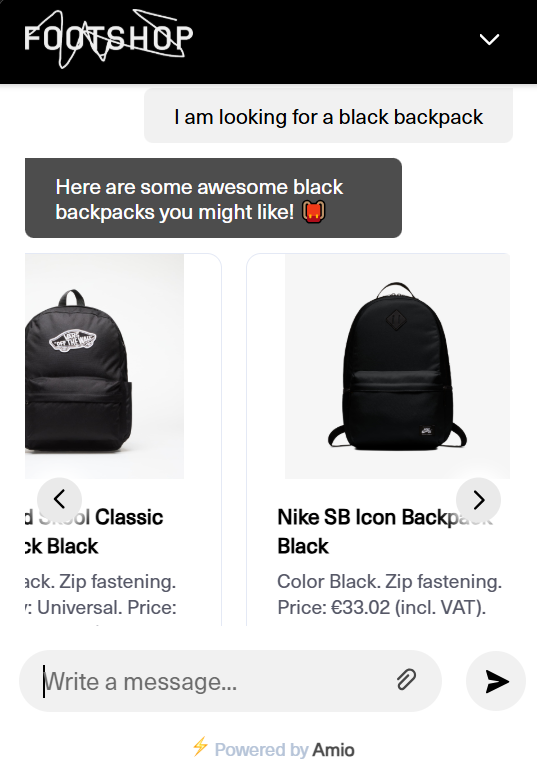
Footshop, for example, uses Amio-powered AI chatbots to answer repetitive questions, give recommendations, and direct customers.
4. Dynamic Pricing and Revenue Optimization
Dynamic pricing uses AI algorithms and predictive modelling to adjust prices in real time based on demand, competition, inventory levels, and customer behavior.
In online retail, pricing decisions directly impact margins and conversion rates. AI systems continuously analyze market signals and digital transactions to recommend optimal price points. Some platforms apply personalized offers based on customer loyalty, purchase history, or sensitivity to price changes.
Amazon is the most well-known example of dynamic pricing in e-commerce. Product prices can change multiple times per day based on factors such as demand, competitor pricing, inventory levels, purchase history trends, and even time of day.
Dynamic pricing is especially relevant for high-volume e-commerce businesses, marketplaces, and ultra-low-cost marketplaces where small pricing changes can significantly affect profitability.
5. Fraud Detection and Risk Management
Fraud detection is one of the most mature AI applications in e-commerce. AI systems analyze transaction patterns, IP address data, device fingerprints, and behavioral signals to detect suspicious activity in real time.
Unlike rule-based systems, AI-driven fraud detection adapts as fraud tactics evolve. Machine learning models continuously retrain themselves using new data, reducing false positives while maintaining strong protection against fraudulent digital transactions.
For example, Shopify uses this technology. While Shopify is a platform, the individual e-commerce businesses running on Shopify benefit directly from AI-driven fraud detection during checkout.
Shopify’s systems analyze hundreds of signals, such as order velocity, mismatched locations, device behavior, and payment history, to assign risk scores to transactions. High-risk orders are flagged automatically, helping store owners prevent chargebacks without manual review.

For e-commerce businesses, effective fraud detection protects revenue, preserves brand control, and improves trust during checkout.
6. Generative AI for Content and Marketing Automation
Generative AI has rapidly expanded its role in e-commerce, particularly in content creation and marketing automation.
E-commerce teams use generative AI models to:
- Create product descriptions and listing optimisation (copywriting)
- Generate category page content for SEO
- Automate email marketing and lifecycle campaigns
- Support website design
For example, Shopify Magic, is a built in AI that helps shop pwners with writing, editing, and translating descriptions, headlines and more by learning the brand voice.
When combined with customer data and behavioral insights, generative AI enables more relevant messaging while significantly reducing content production time.
Benefits of AI for E-commerce Businesses
Adopting AI delivers measurable benefits across both revenue growth and operations:
Higher conversion rates through personalized experiences and intelligent recommendations
For example, Netflix recommends movies and TV series to viewers based on patterns of watching and preferences derived from AI methods. More than 80% of what people watch on Netflix is a recommendation.
Improved customer retention driven by relevant interactions and better customer care
Increased operational efficiency by automating tasks across marketing, support, and logistics
For example, Footshop, achieved 33% cost reduction by leveraging a chatbot.
Scalability without proportional increases in headcount
For e-commerce businesses competing in crowded markets, AI is increasingly the difference between incremental growth and sustained competitive advantage.
Key AI E-commerce Trends to Watch
Agentic Commerce and AI Agents
Agentic commerce refers to AI agents that act autonomously on behalf of users or businesses. These agents can manage tasks such as product discovery, agentic checkout, and even post-purchase support with minimal human input.
Perplexity "Buy with Pro", can detects user intent; whether triggered by what someone is researching or by a direct query, it allows customers to buy directly from the Perplexity app.
Voice Assistants and Conversational Commerce
Voice assistants are becoming more integrated into e-commerce workflows, particularly for reorders, customer service, and smart device-driven purchases.
Do I even need to remind you. of "Hey Siri," or "Alexa?"
First-Party Data and Identity Resolution
As third-party cookies disappear, AI is essential for leveraging first-party databases, identity resolution, and customer data in a privacy-compliant way.
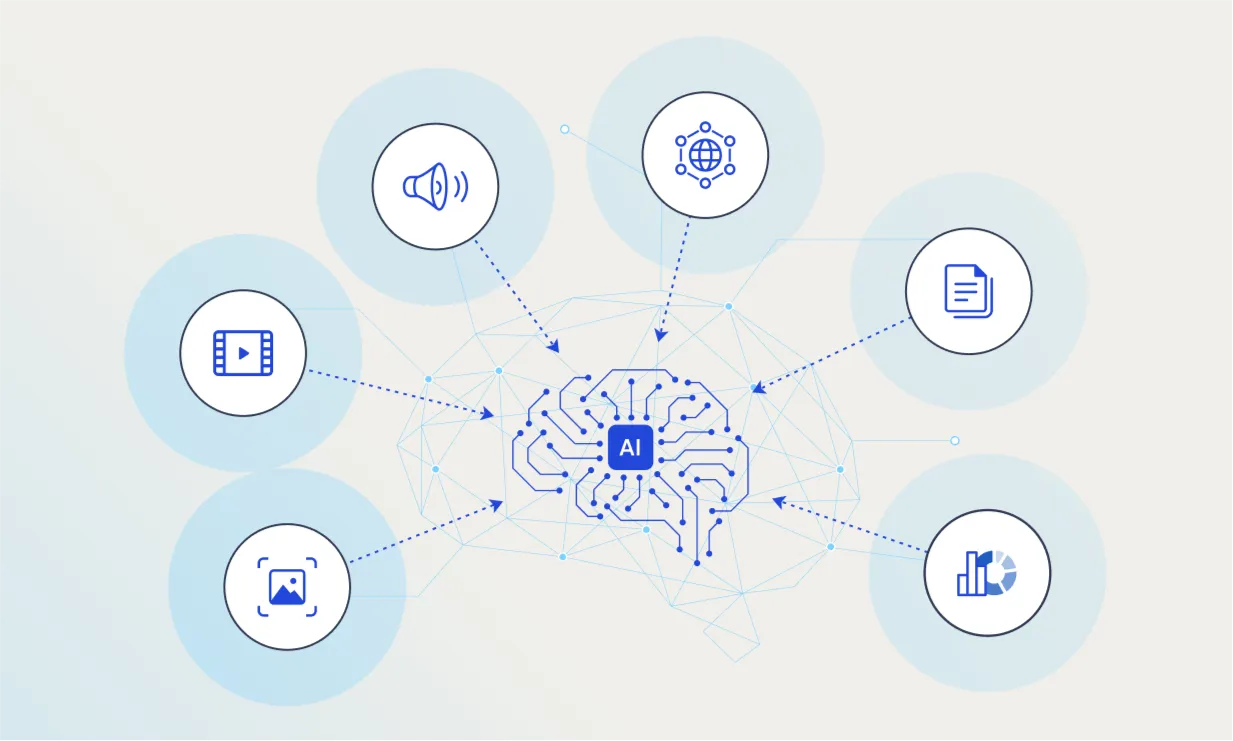
Multimodal AI
Combining text, voice, image, and behavioral data allows e-commerce platforms to create richer, more intuitive shopping experiences across channels.
Challenges of Implementing AI in E-commerce
Despite its benefits, AI adoption comes with challenges:
- Data quality and integration across fragmented systems
- Complexity of AI tools and vendor selection
- Measuring ROI beyond surface-level metrics
Check your chatbot ROI here!
- Brand control when automating customer interactions
- Skills gaps within internal teams
Successful AI implementation requires clear goals, high-quality data, and ongoing optimization rather than one-time deployment.
Conclusion
AI has become a foundational layer of modern e-commerce. From product recommendations and semantic search to supply chain optimization and agentic commerce, artificial intelligence is reshaping how e-commerce businesses operate and compete.
As AI algorithms, generative AI, and autonomous systems continue to evolve, the gap between AI-driven e-commerce businesses and those relying on manual processes will only widen. The most successful companies will be those that treat AI not as a standalone tool, but as a long-term capability embedded across the entire digital commerce stack.
Table of Contents
Start building AI chatbots with Amio.
Book a 30-minute session where we will find out how AI bot can help you decrease call center costs, increase online conversion, and improve customer experience.
Book a demoWhat is Amio?
We understand your business on
Book a 30-min consultation session where we will discuss your support cost optimization potential, experience improvements, including our online conversion increase techniques
Request a demo