
Necessary cookies help make a website usable by enabling basic functions like page navigation and access to secure areas of the website. The website cannot function properly without these cookies.
Customer Service Interview Questions That Prevent Bad Hires
Customer service interview questions are not just a hiring formality. For any hiring manager building a customer support or call center team, they are a risk filter. Weak support agents don't just struggle internally. They increase escalations, reduce customer satisfaction, and quietly hurt customer loyalty.
According to the Zendesk Customer Experience Trends Report, 70% of consumers say a positive support experience influences repeat buying decisions. That means every job interview decision directly impacts not only your customer satisfaction score but also revenue.
Here are a few customer service interview questions you’ll find inside this guide:
- “Tell me about a time you made a mistake with a customer. What did you do next?”
- “Write a three-sentence reply to an angry customer.”
- “When do you escalate an issue and when do you resolve it yourself?”
How to Use These Customer Service Interview Questions
Customer service interview questions in this article are organized by the support skills that actually predict performance in real customer interactions, not just in interviews.
Instead of generic behavioral interview questions, we focus on high-impact areas such as:
- Ownership and accountability
- Written communication skills (chat and email quality)
- Conflict resolution and emotional control
- Judgment under ambiguity
- Process thinking and prioritization
Use 2–3 customer service interview questions per skill area (10–15 total) in every job interview. The goal isn’t to hear polished stories but to detect real performance signals.
For each customer service interview question, we show you exactly:
- What a strong answer (2 points) sounds like (hire signal)
- What an acceptable answer (1 point) looks like (coachable)
- What a concerning answer (0 points) reveals (risk signal)
Score each answer from 0 to 2. If you hear a red flag, use the follow-up probe we will provide you with for each question to test depth instead of moving on.
At the end, review the total score:
- Mostly 2s → Hire
- Mix of 1s and 2s → Maybe (coachable)
- Multiple 0s or any serious red flag → No-hire
Print this table or keep it open during the interview. Score each answer in real time and let the total score, not gut feeling, guide your final decision.
| Question | 2 – Strong | 1 – Acceptable | 0 – Concerning |
|---|---|---|---|
| Skill 1: Ownership & Accountability | |||
| Q1 – Mistake with a customer | |||
| Q2 – Policy pushback | |||
| Q3 – Escalation criteria | |||
| Skill 2: Written Communication | |||
| Q4 – Angry customer reply | |||
| Q5 – Explain policy in plain English | |||
| Q6 – Case summary handoff | |||
| Skill 3: Judgment Under Ambiguity | |||
| Q7 – “It’s not working” | |||
| Q8 – Don’t know the answer | |||
| Q9 – Request outside policy | |||
| Skill 4: De-escalation & Emotional Control | |||
| Q10 – De-escalation process | |||
| Q11 – Escalate or not | |||
| Q12 – Threatened bad review | |||
| Skill 5: Strategic Thinking & Prioritization | |||
| Q13 – Repeat issue detection | |||
| Q14 – Multitasking prioritization | |||
| Q15 – 30-day improvement idea | |||
| FINAL SCORE SUMMARY — 2-point answers: ______ | 1-point answers: ______ | 0-point answers: ______ | |||
You won’t just have better interview questions. You’ll have a structured way to evaluate customer service candidates and reduce the risk of costly hiring mistakes.
Do you really need to hire another agent, or do you just need fewer repetitive tickets? If most of your customer support load comes from repetitive tickets like order status, returns, or basic product questions, customer service automation may reduce ticket volume before you add headcount. See our guide on customer service automation AI tools to explore how.
Customer Service Interview Questions by Skill
Skill 1: Ownership & Accountability Interview Questions
Ownership in customer support is like gravity. You don’t notice it when it’s there, but everything falls apart when it’s missing.
Ownership does not mean taking the blame for everything. It means taking responsibility for the outcome. A strong support agent focuses on solving the customer’s problem, not explaining why it wasn’t their fault.
Ownership directly impacts customer satisfaction score and first contact resolution. It is one of the strongest predictors of long-term performance in customer service representatives. Without it, communication skills and technical knowledge won’t protect your customer experience.
Top red flags in this area:
- Blaming other team members or departments
- Hiding behind policy without proposing next steps
- Escalating too quickly to a manager
- Speaking negatively about customers
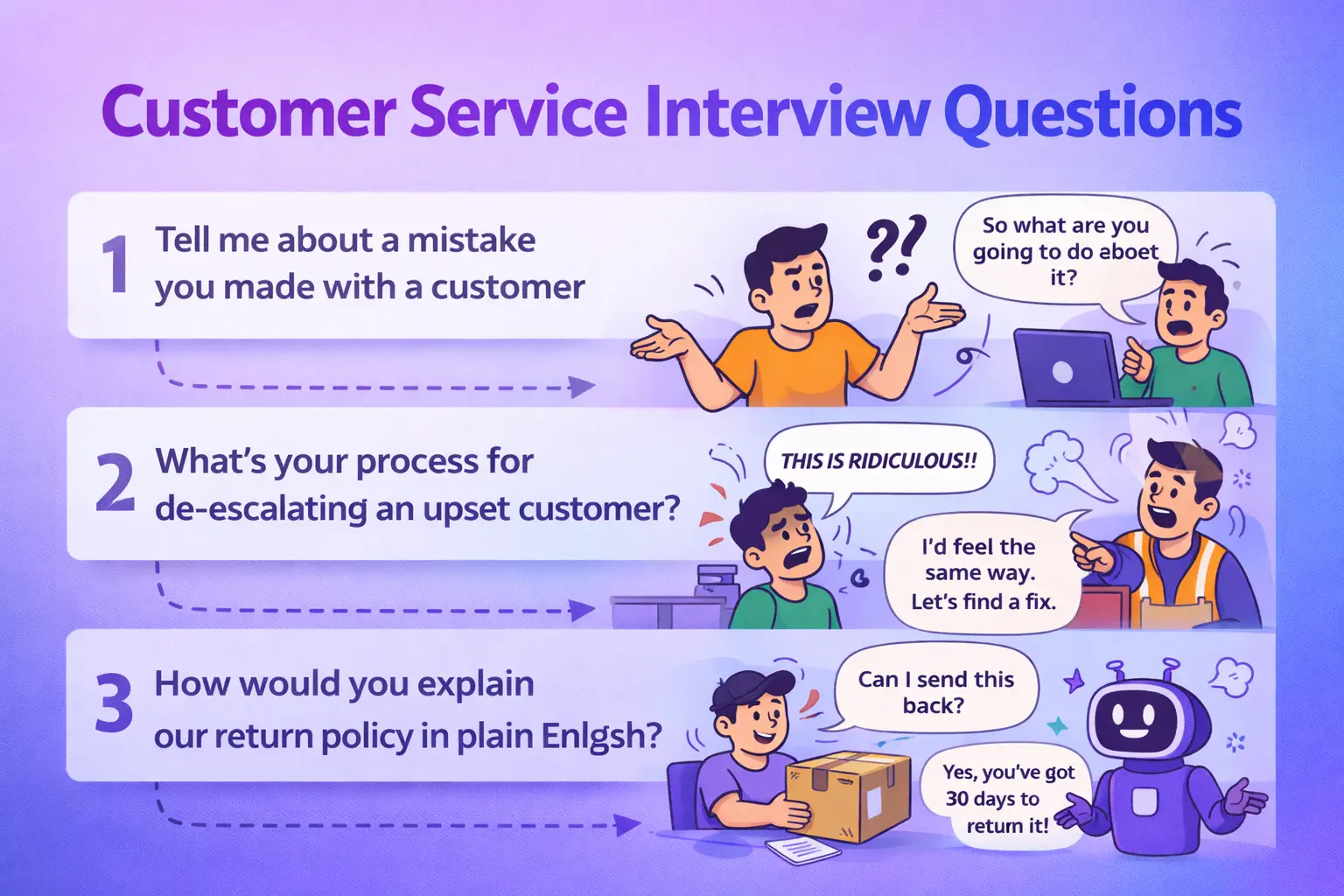
Question 1: “Tell me about a time you made a mistake with a customer. What did you do next?”
Strong answer (2 points): The candidate clearly admits the mistake, explains the impact on the customer, outlines the corrective action, and describes what they changed to prevent it from happening again. You hear ownership, structure, and learning.
Acceptable answer (1 point): They describe a mistake and how it was fixed, but there is limited reflection or no clear improvement step.
Concerning answer (0 points): They minimize the mistake, blame unclear instructions, a teammate, the system, or the customer. No accountability.
Suggested follow-up: “What did you change in your process afterward?”
Question 2: “A customer says your company policy is unfair. How do you respond?”
Strong answer (2 points): The candidate acknowledges the frustration, explains the policy calmly, and focuses on what can be done. They show conflict resolution skills without attacking the policy or the customer.
Acceptable answer (1 point): They explain the policy correctly but show limited empathy or flexibility.
Concerning answer (0 points): They hide behind policy, say “that’s just the rule,” escalate immediately, or imply the customer is wrong.
Suggested follow-up: “If the customer continues to push back, what would you do next?”
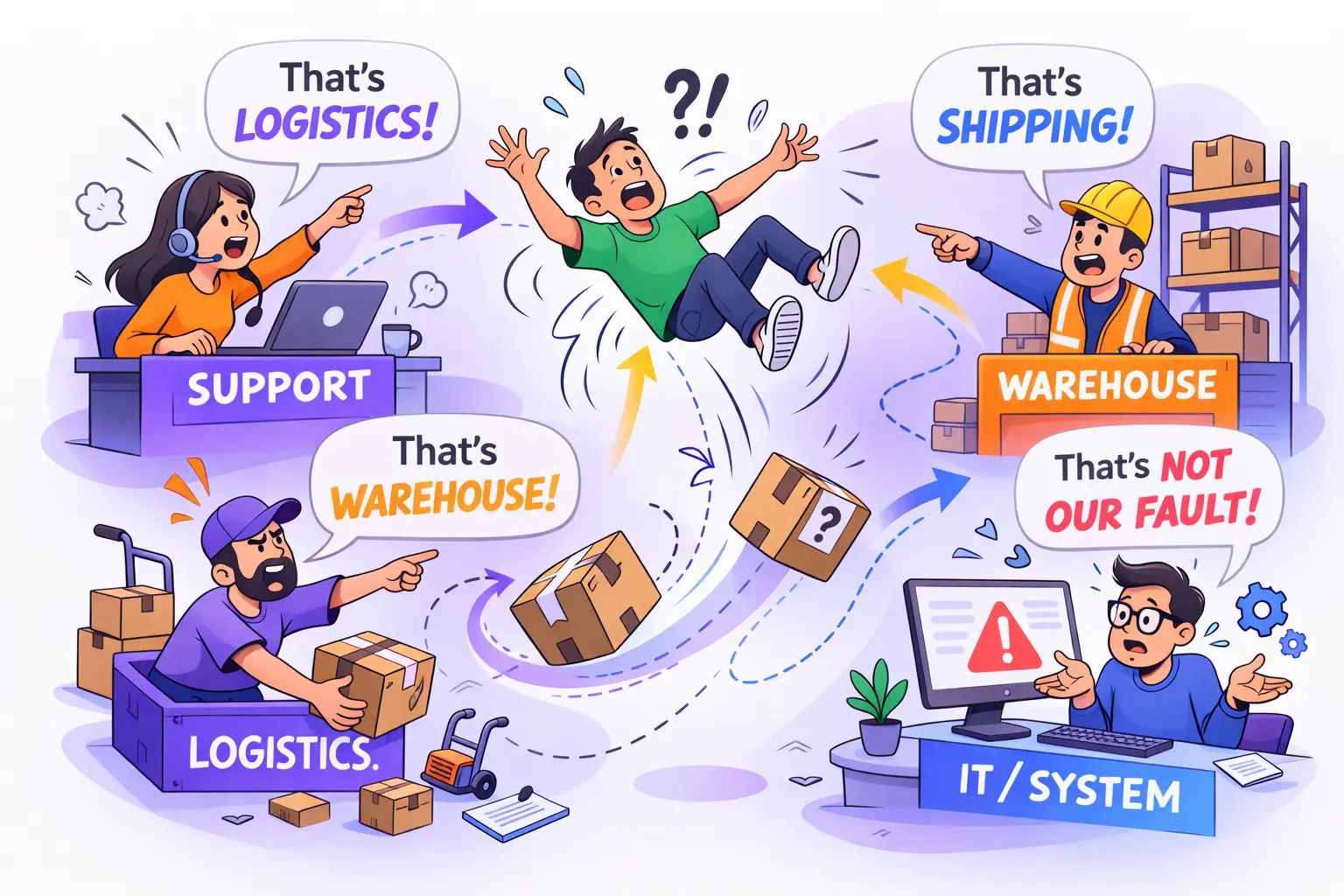
Question 3: “When do you escalate an issue to a manager?”
Strong answer (2 points): They describe clear decision criteria: policy limits, legal risk, customer abuse, or technical boundaries. They attempt resolution first when appropriate.
Acceptable answer (1 point): They escalate when unsure, but without structured criteria.
Concerning answer (0 points): They escalate quickly to avoid responsibility or never escalate even when necessary.
Suggested follow-up: “Can you give an example of a situation where you handled it yourself instead of escalating?”
Skill 2: Written Communication Interview Questions
In modern customer support, writing is the product. Most customer interactions happen over live chat platforms, social media, or email ticketing systems. Poor written communication directly lowers customer satisfaction.
Written communication is often underestimated in customer service interviews. But in reality, it determines response accuracy, resolution speed, and perceived professionalism. Even strong behavioral interview answers cannot compensate for weak writing in a modern customer support role.
Top red flags in this area:
- Long, unstructured responses
- Defensive or cold tone
- Copy-paste policy answers
- Overpromising just to calm the customer
- No clear next step
Question 4: “Write a 3-sentence reply to: ‘This is ridiculous. Where is my order?!’”
Strong answer (2 points): Acknowledges frustration, clearly states action taken (e.g., checking order status), provides a timeframe or next step, and stays calm and structured.
Acceptable answer (1 point): Polite but vague. Support candidate recommends no specific timeframe and no clear action. Tone is neutral but lacks structure.
Concerning answer (0 points): Defensive tone, blames shipping partner, uses jargon, or promises unrealistic compensation.
Suggested follow-up: “Rewrite your response in one sentence without losing clarity.”
Question 5: “Explain a company policy in plain English without copying the policy text.”
Strong answer (2 points): Clear, simple language. Structured explanation. Avoids jargon. Confirms understanding or offers alternatives. Focuses on what the customer can do.
Acceptable answer (1 point): Accurate but too long or slightly formal with limited customer-friendly phrasing.
Concerning answer (0 points): Reads like a legal document. Uses internal language. Invents exceptions. Hides behind policy.
Suggested follow-up: “How would you confirm the customer understood your explanation?”
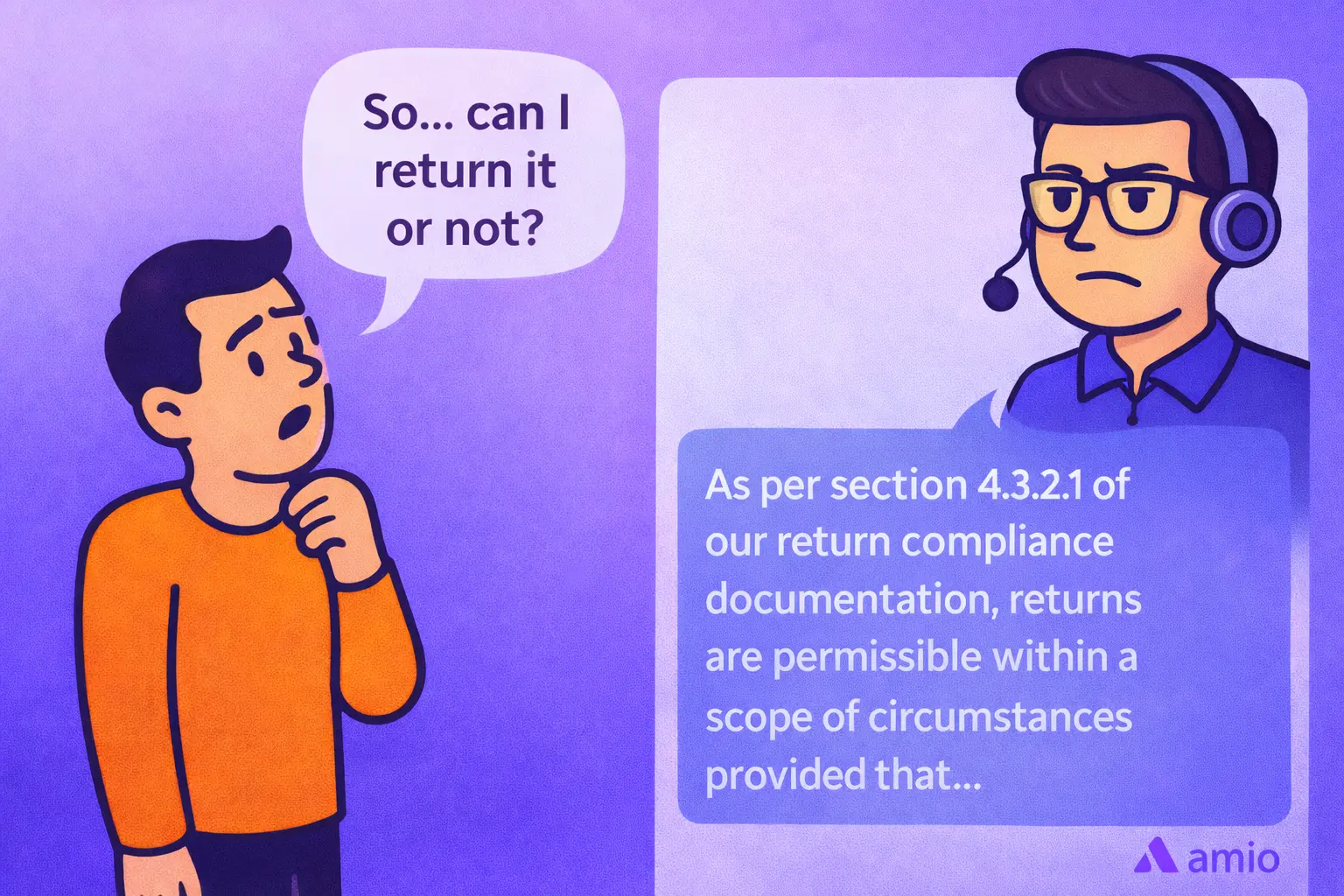
Question 6: “Summarize this customer case for a handoff in four bullet points.”
Provide a short fictional case during the interview with the issue, previous replies, customer tone, and current status.
Strong answer (2 points): Clear context, what has been done, what is pending, urgency level, and required next action. Structured and concise.
Acceptable answer (1 point): Mostly clear but missing one key element (e.g., urgency or next step).
Concerning answer (0 points): Messy, emotional, missing context, or unclear about what needs to happen next.
Suggested follow-up: “What should the next agent do first?”
Skill 3: Anti-Script-Only Thinking & Problem-Solving Interview Questions
Scripts are helpful until reality stops following them. In customer support, tickets are rarely perfectly described. Messages like “It’s not working” or “This makes no sense” are a daily reality. Strong customer service representatives don’t panic, guess, or hide behind scripts. They think.
Judgment under ambiguity separates high-performing support agents from script-dependent ones. In modern customer support, especially across live chat platforms and email ticketing systems, agents must interpret incomplete information safely and consistently.
Strong judgment under ambiguity directly impacts first contact resolution, response accuracy, and overall customer experience.
Top red flags in this area:
- Jumping to solutions without clarifying the problem
- Guessing instead of checking internal resources
- Making up answers to avoid saying “I don’t know.”
- Rigid script-only thinking
- Escalating because the situation is unclear
Question 7: “A customer says: ‘It’s not working.’ What do you do first?”
Strong answer (2 points): The candidate asks 2–3 targeted clarifying questions to narrow down the issue quickly. They focus on collecting the minimum information needed before proposing a solution. You hear structured thinking.
Acceptable answer (1 point): They ask a generic clarifying question (“Can you explain more?”) but without direction or structure.
Concerning answer (0 points): They immediately guess a fix, blame the user, or suggest escalation without investigation.
Suggested follow-up: “What’s the minimum information you need before taking action?”
Question 8: “What do you do when you don’t know the answer?”
Strong answer (2 points): The candidate describes a customer-safe response (“Let me check that for you”), verifies information through internal knowledge base, CRM software, or team members, and commits to a clear follow-up timeframe.
Acceptable answer (1 point): They ask someone internally, but cannot clearly articulate how they communicate uncertainty to the customer.
Concerning answer (0 points): They admit they sometimes guess. Or they say they “try to give something helpful” without verifying.
Suggested follow-up: “Write the exact sentence you would send to the customer.”
Question 9: “A customer requests something outside company policy. How do you respond without escalating?”
Strong answer (2 points): They acknowledge the request, clearly explain the boundary, offer alternative options, and define the next step.
Acceptable answer (1 point): They communicate the boundary correctly but provide weak alternatives.
Concerning answer (0 points): They either rigidly say “no” without options, break policy to please the customer, or escalate immediately.
Suggested follow-up: “Give me two alternative options you would offer.”
Skill 4: De-escalation & Conflict Resolution Interview Questions
Conflict handling directly impacts refunds, churn, negative reviews, and long-term customer loyalty. In customer support, emotional control is not about being passive. It’s about lowering tension while protecting company policy and guiding the customer toward resolution.
Emotional control in customer service interviews is often underestimated. But in real customer interactions, especially in live chat tools, call center environments, and email ticketing systems, it determines whether a situation ends in resolution or escalation.
Strong de-escalation skills reduce refunds, protect customer retention, and stabilize your support team under pressure.
Top red flags in this area:
- Arguing with the customer
- Mirroring the customer’s anger
- Over-apologizing without offering solutions
- Offering unauthorized compensation
- Escalating too quickly to avoid discomfort
Question 10: “Walk me through your de-escalation process.”
Strong answer (2 points): The candidate describes a clear structure: acknowledge emotion → clarify facts → provide options → confirm next step. They separate emotion from the problem and stay solution-focused.
Acceptable answer (1 point): They say “I stay calm and try to help,” but cannot describe a clear step-by-step approach.
Concerning answer (0 points): They argue back, try to “win” the conversation, shut down the customer, or rely entirely on escalation.
Suggested follow-up: “Give me one sentence you would use to lower the temperature immediately.”
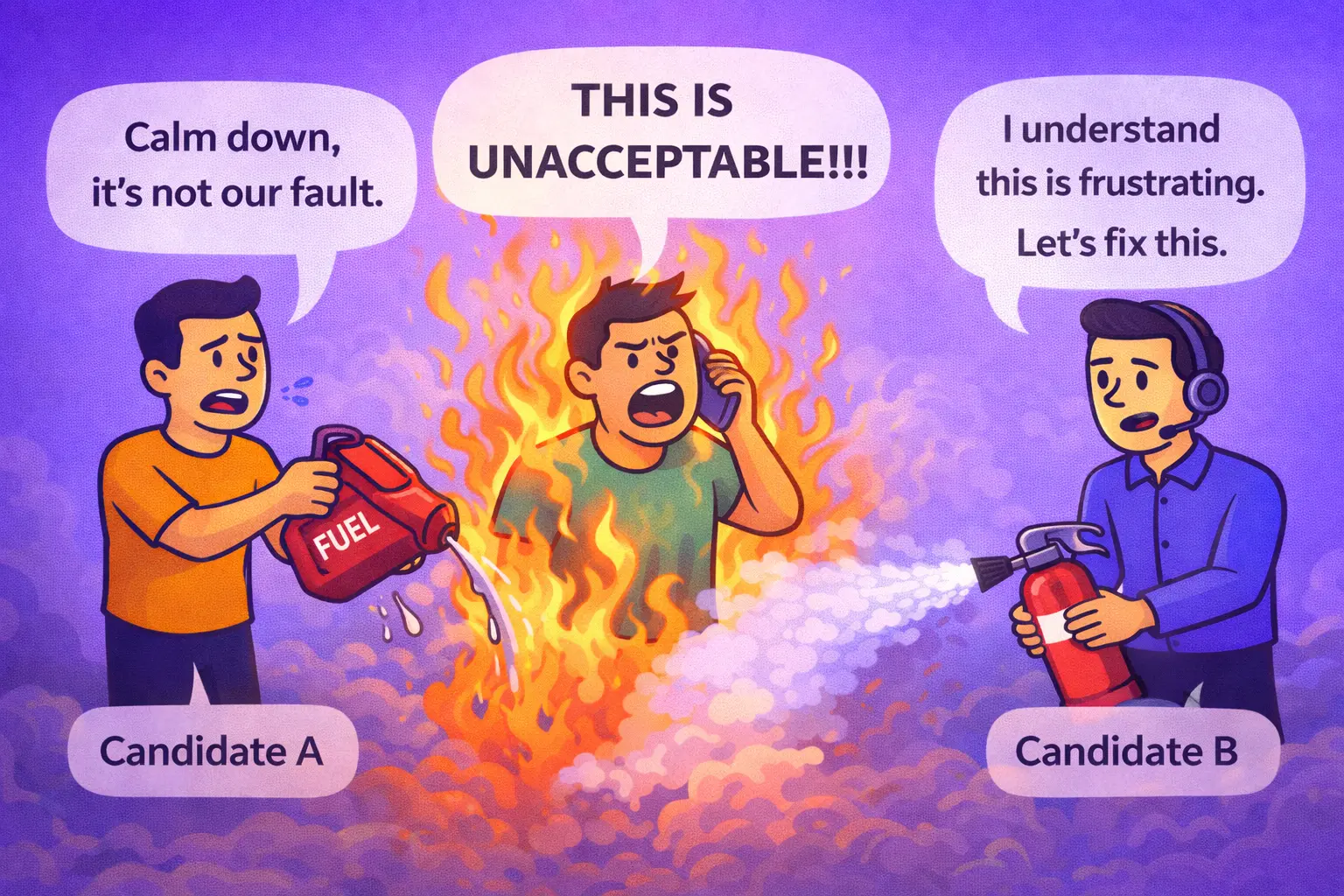
Question 11: “When do you escalate to a manager, and when do you not?”
Strong answer (2 points): Clear criteria. They attempt resolution first when appropriate, define policy or risk boundaries, and escalate with a structured summary. This shows judgment and emotional control.
Acceptable answer (1 point): They escalate when unsure, but without clear reasoning or thresholds.
Concerning answer (0 points): They escalate almost everything to avoid pressure, or refuse to escalate even when policy requires it.
Suggested follow-up: “What information must be included in your escalation note?”
Question 12: "A customer threatens to leave a bad review. What do you do?”
Strong answer (2 points): The candidate acknowledges the frustration, avoids defensiveness, focuses on resolution, and outlines concrete next steps. They do not negotiate emotionally or promise unauthorized compensation.
Acceptable answer (1 point): They try to calm the customer but lack a clear resolution plan.
Concerning answer (0 points): They become defensive, guilt-trip the customer, or offer discounts outside policy just to avoid a review.
Suggested follow-up: “What would you not promise in this situation?”
Our customer service interview questions are designed specifically for e-commerce support teams. If you're looking for more general hiring questions, read LinkedIn's 30 behavioral interview questions focused on important soft skills.
Skill 5: Prioritization & Strategic Thinking Interview Questions
Great customer service representatives don’t just solve tickets. Process thinking is what allows a customer support team to scale without constantly hiring. Support agents with this mindset improve workflows, reduce repeat tickets, and strengthen customer retention over time.
In customer service interviews, this skill often predicts long-term impact more accurately than polished behavioral interview answers alone.
Top red flags in this area:
- “That’s not my job” mentality
- No interest in improving recurring issues
- Prioritizing randomly instead of by urgency or risk
- Ignoring SLA or response time impact
- Complaining about workload without suggesting solutions
Question 13: “Tell me about a time you spotted a repeat issue and helped fix it.”
This question tests whether the candidate thinks beyond individual customer interactions.
Strong answer (2 points): They identify a pattern (e.g., repeated WISMO requests, unclear return policy, confusing product description), propose a practical fix, and describe measurable impact (fewer tickets, faster resolution, improved customer experience).
Acceptable answer (1 point): They helped informally or mentioned the issue to a manager, but cannot describe a concrete improvement or measurable result.
Concerning answer (0 points): They say it’s management’s responsibility, or show no interest in improving recurring problems.
Suggested follow-up: “How would you detect repeat issues in tickets or customer feedback?”
If your team keeps answering “Where is my order?” all day, you may be dealing with more than a hiring problem. See how e-shops reduce WISMO tickets before adding more agents.
Question 14: “How do you prioritize when you have five customer conversations at once?”
Modern customer support often requires multitasking across live chat platforms, email ticketing systems, or call center queues.
Strong answer (2 points): They describe clear prioritization rules: urgency, customer risk, SLA impact, complexity, and potential escalation. They set expectations with customers and use tools (macros, CRM software, ticket tags) intelligently.
Acceptable answer (1 point): They say they “multitask” or answer in the order received, without explaining prioritization logic.
Concerning answer (0 points): No structure. Panic. Ignores response times or says they “just handle it somehow.”
Suggested follow-up: “What gets answered first and why?”
Question 15: “What is one change you would make to improve our customer support team in the first 30 days?”
This tests ownership, analytical thinking, and alignment with company culture.
Strong answer (2 points): Practical, measurable idea tied to customer pain points (e.g., clearer help center articles, better ticket categorization, automation of repetitive tickets, improved internal handoff process). They explain how success would be measured (customer satisfaction score, response time, reduced ticket volume).
Acceptable answer (1 point): General improvement idea without metrics or clear impact.
Concerning answer (0 points): Criticizes systems or team members without proposing a constructive solution.
Suggested follow-up: “How would you measure success after implementing that change?”
How to Use the STAR Method in Customer Service Interviews
Many customer service interview questions in this guide are behavioral interview questions, meaning they ask candidates to describe real past situations, not hypothetical answers.
The STAR method is a simple framework you can use to evaluate those responses:
- Situation - What was happening?
- Task - What was their responsibility?
- Action - What exactly did they do?
- Result - What changed because of their action?
Strong customer service candidates naturally structure their answers around actions and results. Weak candidates stay vague, focus on “we” instead of “I,” or skip measurable outcomes.
You don’t need to teach candidates STAR during the job interview. Just use it as a quiet evaluation lens to separate polished talkers from real problem-solvers.
How to Prevent Expensive Hiring Mistakes
Customer service interview questions should not test charm. They should test judgment, ownership, communication skills, and emotional control under pressure.
If you use structured, red-flag-focused customer service interview questions combined with a simple scoring system, you eliminate guesswork from the job interview process. Instead of hiring based on personality or polished behavioral interview answers, you evaluate real support skills that protect customer service support quality in the long term.
Great hiring managers don’t look for perfect talkers. They look for patterns: accountability, structured thinking, and measurable results.
Use this framework. Save it. Share it with your team. And next time you evaluate support candidates, make sure you’re reducing risk, not rolling the dice.
FAQ: Customer Service Interview Questions
What questions are asked in a customer service interview?
Customer service interview questions typically focus on communication skills, conflict resolution, accountability, and handling difficult customer interactions. Hiring managers often use behavioral interview questions to understand how candidates handled real past situations, not just hypothetical answers.
How do you evaluate customer service interview answers?
The most reliable way to evaluate answers is through structured scoring. Rate each response as Strong (2), Acceptable (1), or Concerning (0) based on ownership, clarity, judgment, and customer focus. Structured customer service interview questions reduce bias and improve candidate evaluation accuracy.
What are red flags in customer service interviews?
Common red flags include blame-shifting, hiding behind policy, escalating too quickly, overpromising compensation, or giving vague answers without measurable results. Weak responses often lack ownership and structured thinking.
What are the 7 qualities of good customer service?
Strong customer service representatives typically demonstrate:
- Ownership and accountability
- Clear written communication
- Emotional control
- Conflict resolution skills
- Structured problem-solving
- Customer empathy
- Prioritization under pressure
These qualities directly impact customer satisfaction, retention, and first contact resolution.
How important are soft skills in customer service roles?
Soft skills are critical in modern customer support. While tools like CRM software and live chat platforms help with efficiency, communication skills, emotional intelligence, and judgment ultimately determine customer experience quality.
Should hiring managers use behavioral interview questions?
Yes. Behavioral interview questions help hiring managers assess real-world performance. Using frameworks like the STAR method ensures candidates describe Situation, Task, Action, and Result clearly, making it easier to separate polished talkers from high-performing support agents.
Table of Contents
Start building AI chatbots with Amio.
Book a 30-minute session where we will find out how AI bot can help you decrease call center costs, increase online conversion, and improve customer experience.
Book a demoWhat is Amio?
We understand your business on
Book a 30-min consultation session where we will discuss your support cost optimization potential, experience improvements, including our online conversion increase techniques
Request a demo