
WISMO in E-Commerce: How to Cut “Where’s My Order?” Tickets

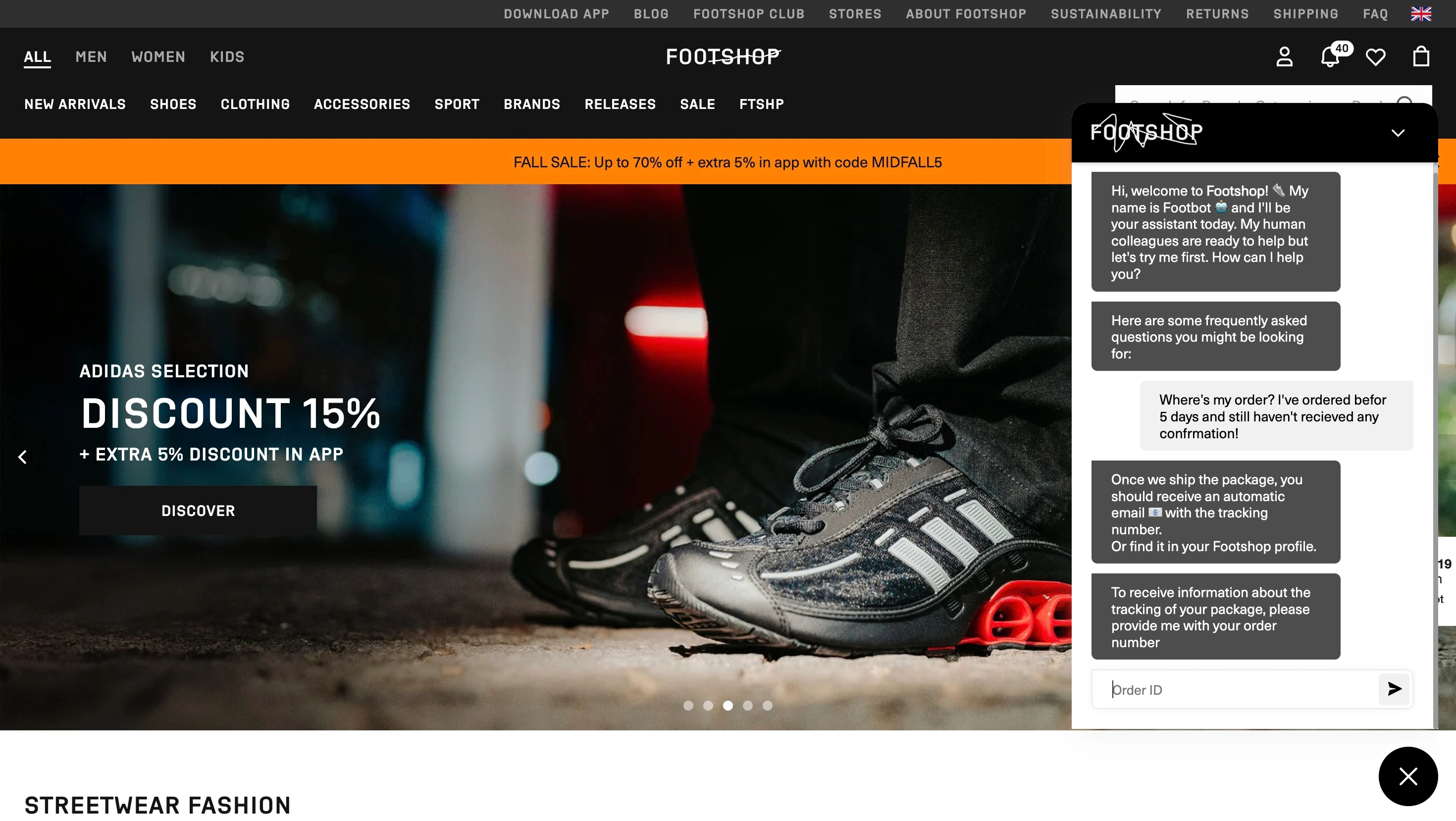
WISMO stands for “Where Is My Order?”. And if you run an e-commerce store, you already know it’s not just a question. If “Where’s my order?” were an Olympic sport, e-commerce would be standing on the podium with a gold medal, a silver medal, and probably bronze medal too.
Every single day, hundreds (sometimes thousands) of customers ask the same question: “Where is my order?” They refresh tracking pages, dig through emails, and when they don’t find a clear answer, they do the one thing they know will get attention.… they call support.
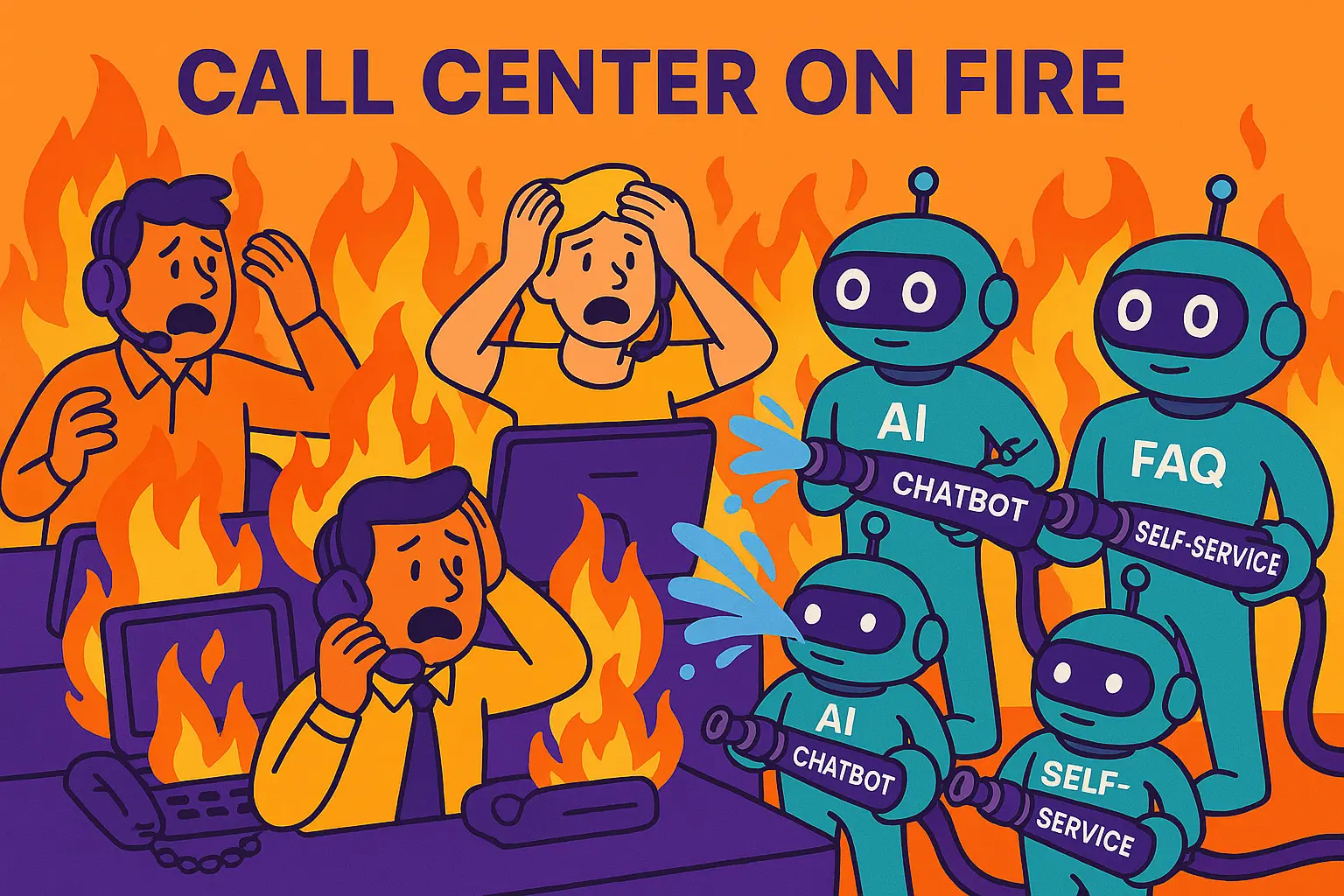
WISMO calls are the single biggest reason e-commerce support teams lose their sanity. (Freshworks) Customers checking order status, asking if their package is stuck somewhere between a warehouse and a parallel universe, or just calling “to make sure everything’s okay.” These calls are repetitive, predictable, and painfully expensive.
So how do you stop WISMO from eating your support team alive?
The answer is simpler than you might think. It's called call deflection.
Who This Article Is For
This guide is for e-commerce teams whose customer service center spends a painful amount of time answering WISMO questions and other repetitive calls that should never reach a phone line in the first place.
If you manage customer support, customer experience, live chat, or digital channels or you simply want fewer WISMO tickets and happier customers, you’re in the right place.
It’s also for online stores using Shopify, WooCommerce, or custom stacks, who want scalable self-service options, faster customer experience, and lower call volume without hiring more agents (or sacrificing customer satisfaction).
What You’ll Learn in This Guide
In this article, you’ll learn how modern e-commerce brands actually reduce WISMO calls using call deflection. We’ll cover which digital support channels work best for WISMO, how AI chatbots and automated assistants handle high-frequency “Where’s my order?” questions, and which self-service resources truly move the needle.
You’ll get practical examples and clear strategies to cut WISMO-driven support costs while improving post-purchase experience across your FAQ page, knowledge base, and live chat.
What Is WISMO?
WISMO stands for “Where Is My Order?” A short acronym for a very long support headache.
In e-commerce, WISMO covers every customer inquiry related to order status after checkout:
- shipping updates,
- tracking links
- delivery dates
- missing confirmation emails
- “has it shipped yet?” follow-ups
If a customer is asking anything about their order or delivery process, that’s WISMO.
And here comes the important part: WISMO is almost never a complex support issue.
Most WISMO questions don’t require a human agent, deep investigation, or escalation. In most cases, nothing is actually wrong with the order. The package is on its way. The warehouse did its job. The carrier is doing what carriers do. The real issue is uncertainty.
Customers don’t see the information they expect, exactly when they expect it. So they start refreshing inboxes, clicking tracking links, and scrolling your FAQ. When that still doesn’t give them peace of mind, they reach for the phone.
Why WISMO Is Such a Big Problem in E-Commerce
Picture a typical Monday morning. Your support team hasn’t even logged into the contact center yet, and the call queue is already stacked with WISMO (“Where’s my order?”) questions, return-status checks, and “I can’t find my order confirmation” panic. At the same time, your live chat queue is filling up with… the exact same questions.
Modern shoppers expect instant answers. When they can’t quickly find order tracking, delivery updates, or return status in your FAQ or self-service portal, they do what feels safest: they pick up the phone.
That’s the hidden cost of customer service in e-commerce.
Every unnecessary WISMO call slows down response times, hurts customer satisfaction, and inflates support costs in a way no e-commerce brand enjoys. And because these calls are so frequent, they quietly overwhelm contact centers day after day.
And that’s exactly why call deflection matters so much for WISMO.
What Is Call Deflection?
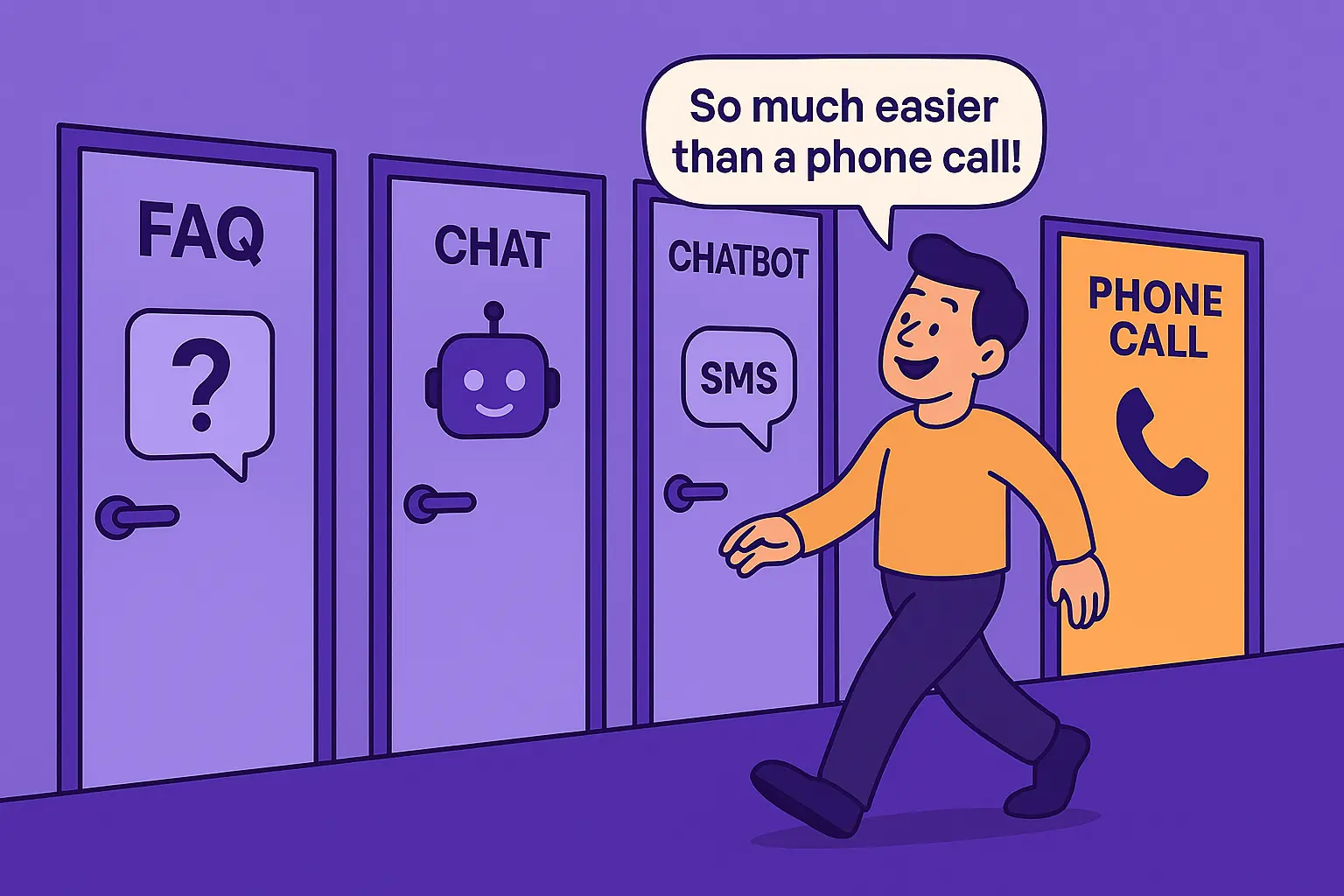
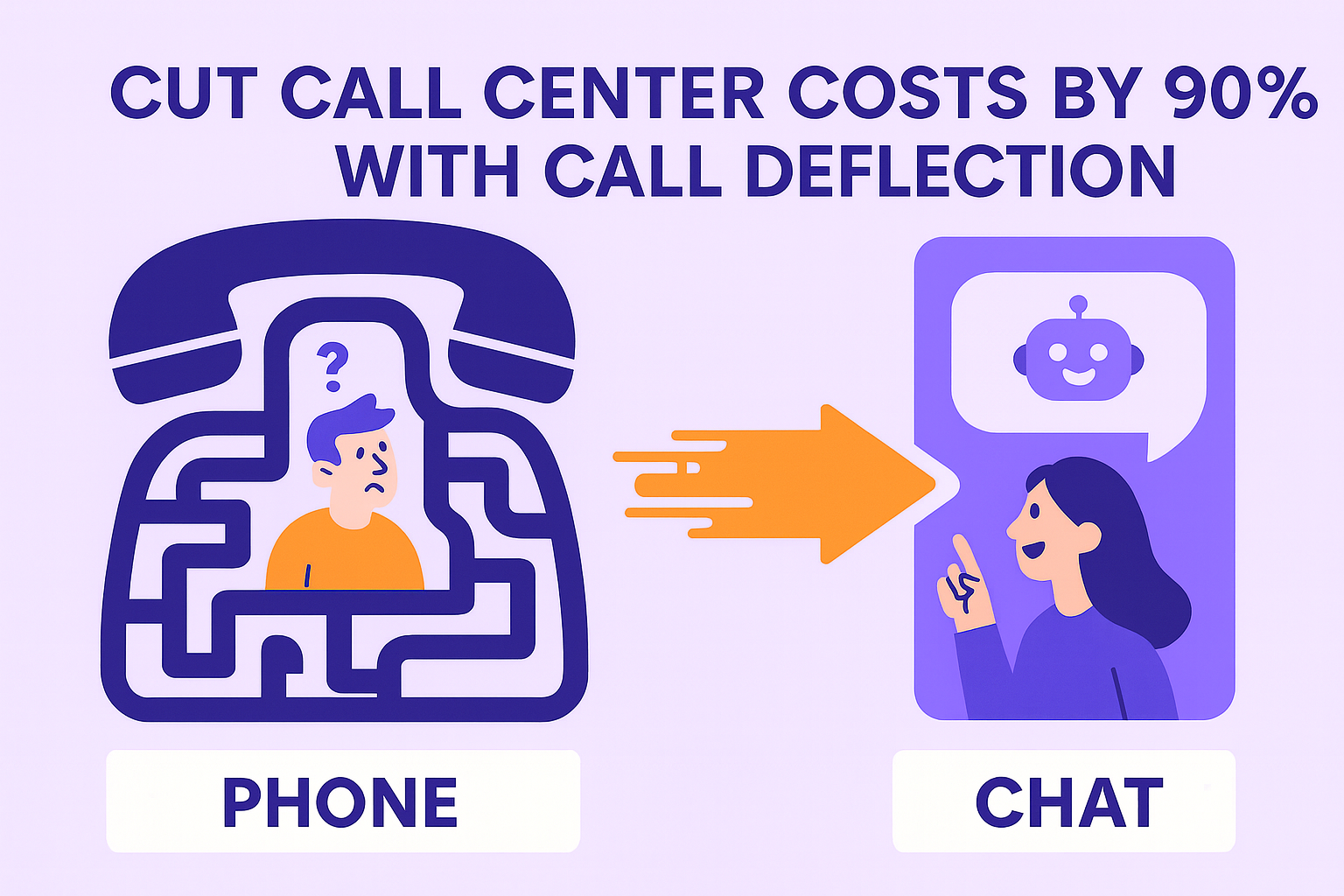
Call deflection is the strategy of moving customers away from expensive phone calls into faster digital channels like AI chatbots, live chat, FAQ pages, and automated self-service tools. Instead of forcing customers to wait on hold or speak to an agent about simple issues, call deflection resolves high-frequency questions instantly through digital support channels.
In plain English. It’s giving shoppers a quicker, easier way to get answers without calling you.
In e-commerce, it’s not just a support tactic. It’s the fastest and most effective way to reduce WISMO calls, eliminate repetitive tickets, and improve customer experience without hiring more agents.
A Gartner study even found that AI-powered assistants can resolve 80% of repetitive questions instantly, something no contact center can achieve at scale.
Why Call Deflection Matters for E-Commerce
Modern shoppers expect instant answers. When they can’t find clear self-service options on your FAQ page or knowledge base, they jump straight to the phone.
This is the hidden cost of modern customer support in e-commerce. Every unnecessary phone call slows down customer experience, damages customer satisfaction, and inflates costs in a way no e-commerce brand enjoys.
That’s exactly why call deflection matters.
Instead of customers pushing your team into reactive chaos, your automated channels absorb the common questions instantly, improving customer experience and freeing agents to focus on high-value interactions. It’s faster, cheaper, and far more scalable than adding more staff or extending business hours.

And even more interestingly, according to a Webex study, 67% of customers prefer self-service over speaking to an agent, which makes call deflection not just a cost-saving strategy but the support experience shoppers actively want.
Why call deflection works so well for WISMO
Most industries deal with technical troubleshooting. E-commerce deals mostly with human impatience.
That’s why call deflection works exceptionally well in e-commerce:
- shoppers ask the same questions every day,
- answers rarely require a human agent,
- automated assistants can resolve them instantly,
- and digital channels scale effortlessly during peak seasons.
When 40–60% of your calls are repeatable questions, deflection isn’t a hack. It’s a competitive advantage.
Call Deflection vs Call Avoidance
Call deflection is not about hiding your phone number or making it hard to reach support. That’s call avoidance and it destroys customer loyalty faster than a lost holiday package.
True call deflection focuses on:
- faster resolution
- clear self-service options
- proactive digital channels
- and improving customer experience by giving shoppers answers before they need to call.
Avoidance frustrates customers. Deflection helps them.
And when done right, it reduces call volume, boosts customer satisfaction, and frees your agents to focus on complex issues rather than the same five repetitive calls.
Call Deflection Tools for E-Commerce
Think of your support toolkit as a kitchen full of gadgets, some genius, some gathering dust. If you run an online store and your support team is drowning in repetitive questions, picking the right deflection tools isn’t optional. It’s vital.
Below are the most powerful digital support channels e-commerce brands use today. We’ll look at what works (and why) and what often fails (and how to avoid it).
Traditional IVR (Interactive Voice Response)
IVR is the menu you hit when you call a business and hear: “Press 1 for sales, 2 for support…”. An automated system routing calls without a human on the line.
If IVR systems were a shopper, they’d still be paying with a cheque. Yes, IVR menus help reduce call volume by filtering callers into buckets like “Press 1 for shipping” and “Press 9 if you’re already annoyed.” And sure, they technically count as digital support channels. But in e-commerce, IVR is basically a flip-phone in a world full of AI shopping assistants.
Why it helps:
It routes calls faster, reduces agent workload, and gives your support team a fighting chance on Mondays. But it doesn’t answer WISMO questions, return status checks, or product availability issues, the real drivers behind high call volume in online retail.
Who it’s for:
Big e-shops with lots of phone traffic who need basic call routing but not the ones hoping IVR alone will magically deliver better customer experience or self-service options.
FAQ Pages & Knowledge Bases (Self-Service Resources)
Your FAQ and knowledge base should be your first line of defense. They're self-service library of content on your website or app where customers can find answers to standard questions like “Where’s my order?” or “How do I return?”.
When done right, your FAQ and knowledge base becomes an always-on self-service channel that reduces support tickets before they ever hit your contact center. It actively guides customers to the right order status page, tracking page, or self-service tracking page without involving an agent.
Why it helps:
Shoppers get quick answers without waiting in a live chat queue or calling the contact center. Searchable FAQ content combined with internal links to chatbots or live chat creates a smooth digital support experience across channels.
Who it’s for:
Any e-commerce brand dealing with recurring questions like “Where’s my order?”, “How do I start a return?”, or “Why is my discount code not working?” - essentially every online store.
Live Chat (Human-Operated Digital Support)
Live chat is the middle ground between a full phone call and a cold FAQ page. It's the live messaging window on your site or app or conversation in e-mail or any social media as Whatsapp or Messenger where an agent (not a bot) answers customer questions in real time via chat.
It's faster and cheaper than calls, and lets your agents handle multiple conversations at once. Something phone support will never achieve without cloning.
Why it helps:
It lowers call volume by offering a convenient alternative to voice support. Agents can handle multiple chats simultaneously, meaning faster resolutions and lower operating costs compared to phone calls.
Who it’s for:
Stores with enough traffic and support capacity to manage real-time conversations, who want to reduce the number of customers jumping straight to the phone.
According to a Voiso/ContactBabel study, the average inbound support call now costs $7.16, which is 42% more expensive than a web chat. That alone makes live chat one of the most cost-effective digital support channels for e-commerce.
Proactive Communication & Automated Notifications
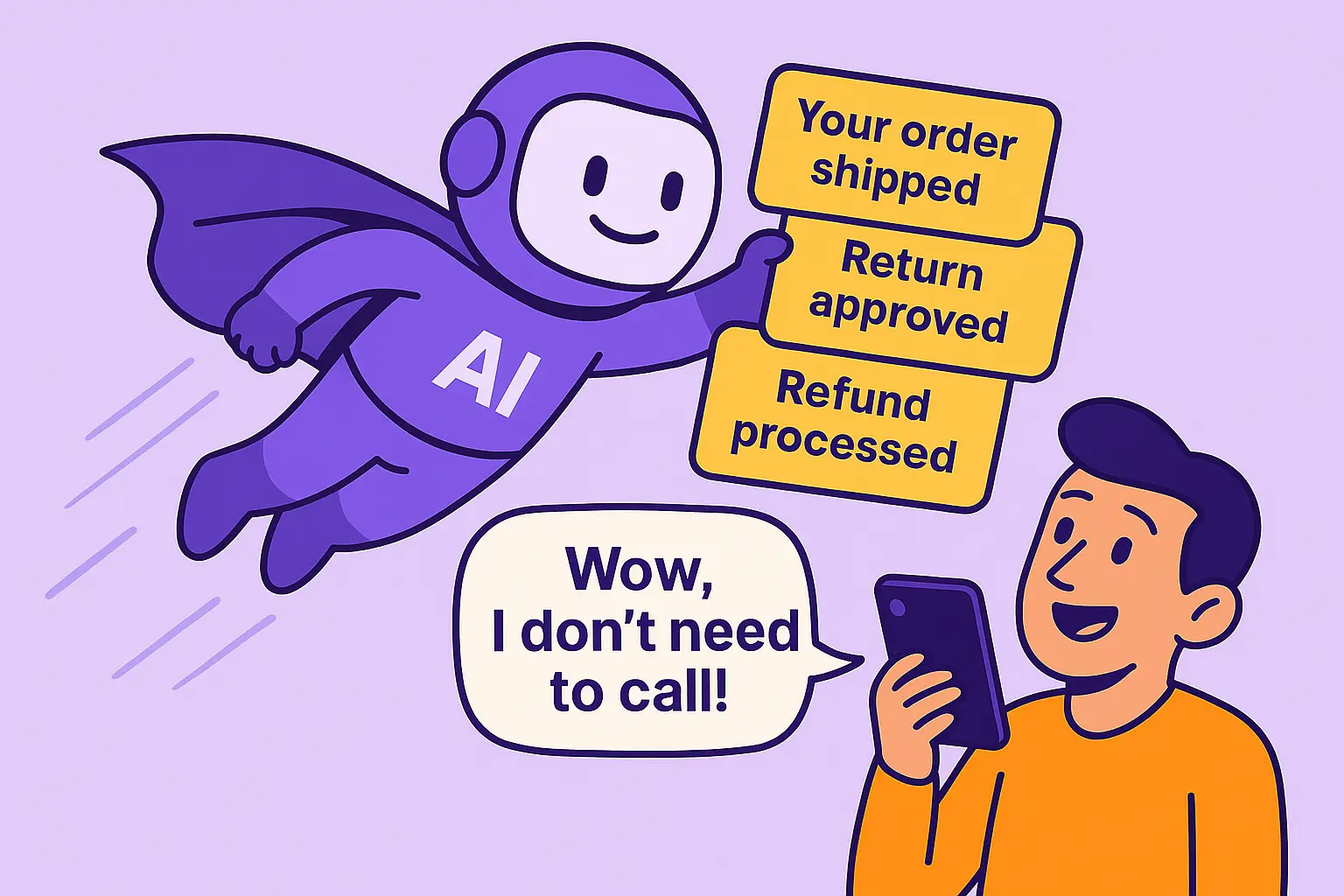
Proactive communication is one of the most underrated call-deflection strategies in e-commerce. Instead of waiting for customers to ask “Where’s my order?” or “Has my refund been processed?”, you tell them before their brain even forms the question.
Automated notifications across SMS channels or live update emails keep shoppers informed with real-time delivery times updates, shipping delays, payment information, delivery issues, and other delivery notifications.
Why it helps:
Proactive updates dramatically reduce call volumes by addressing the most common triggers before customers reach your contact center. When customers know exactly what’s happening with their delivery, they stop calling “just to double-check."
Who it’s for:
Any online store handling high volumes of WISMO questions and returns. If your support team is drowning in “Just checking…” calls, proactive communication pays for itself instantly.

AI Chatbots
AI chatbots are the always-on digital support channel customers meet first. They're tiny automated assistants living in your website, mobile app or messaging channels. They answer routine questions instantly, guide shoppers through your FAQ page, and reduce call volume by intercepting the “easy tickets” before they hit your contact center.
Unlike live chat, no human needs to be awake, online, or caffeinated. Studies show chatbots can handle a huge chunk of repetitive support.
Why it helps:
AI-powered assistants can resolve up to 80% of routine questions instantly (Gartner), They provide instant answers, reduce call handling time, and keep customer satisfaction high by eliminating unnecessary waiting. They act as a 24/7 self-service channel across your website, mobile app, and messaging platforms.
Who it’s for:
Brands starting with automation for the first time, e-commerce teams overwhelmed by repeatable questions, and e-shops that need a scalable digital channel without adding more call center staff.
There are hundreds of AI chatbots out there and they all claim to be “the best.” If you don’t want to waste weeks testing tools that look identical on paper, we put together a practical comparison of the top e-commerce chatbots on the market.
It breaks down real strengths, limitations, pricing, and which chatbot actually works for online stores (not just generic websites).
👉 Read the full guide: Best Ecommerce Chatbots Compared (2025 Edition)
E-Commerce–Specialist AI Chatbots
This is where things get spicy. These are the upgraded version of basic AI chatbots.
Unlike them, these chatbots don’t just “answer questions”, they’re directly connected to your product feed, order management system, and return workflows. In other words: they actually know your store.
E-Commerce–Specialist AI Chatbots understand your product catalog, can check real-time stock levels, track orders or process returns. If a generic chatbot is a calculator, this is a full-blown e-commerce brain.
Why it helps:
These chatbots eliminate the biggest call drivers:
• “Where’s my order?” (real-time tracking)
• “Is this size in stock?” (product feed ingestion)
• “How do I return this?” (returns flows)
• “What’s the difference between these models?” (product data),
This dramatically reduces call volume and improves digital customer experience across all channels.
Who it’s for:
Growing e-commerce brands, mid-market stores, or any online retailer dealing with constant WISMO tickets. If your support team spends half their day repeating the same questions, this is your best ROI tool.

A quick (and yes, slightly biased) AMIO note
Look, we'll be honest. We’re the ones writing this guide, so pretending to be “100% objective” would be like a cashier telling you they might have accidentally scanned your items twice.
But here’s the thing. Our chatbot uses the newest generative AI models and connects directly to your product feed and order management system. That means it doesn’t just answer questions but trully resolves the support tickets that normally flood your phone lines.
Instead of flooding you with buzzwords like “best AI chatbot” or making absurd promises like “reduce call volume by 99%” we would like to show you what our AI chatbot can actually handle for your store and where it can make the biggest difference.
Grab 15 minutes with our experts and try it live. 👉 Book a demo
AI Voice Assistants
Voice assistants are the modern evolution of call deflection. This is the AI version of a call center agent that speaks naturally, understands intent, and solves issues during a phone call without handing the customer to a human. Think of it as “AI live chat, but with a voice”.
Unlike outdated IVR menus, these AI phone agents can actually understand WISMO questions, access order details, and resolve issues mid-call. No “Press 9 for disappointment”.
Why it helps:
Voice assistants give you the best of both worlds:
• the convenience of a call
• the instant automation of a chatbot.
They handle repetitive calls in real time, reduce call overload, and save money by deflecting customers into automated channels even while they’re already calling. This dramatically lowers phone-based support tickets and improves customer experience for shoppers who still prefer voice support.
Who it’s for:
E-commerce brands with high phone volume, stores where customers prefer calling (older demographics, specialty products), or any team wanting to cut support costs without forcing every customer into digital channels.
But here’s the honest part. This technology is still early. AI voice assistants are improving fast, but they’re not yet as reliable as mature digital channels like AI chatbots or FAQ-based self-service. They can occasionally misunderstand accents, struggle with noisy environments, or fail on complex edge cases that require perfect context.
Think of them as “already useful but still leveling up.”
What is the Best Call Deflection Tool for E-commerce?
How These Call-Deflection Tools Work Together
No single digital channel can carry your whole call-deflection strategy. The magic happens when all these tools, live chat, IVR menus, AI chatbots, tracking pages, and even voice assistants, work together as one seamless support experience.
Think of it like building a “digital front door” for your online store. If customers see clear self-service options, a visible live chat button, fast AI-powered assistance, and proactive messaging, they naturally choose digital channels over phone calls. But if these tools are hidden, buried in the footer, or only appear after a three-click treasure hunt… shoppers will do what shoppers always do: pick up the phone and flood your contact center.

That’s why placement, visibility, and smart website UX matter just as much as the tools themselves. Your contact page, header navigation, mobile layout, FAQ structure, and checkout flow all need to make your digital support channels impossible to miss and genuinely easier than calling.
If you want a deeper, practical breakdown of exactly how to nudge customers away from phone calls and into fast digital support, we already covered it step-by-step in this guide: 👉 Cut Call Center Costs by 90% With Call Deflection Done Right
How to Calculate Call Deflection Savings
Most e-commerce brands massively underestimate how much money they burn on avoidable WISMO calls. Every unnecessary phone call increases call handling time, overloads your contact center, and forces you to hire more agents just to keep up with repetitive support tickets. That’s why understanding how to calculate your call-deflection savings is essential before choosing the right digital support channel.
Fortunately, the math is simple. In practice, there are only four numbers that matter:
- Your support volume (calls, live chats, emails per month) - These represent your total support requests and therefore your total cost exposure.
- Your cost per channel (calls are by far the most expensive averaging $7.16 each, 42% more than live chat)
- Your automation & deflection rates (how many requests AI resolves or prevents before they hit your agents)
- Cost of Your AI Solution (AI is not free, but compared to the cost of agents, it pays for itself ridiculously fast)
Put these together and you instantly see how much you can save on support costs. We built a dedicated tool that does the entire calculation for you.
👉 Try the AMIO AI ROI Calculator
Just enter your monthly call volume, chat volume, agent salaries, and expected automation/deflection rates and you’ll see:
- your current support costs
- your expected monthly savings
- and your true ROI
For example, a store with 1,500 calls/month and a 15% deflection rate can save over €6,300 every month without hiring a single extra agent.
📌 If you’re wondering whether call deflection is “worth it,” this calculator will answer the question in under 10 seconds. 👉 Calculate your savings in 10 seconds
Smarter Digital Support Means Fewer Calls
Most WISMO support calls are repeatable, predictable, and absolutely not worth $7.16 each. That's why modern e-commerce support isn’t about hiring more agents. It’s about removing the repetitive work that never needed a phone call in the first place. When your FAQ page, AI chatbots and even voice AI work together, they absorb the predictable WISMO questions before they ever hit your contact center.
The result? Lower support costs, faster resolutions, and customers who finally get the instant answers they expect.
If you want to see exactly how much your store can save with real call deflection, try the AMIO AI ROI Calculator. And if you want to see how an AI chatbot can cut your call volume without cutting customer satisfaction, book a quick demo and try it with your own data.
FAQ: WISMO, Order Tracking & E-commerce Customer Support
What is WISMO in e-commerce?
WISMO stands for “Where Is My Order?” and it’s the most common customer inquiry in e-commerce customer service.
WISMO questions appear when customers can’t easily find their order status, tracking number, or delivery updates after purchase. When order tracking isn’t clear, WISMO quickly turns into customer service calls, support emails, or WhatsApp messages.
Why do customers contact support about order status?
Because their order tracking experience is unclear or missing. If customers can’t find a reliable order status page, tracking page, or real-time delivery update, they assume something is wrong. Even when the delivery process is perfectly fine.
Unclear tracking breaks customer expectations and that’s when support teams pay the price.
How does better order tracking reduce WISMO?
Clear, real-time package tracking answers WISMO before it becomes a ticket. A good self-service tracking page with delivery status, shipping carrier info, delivery date estimates, and automated status updates can eliminate a huge portion of customer inquiries.
What should a good order status page include?
An effective order status page should show:
- real-time tracking updates
- current delivery status and delivery times
- shipping carrier details
- tracking number and Track & Trace links
- proactive delivery notifications
- branded tracking experience that matches your store
This turns order tracking into part of the customer post-purchase experience, not a support problem.
How does self-service tracking improve customer experience?
Self-service tools let customers help themselves, instantly.
When shoppers can check their package tracking without contacting customer support, it improves:
- customer satisfaction
- Net Promoter Score (NPS)
- customer loyalty
- repeat sales
And your CX team gets fewer “just checking” messages.
Can proactive notifications reduce WISMO calls?
Absolutely. Delivery notifications, live update emails, and post-purchase email flows stop WISMO before it starts. Order confirmation emails, shipping confirmations, and automated status updates reassure customers throughout the delivery process.
What role do AI chatbots play in handling WISMO?
AI chatbots like AMIO handle WISMO questions by:
- pulling order and shipping data
- checking order status and delivery progress
- linking customers to the correct tracking page
- answering repetitive customer service inquiries instantly
That means fewer customer service calls and faster resolutions without human agents.
Why is WISMO so expensive for support teams?
Because it’s high-volume and repetitive. WISMO tickets flood support emails, messaging channels, and live chat even though they rarely require a human. Each unnecessary inquiry increases support costs and pulls agents away from real issues.
Is WISMO relevant only for large e-commerce stores?
No. WISMO affects everyone. Even a single delayed order can trigger multiple follow-ups if the delivery process isn’t transparent.
How does better post-purchase experience impact revenue?
A strong order and shipping tracking experience improves:
- Customer Satisfaction
- Net Promoter Score
- Customer Lifetime Value
- repeat sales
- Customer Acquisition Cost efficiency
Customers remember how you handled delivery, not just how you sold.
Book a 30-minute session where we will find out how AI bot can help you decrease call center costs, increase online conversion, and improve customer experience.
Book a demo