
Necessary cookies help make a website usable by enabling basic functions like page navigation and access to secure areas of the website. The website cannot function properly without these cookies.
Top 5 AI Chatbots for E-commerce in 2026 [+ How to Choose]
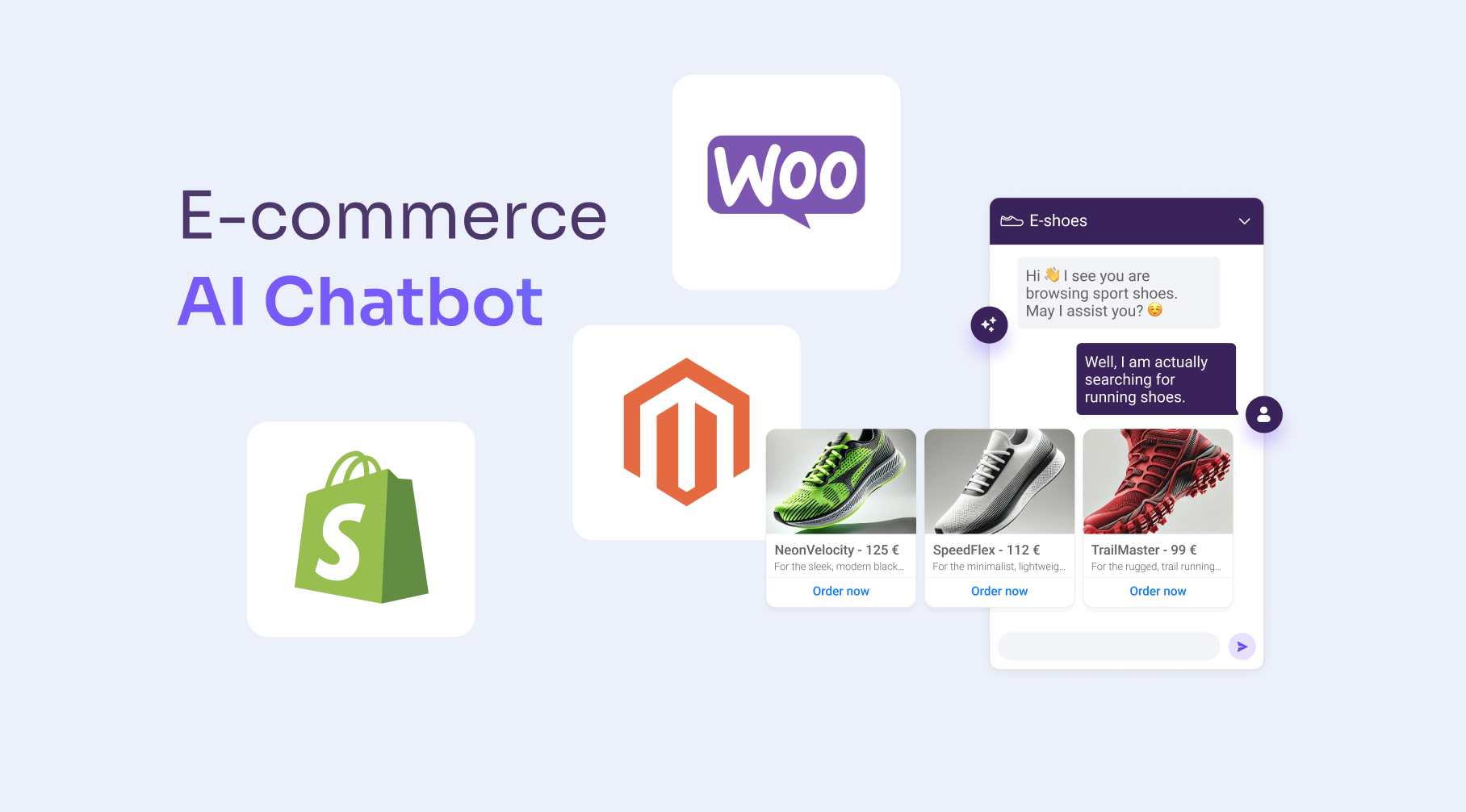
If you run an online store, you’ve likely heard about AI chatbots. They’re everywhere—and for good reason.
But not all are equal—some miss key e-commerce features; some fall short in performance.
In this article, I’ll guide you on how to choose the right AI chatbot for your needs. Then, you can go out and do your research.
Or start with our top 5 picks—at your own risk. 🤘
How to Choose the Best Chatbot for Your Online Store
The right bot should integrate into your e-shop ecosystem, understand your processes, and know everything you sell. It should provide accurate, well-crafted responses to any question. Simple in theory, harder to find the right solution.
Here’s a list of what you should look for, sorted by usual priority. Adjust the order based on your specific needs.
1. Integration with Your E-commerce Platform
Ensure the chatbot integrates well with your e-commerce platform (Shopify, WooCommerce, etc.). What you are looking for is:
- can the chatbot access customers' orders
- deployment of the webchat
2. Data Source Management (Product Feeds)
Your chatbot must stay updated with your product details. It should pull data from your XML feeds to provide relevant products with accurate information on stock, pricing, and more.
3. AI Capabilities
Pick a solution with real AI, so it understands customer questions and delivers precise answers. A bot that just clicks buttons or uses natural language processing (NLP) won’t cut it.
4. Prompt Design
If the bot gives awkward responses, either the data is wrong 👆 or the prompt design is lacking. It should let you customize prompts to fit your brand’s voice—no robotic answers.
5. Omnichannel Support
Your chatbot needs to function across all your major channels—social media, website, and mobile app. This ensures consistent service for existing or potential customers, no matter where they engage with you.
6. Language Support
If you serve customers in many languages, make sure your bot can communicate in those languages well. Don’t restrict your customer base with an English-only solution.
7. Integration with Help Desk
The bot should work with your help desk for smooth transitions to human agents. Also consider:
- Does it know your call center’s hours?
- Can it switch to email when support is offline?
8. Bonus - Look at References
See who’s already using the provider's solution and how it’s performing. Reviews and case studies from similar businesses can save you time and effort upfront.
Main Benefits of E-commerce Chatbots
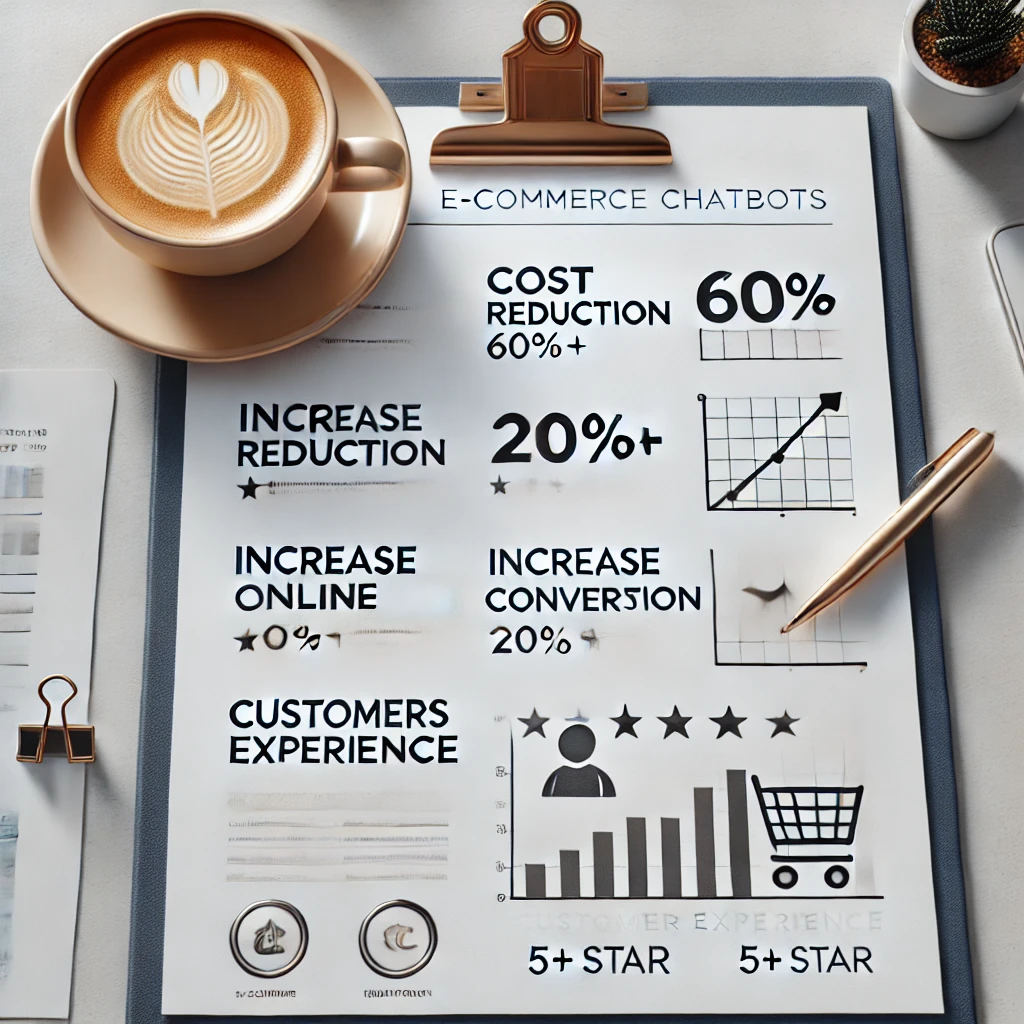
Choosing the right AI chatbot for your online store isn’t about picking the flashiest option—it’s about finding one that fits your needs. Different chatbots excel in different areas, so knowing their key benefits is crucial to making the right decision. Here are three major advantages the right chatbot can offer:
1. Cost Reduction (60%+)
E-commerce chatbots can cut support costs by over 60% by automating 90% of responses and defecting customers from phone and email to the automated channel. How you present contact details and promote the chatbot is your duty, but the AI needs to hit that 90%+ automation target if cost reduction is your target.
2. Increase Online Conversion (20%+)
Chatbots do more than just provide support—they can boost conversion rates by improving the online shopping experience. AI virtual assistants can offer personalized recommendations, filter results, and guide them through the buying process. This will increase both conversion rates and customer satisfaction.
3. Customer Experience (5+ Star)
Speaking about customer satisfaction, here's a list of factors the chatbot influences:
- 24/7 availability for real-time support
- Fast and accurate replies to increase customer engagement
- A consistent and personalized experience
- No more waiting for a human agent
- Smooth handovers to operators for human intervention
If you want to get in-depth information on this topic, continue to our detailed article about the benefits and use cases of e-commerce chatbots.
Top 5 E-commerce Chatbots - Editors Choice
Drumroll, please! 🥁
Now that you know what to look for, you could go and do your own research.
But wait—you’re busy running your e-shop, right? So here’s our carefully curated list of the 5 best AI-powered chatbots for e-commerce.
We get that starting with our own solution might feel a little awkward—but we do it for a reason. At Amio, we’re working hard to build the best platform tailored for e-shops.
That said, feel free to compare—the final choice is yours. ✌️
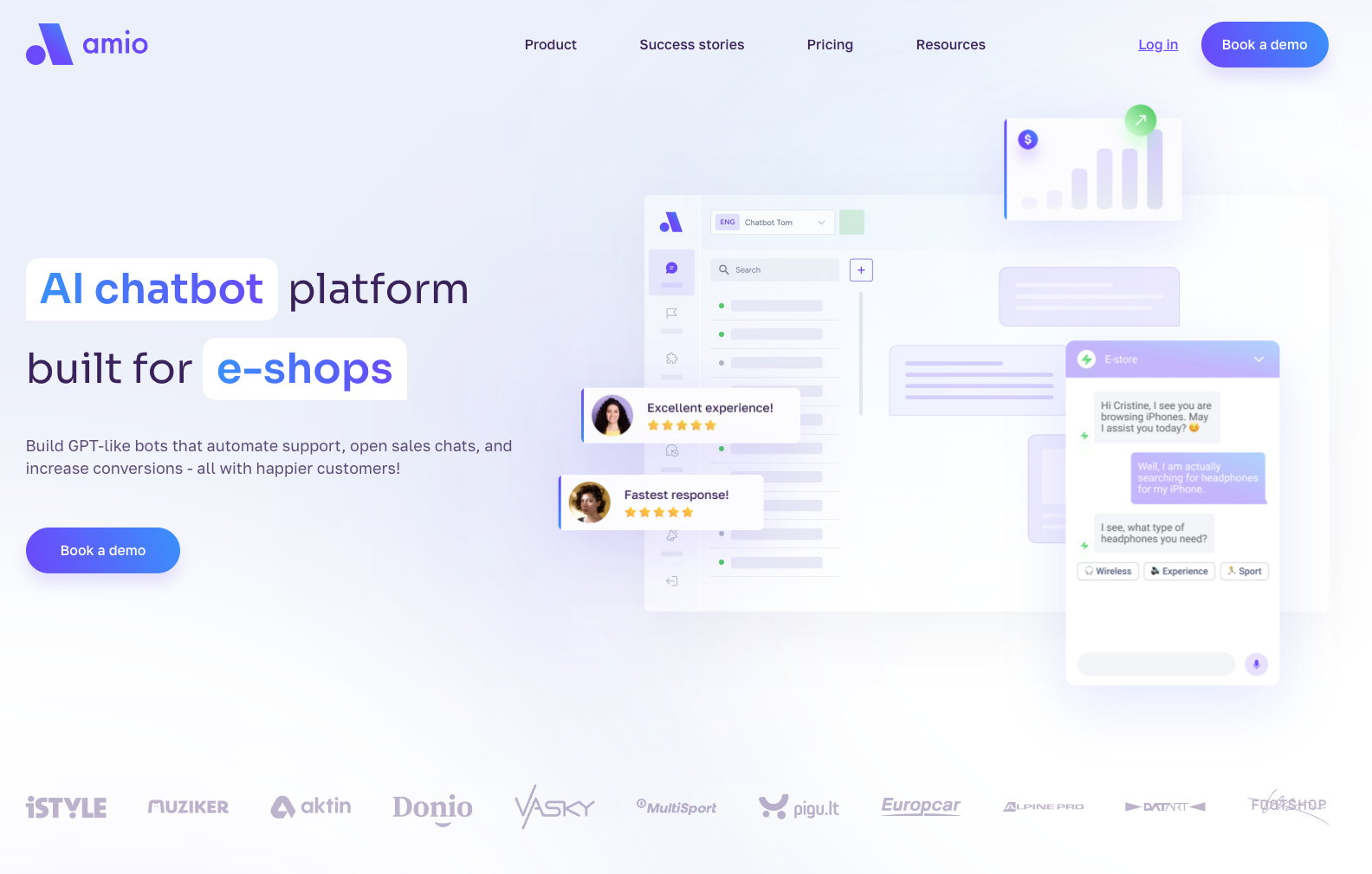
1. Amio
- ✅ Integration with E-commerce Platforms - API to access customers data, Google Tag Manager deployment
- ✅ Data Source Management - XML feeds for personalized product recommendations, scheduled data updates, web scraping, pdf, txt, etc.
- ✅ AI Capabilities - Latest GPT from Open AI
- ✅ Prompt Design - Access to all GPT settings
- ✅ Omnichannel Support - Webchat, mobile app chat, WhatsApp, Messenger, Telegram, Viber, Google RCS
- ✅ Language Support - 85 languages
- ✅ Integration with Help Desk - any help desk through a generic connector or email fallback
- ✅ References - footshop.com, istyle.cz, pigu.lt, muziker.sk, europcar.rs, factcool.ro
Why choose Amio?
Amio offers all the essential features needed for a top-tier e-commerce AI chatbot, paired with an affordable and transparent pricing model.
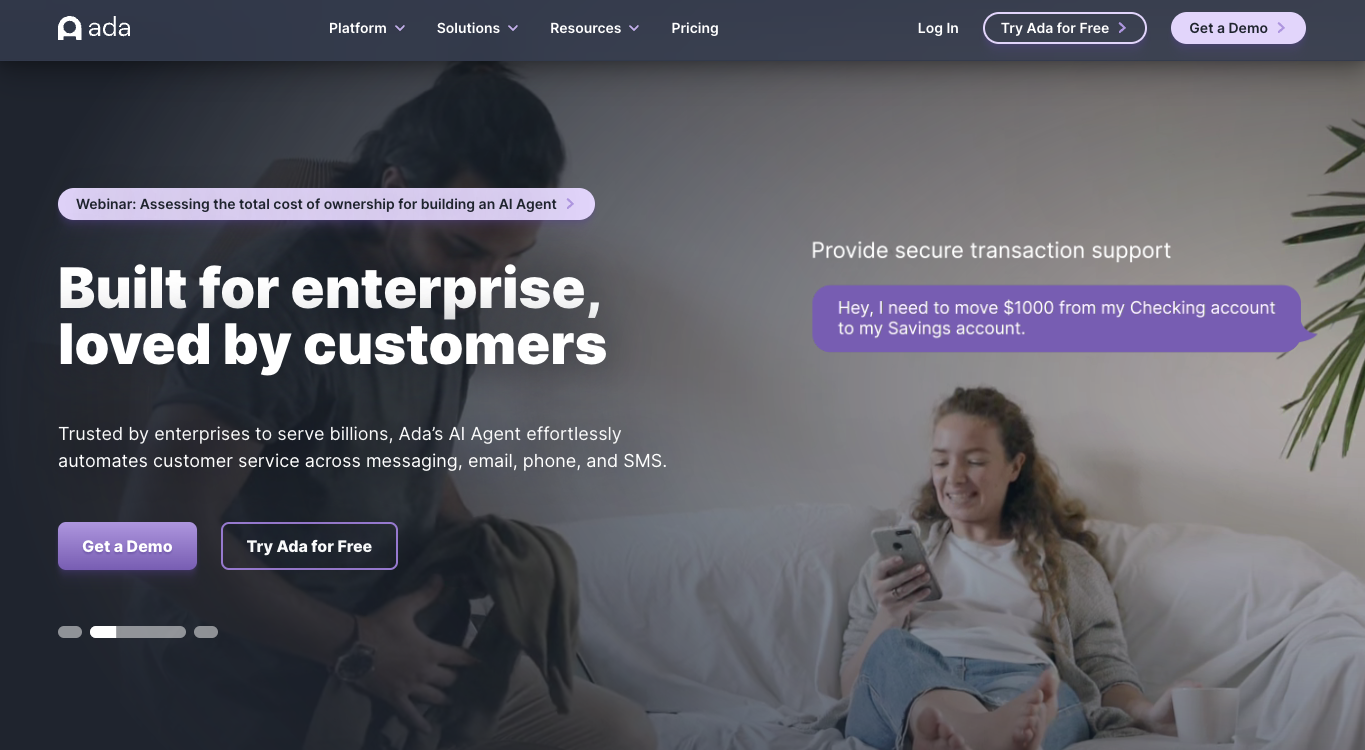
2. Ada
- ✅ Integration with E-commerce Platforms - API to access customers data, Google Tag Manager deployment
- 🤔 Data Source Management - manual data entry to knowledge base, no web scraping, no support for product feeds
- ✅ AI Capabilities - GPT-4Turbo
- 🤔 Prompt Design - Limited to 40 guidance prompts each 300 characters long at most.
- ✅ Omnichannel Support - WhatsApp, Messenger, Instagram, Twitter and live chat
- ✅ Language Support - 50 languages supported
- ✅ References - amymyersmd.com, shapermint.com, wealthsimple.com
Why choose Ada.cx
Ada is a great option if you're looking to automate after-sales inquiries while handling pre-sales questions through a general knowledge base.
When not to choose Ada.cx
If your product portfolio changes often (availability, pricing, etc.), Ada may not be the best fit. Also, if you’re seeking predictable and affordable pricing, you might want to explore other options.
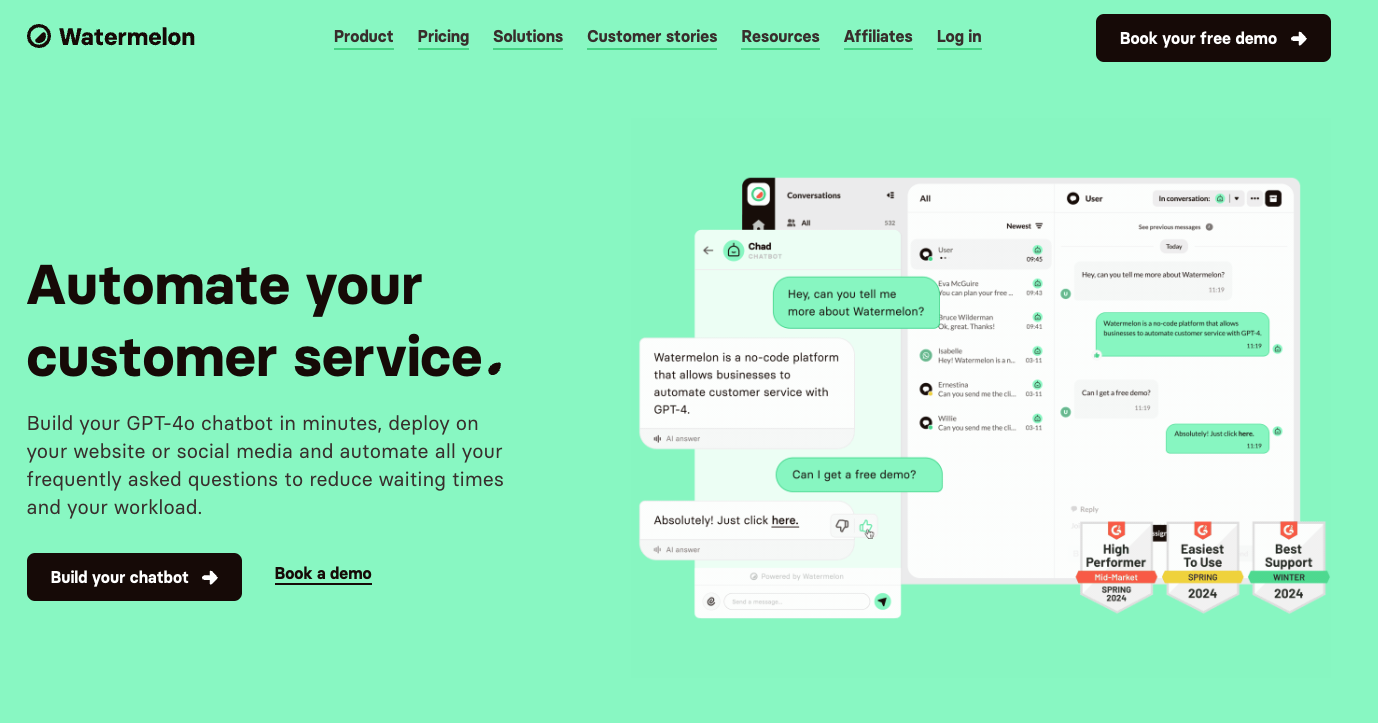
3. Watermelon
- ✅ Integration with E-commerce Platforms - API to access customers data, Google Tag Manager deployment
- 🤔 Data Source Management - website scraping, documents, no product feeds
- ✅ AI Capabilities - GPT-4o
- ✅ Prompt Design - access to complete prompt
- ✅ Omnichannel Support - WhatsApp, Messenger, Instagram, and live chat
- ✅ Language Support - 85 languages
- 🤔 Integration with Help Desk - limited integration through Zapier
- 🤔 References - mbowebshop.nl, zadkine.nl - found local implementations only
Why choose Watermelon.ai?
Watermelon is a solid option, especially if your e-shop is based in the Netherlands. 😄 Jokes aside, it’s a strong contender for GPT-powered AI chatbots, offering advanced AI capabilities.
When not to choose Watermelon.ai
If your product portfolio changes often (availability, pricing, etc.), Watermelon might not be ideal. Additionally, it can become costly if your chat volume is high.
4. Tidio
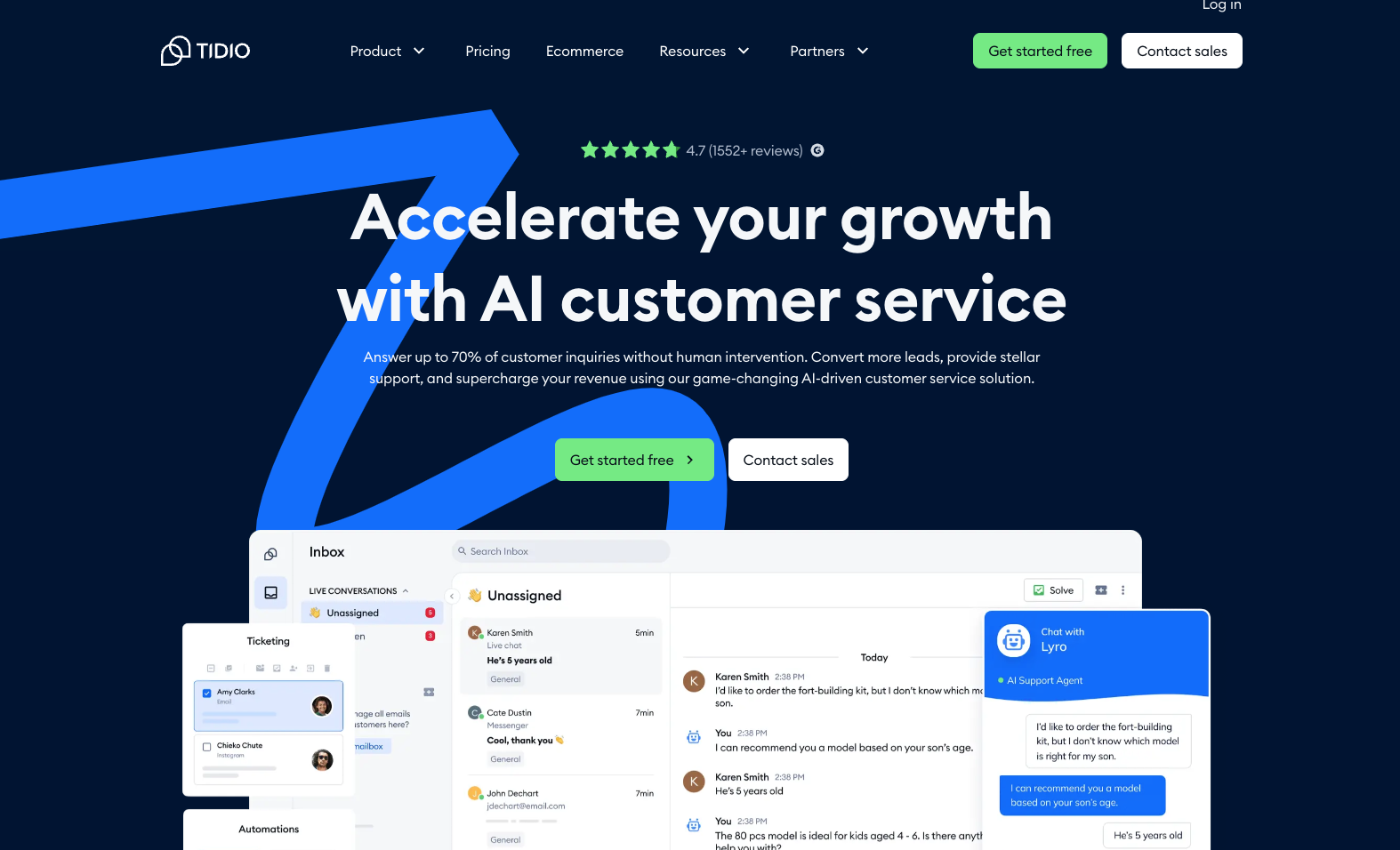
- ✅ Integration with E-commerce Platforms - native plugin to Shopify, BigCommerce, WooCommerce
- 🤔 Data Source Management - support for web scraping and static files, no support for product feeds
- ✅ AI Capabilities - Claude (Anthropic AI)
- 🤔 Prompt Design - Limited to: use emojis and tone of voice
- ✅ Omnichannel Support - a
- 🤔 Language Support - English, Spanish, Japanese, French, Portuguese, and German
- 🤔 Integration with Help Desk - Zendesk, Salesforce, Zoho
- ✅ References - adhocatelier.it, geckohospitality.com, eye-oo.com
Why choose Tidio?
Tidio is a strong option if you’re looking for an AI chatbot with built-in help desk solutions and native plugins for major e-commerce platforms.
When not to choose Tidio
If your business operates in a language that Tidio doesn’t support, you’ll be out of luck—it there would be a language barrier. Additionally, if your products need specific and advanced prompt design to guide the AI, Tidio may not provide the flexibility you need.
5. Perfectbot
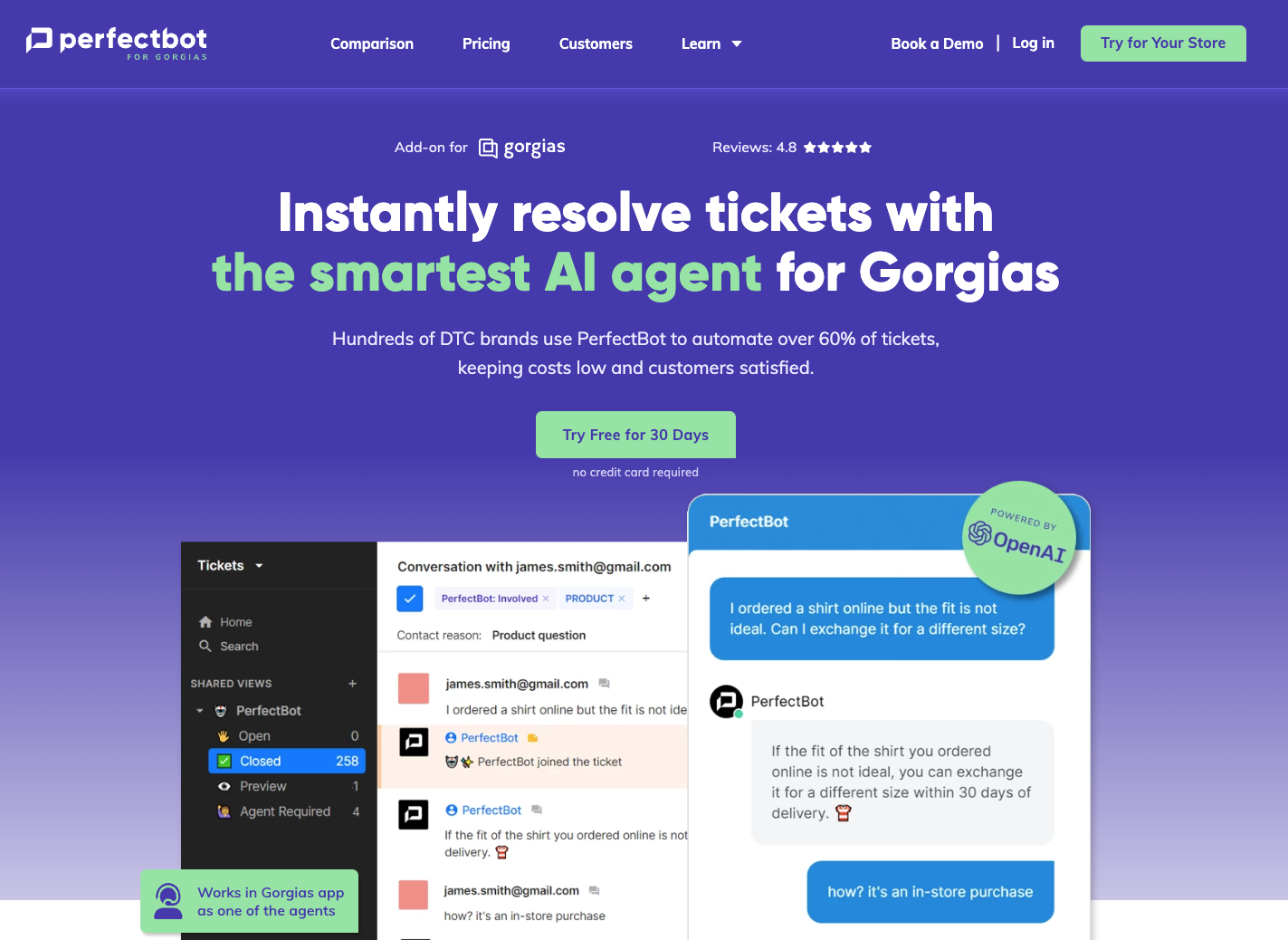
- 🤔 Integration with E-commerce Platforms - integration with Shopify only
- 🤔 Data Source Management - manual knowledge base entries, website scraping
- ✅ AI Capabilities - GPT
- ❌ Prompt Design
- ❌ Omnichannel Support - web chat only
- ✅ Language Support - 85 languages
- 🤔 Integration with Help Desk - Gorgias only
- ✅ References - beau-domaine.com, thesteelshop.com
Why choose Perfectbot?
Perfectbot offers attractive pricing and integrates well with Gorgias. This makes it a good choice if you're already using Gorgias as your help desk.
When not to choose Perfectbot
If different messaging platforms are an important part of your customer communication strategy, Perfectbot’s limited channel support could be a dealbreaker. It also lacks options for prompt design and integrates only with Gorgias help desk.
How to Build a Chatbot for Your E-shop
Now that you’ve done your research and selected a few potential solutions, it’s time to dive in and start building. The goal is to test multiple platforms to see which one works best for your e-shop.
While it might seem complicated, the process is easier than you think. Here’s how to evaluate and test different platforms to find the ideal chatbot for your business.
Step 1: Define your goals
Before jumping into chatbot building, it's essential to clearly define what you want to achieve. Common goals for e-commerce chatbots include:
- After-sales support automation: Answering FAQs, answering order status questions, and providing real-time assistance.
- Sales Assistance: Guiding customers through their purchase decisions, recommending products based on preferences, and promoting discounts or offers.
Understanding your main objectives will help you decide which functionalities to integrate into your chatbot.
Step 2: Choose the right platforms
Select 1-3 platforms for evaluation, using the criteria we covered earlier (help desk integration, language support, compatibility with your e-commerce platform, etc.).
Focus on whether the solution’s claims align with the goals you’ve defined. Additionally, review real-world implementations of these chatbots to see them in action and run a quick test to ensure they meet your specific needs.
Step 3: Build a knowledge base
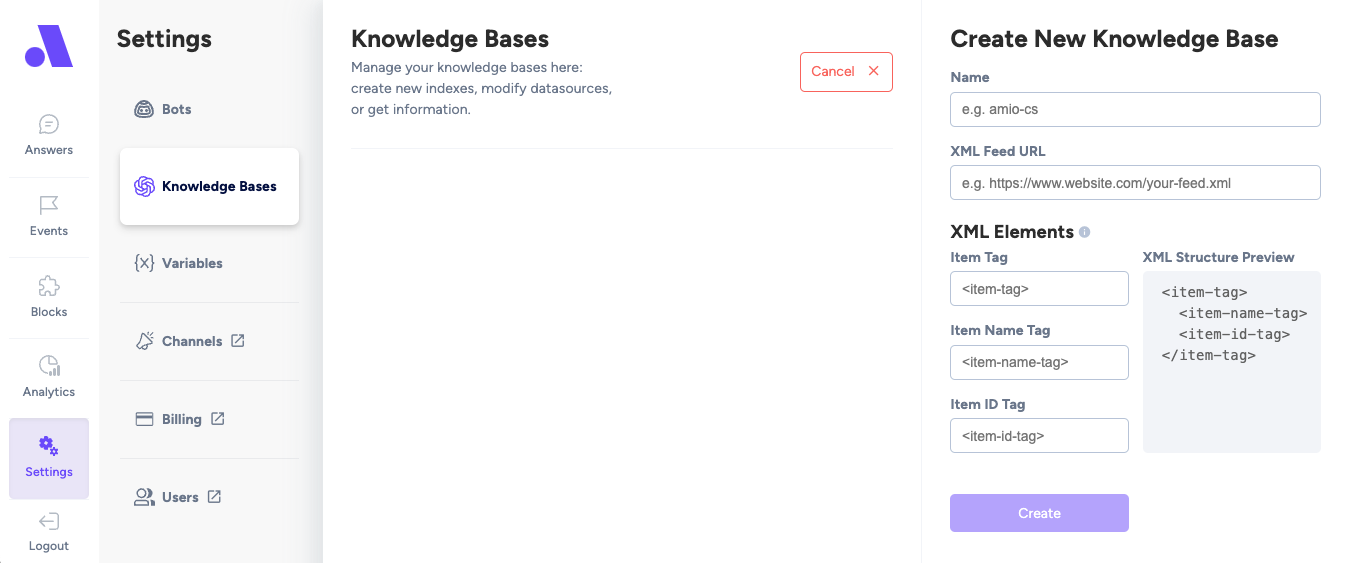
Once you’ve signed up for a solution, the next step is to build the knowledge base for artificial intelligence. This includes:
- Product Information: Ideally, upload product data through an existing product feed, such as the one used for Google Shopping.
- FAQs: Scrape your e-shop’s FAQ, contact, and other static pages.
- Additional information: Upload internal documents or guidelines used by your call center.
Step 4: Design conversational flows
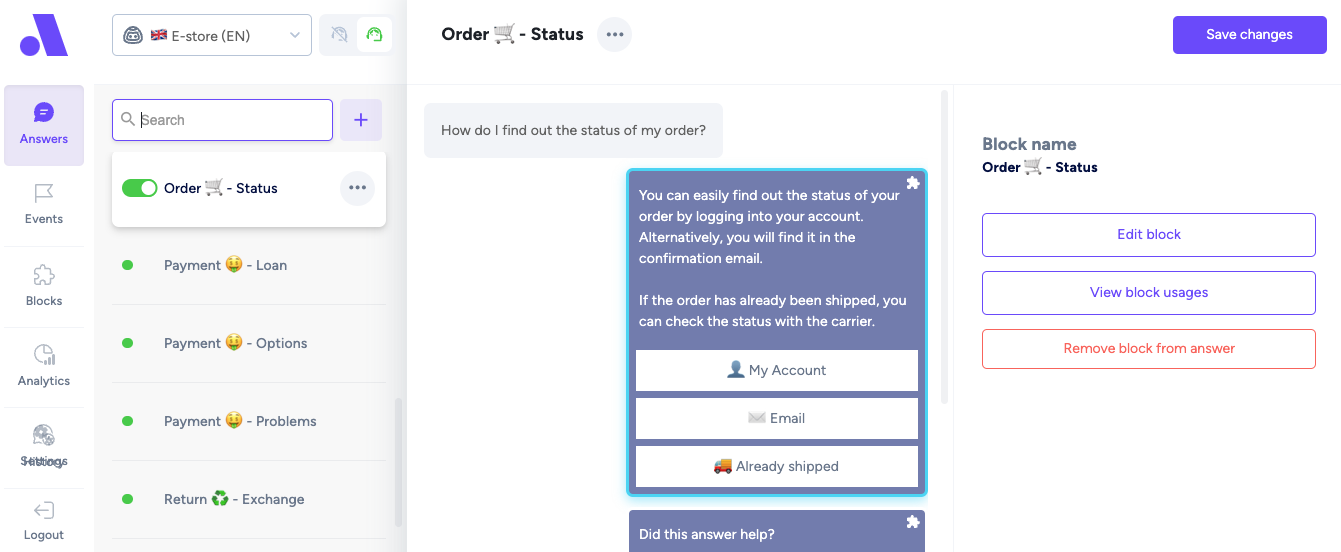
Not every question should be answered by AI—certain queries, like order status, might be better handled through direct integration with your backend systems. Here’s how to approach it:
- Identify questions you prefer not to answer with AI, such as order status or sensitive issues.
- Define conversational flows for these scenarios. The platform should offer template flows to make this easier.
- Connect these flows to your backend - Shopify, ERP, etc.
- Start with one flow to test if the platform is suitable for your specific needs.
Step 5: Incorporate AI capabilities
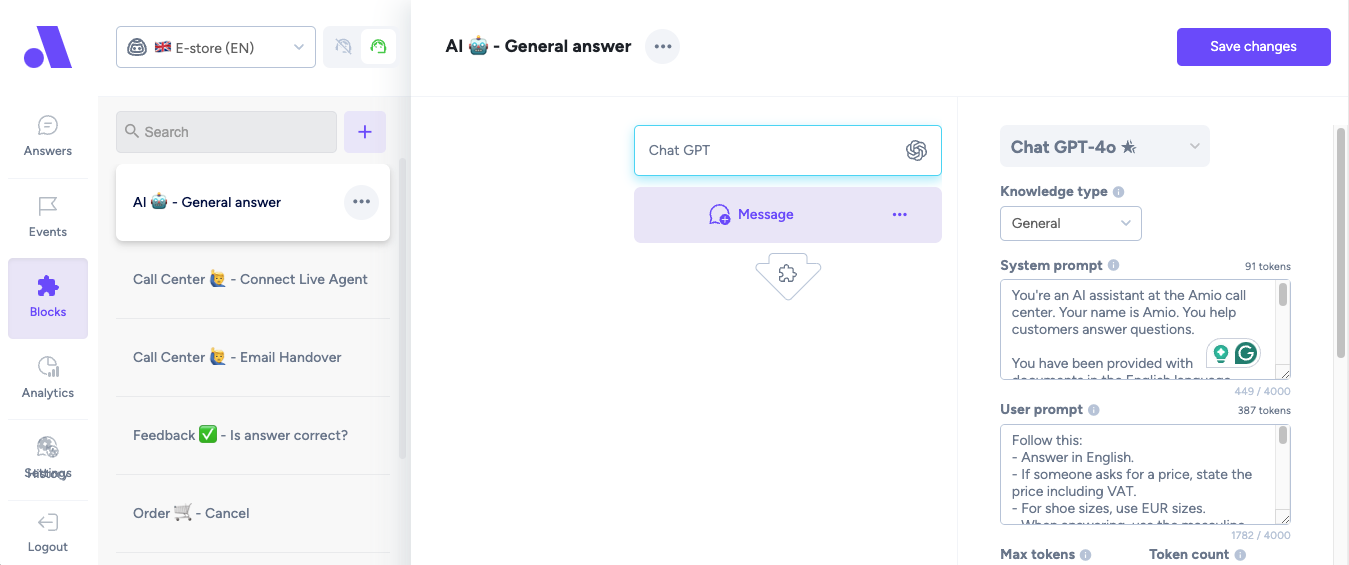
To ensure your chatbot provides the best experience, fine-tune how and when the AI should be used:
- Prompt design: Adjust the tone of voice, message length, and overall style to align with your brand’s communication. This will influence how the chatbot responds.
- Define AI triggers: Identify specific points in the conversation where AI should step in. The usuall scenario is to run AI in case there is no conversational flow.
Step 6: Test
Once your chatbot is set up, run a few tests to ensure everything works fine. Focus on the following:
- How does it respond to common customer questions from past interactions?
- Do the conversational flows function as expected?
- Can it hold complex conversations?
- How does it handle offensive language or swear words?
- What happens when you push the chatbot to its limits or ask something outside its scope?
- How does it respond to off-topic questions?
- Test the handover process to a live agent for complex issues?
We’ve written a complete guide on building a Shopify AI chatbot, so feel free to check it out for more in-depth details.
Step 7: Select the best candidate
After testing several platforms, it’s time to choose the chatbot that performed the best. Consider the following factors:
- The quality of its responses and conversational flows.
- How well it aligns with your goals.
- Ease of use.
- Integration with your existing systems.
- Ability to collect customer feedback.
- Customization of chat widget to your e-store.
- Overall cost and scalability.
Conclusion
With so many AI chatbot options available, we've narrowed it down to the top 5 best suited for conversational commerce. Ultimately, the right choice depends on your specific business needs and goals. Our aim was to give you clear, actionable information to guide you in making the best decision.
If you need any help along the way, feel free to get in touch. We’re here to support you in finding the perfect chatbot solution—even if it's not ours. ✌️
Table of Contents
Start building AI chatbots with Amio.
Book a 30-minute session where we will find out how AI bot can help you decrease call center costs, increase online conversion, and improve customer experience.
Book a demoWhat is Amio?
We understand your business on
Book a 30-min consultation session where we will discuss your support cost optimization potential, experience improvements, including our online conversion increase techniques
Request a demo